Buggy vs Truggy RC Car – Which One Actually Wins Backyard Battles?
Buggy vs Truggy RC Car: Which One Actually Wins Backyard Battles?
As an Amazon Associate I earn from qualifying purchases.
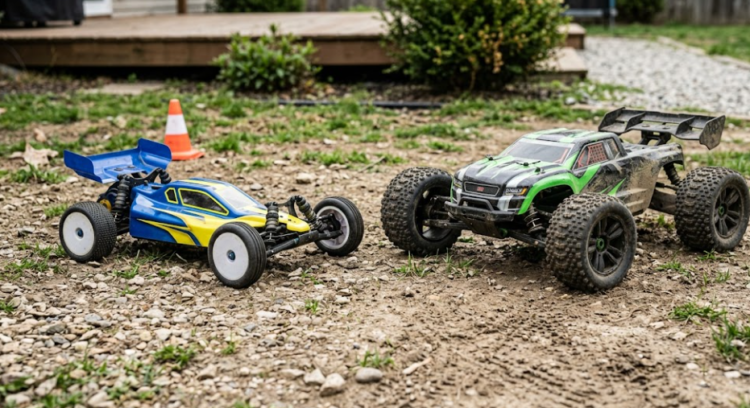
My six year old daughter picked our first RC buggy off the shelf because she liked the color, and honestly that turned out to be a pretty rough way to shop for RC cars. A few broken arms and one very confused trip to the hobby shop later, I finally understood what actually separates a buggy from a truggy. If you are stuck choosing between the two, here is what I wish someone had told me before I spent money guessing.
Buggy vs Truggy RC Car: What Is Actually Different
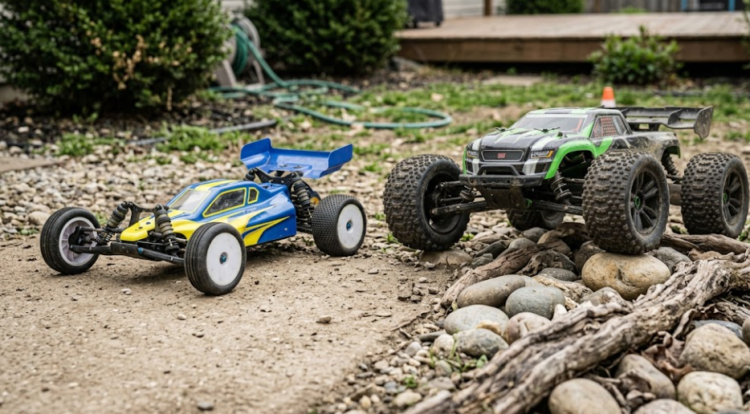
People throw these two words around like they mean the same thing, and I used to do it too. They do not. The difference comes down to body style, tire size, and what kind of punishment each one is built to take, and once you understand that, picking between them gets a lot easier.
What Makes a Buggy a Buggy
A buggy is the lighter, lower, and generally faster option of the two. Think low profile body, smaller wheels, and a chassis built around speed and cornering rather than brute force. Buggies are the ones you see ripping around a smooth dirt track, taking corners at angles that look borderline unfair. My daughter’s Losi Mini B is technically a mini buggy rather than a full size one, but it taught me exactly what this category is about. It is nimble, it is quick to respond, and it genuinely rewards a driver who is trying to learn throttle control instead of just mashing the trigger. I actually wrote up my full experience with that exact truck in my Losi Mini B review, which goes deeper into why it became our go to driveway car.
What Makes a Truggy a Truggy
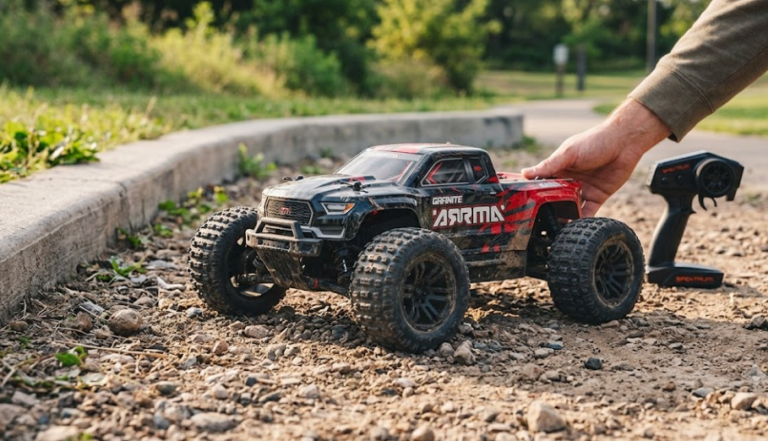
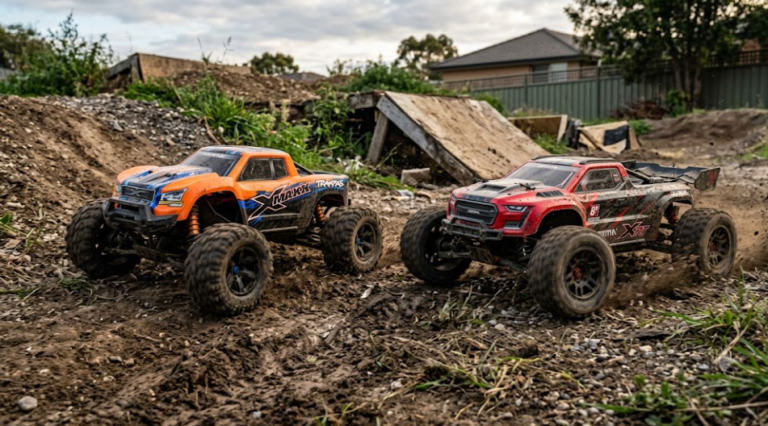
A truggy is basically what happens when a buggy and a monster truck have a long conversation and decide to meet in the middle. It keeps a lot of the buggy’s speed oriented chassis, but it gets bigger tires, more ground clearance, and a taller stance that lets it shrug off rocks, roots, and the occasional garden hose left in the wrong spot. Trucks like the Arrma Kraton fall into this general territory, and after months of running one against a full size monster truck, I put together a breakdown in my Kraton 6S vs Maxx comparison that shows exactly how that extra height and suspension travel changes the way the truck handles rough ground.
Speed and Handling Differences You Actually Notice
On paper, buggies and truggies can post similar top speeds depending on the motor and battery setup, but the way that speed feels behind the wheel is completely different, and this is where most people make the wrong call for their situation.
Buggy Handling on Smooth Terrain
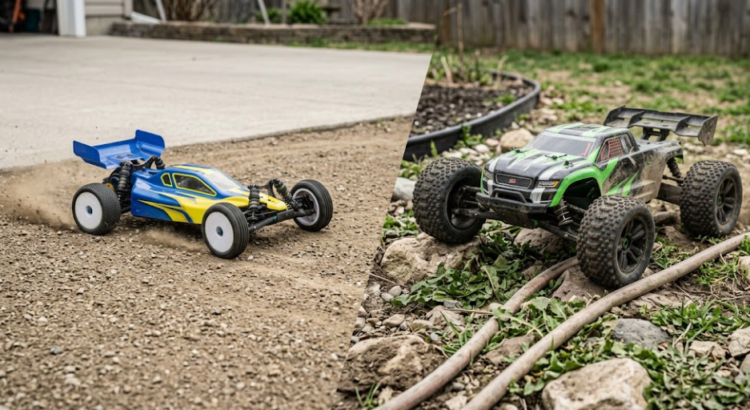
Buggies live for hard packed dirt, driveways, and anything close to flat. The lower center of gravity means less body roll through corners, and the lighter chassis means it accelerates out of a turn faster than most truggies can manage. This is the car that feels alive on smooth ground. It is also, frankly, the car that gets tossed around the most the second you introduce a rock garden or thick grass, because there just is not enough ground clearance to shrug that stuff off.
Truggy Handling on Rough Terrain
A truggy trades a little of that low end snap for stability once the ground gets messy. The taller ride height and longer suspension travel soak up bumps that would send a buggy cartwheeling, and the wider stance keeps it planted through loose gravel or uneven yards. If your driving surface is anything other than a smooth track, a truggy is going to feel far more forgiving, especially for a newer driver who has not built up the reflexes yet to catch a buggy mid air landing.
Durability and Maintenance Differences
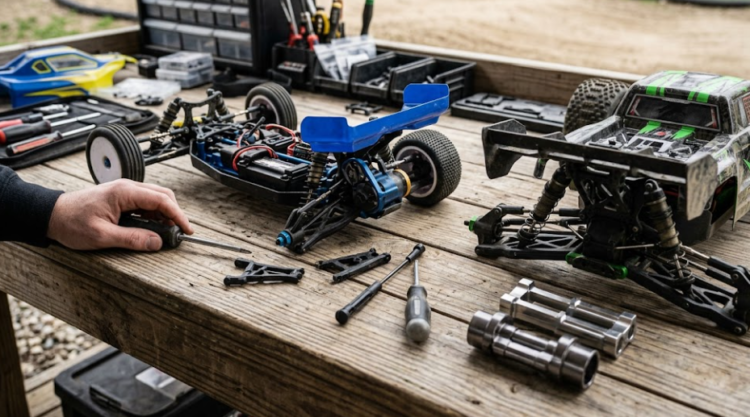
This is the part nobody mentions until it is too late. Buggies, especially the smaller and cheaper ones, tend to have lighter suspension arms and thinner drivetrain components because the whole design philosophy is built around shedding weight for speed. That is great for lap times and absolutely brutal on your wallet if your driver of choice is a six year old who treats every jump like a personal challenge.
👉 RC spare suspension parts
520pcs Universal RC Screw Kit Screws Assortment Set
Truggies are generally overbuilt by comparison. Bigger dogbones, chunkier suspension arms, and tires with more sidewall to absorb impact all add up to a truck that survives mistakes rather than punishing them. I am not saying buggies are fragile, because a well built one can take a serious beating, but the margin for error is smaller, and repairs tend to come around more often if the car is regularly landing hard or clipping obstacles.
Which One Should You Actually Buy
Honestly, this comes down to where you drive more than anything else, and being honest with yourself about that answer will save you a lot of frustration.
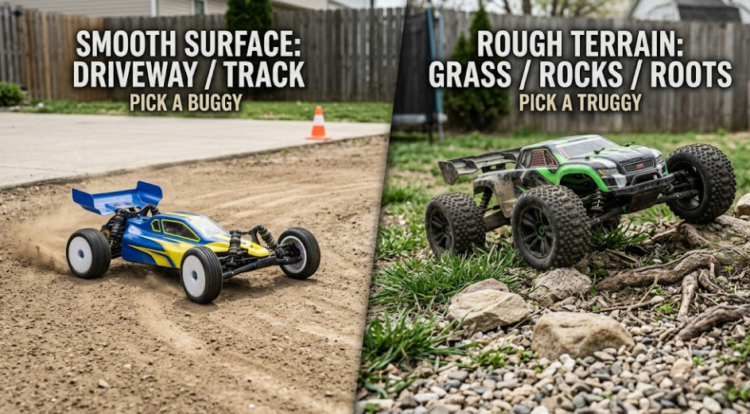
Pick a Buggy If Your Driving Surface Is Smooth
If most of your running happens on a driveway, a parking lot, or a groomed dirt track, a buggy is going to feel more responsive and more fun lap after lap. It rewards smooth inputs, and it is genuinely satisfying once you get a feel for how it carries speed through a corner. Just budget a little extra for spare suspension parts if a kid is going to be behind the wheel.
Pick a Truggy If Your Yard Fights Back
If your typical running ground includes grass, gravel, small rocks, or the occasional root sticking out of nowhere, a truggy is the more forgiving choice. It handles the unexpected bump far better, and it tends to survive the kind of hard landings that would send a buggy back to the workbench. For anyone bashing in a real backyard rather than a manicured track, this is usually the safer starting point.
My Honest Take After Running Both
If I had to pick one for a family driveway with a mix of pavement and grass, I would lean truggy every time, purely because it forgives more mistakes and that matters a lot when a six year old is holding the transmitter. That said, the buggy earned its spot in our garage too, and on a smooth stretch of pavement it is still the more exciting car to drive. The real answer is that neither one is objectively better. They are built for different ground, and once you match the car to your actual driving surface instead of just picking whichever one looks cooler, the decision gets a lot easier.
Frequently Asked Questions
Is a truggy faster than a buggy?
Not usually. Buggies tend to accelerate quicker and corner tighter thanks to their lighter weight and lower stance, while truggies trade some of that raw speed for stability on rough ground.
Can a beginner start with a buggy?
Yes, but expect a steeper learning curve on anything other than smooth terrain. A truggy is often the more forgiving starting point for a first time driver, especially a younger one.
Do truggies need more maintenance than buggies?
Generally less, since truggies are built with heavier duty suspension components and larger tires designed to absorb impact. Buggies can require more frequent parts replacement if they are driven hard on uneven ground.