
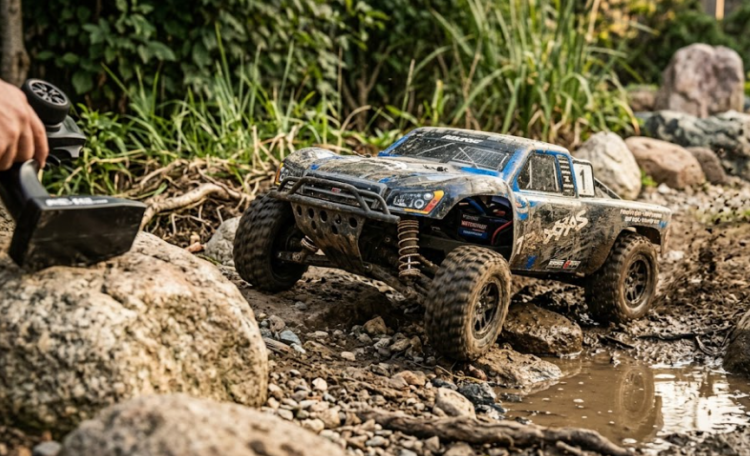
I’ve snapped more front axles than I want to admit, all in the name of finding an off-road RC car that could handle my backyard without falling apart by lunchtime. My first one lasted exactly one afternoon before a chassis crack ended the fun. The second one drowned in a puddle that was maybe two inches deep. So when I finally found a setup that survived rocks, mud, and one seriously embarrassing jump attempt, I figured it was worth writing down everything I wish someone had told me first.
👉 Best Off-Road RC Cars in 2025: Ultimate Comparison Guide
What Actually Makes an RC Car Off-Road Capable
Most listings slap “off-road” on the box the second a car has knobby tires, but that word means almost nothing on its own. A car can look rugged in photos and still fold under real dirt, rocks, or a decent slope. There are a few things that separate a car built for terrain from one that just looks the part.
Suspension Travel Matters More Than Horsepower
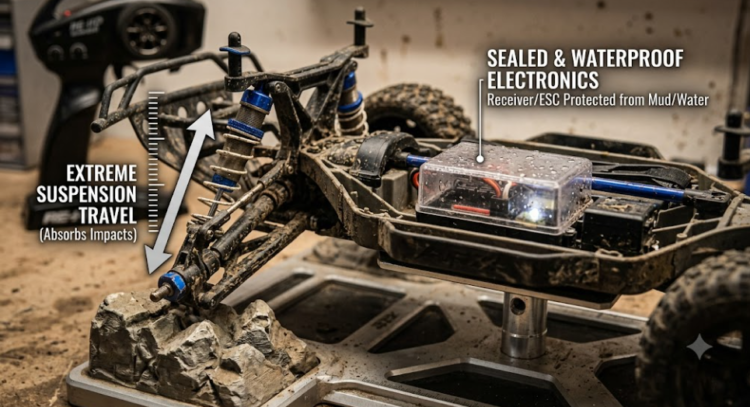
I used to think a faster motor automatically meant a better off-road experience. Then I ran a high-speed buggy over a rutted trail and watched it bounce sideways off nearly every bump because the shocks barely moved. Suspension travel, meaning how far the wheels can move up and down, absorbs the impact from rocks and dips so the chassis doesn’t take the hit directly. A car with long-travel suspension and soft-ish shock oil will keep its wheels planted on uneven ground, while a stiff, short-travel setup built for smooth pavement will just skip across obstacles like a stone across a pond.
Waterproof Electronics Are Non-Negotiable
This one cost me an entire receiver and a very confused afternoon trying to figure out why my car suddenly stopped responding. Off-road driving means mud, puddles, and dust, whether you’re planning for it or not. If the electronics aren’t sealed, one splash through a shallow creek can fry the receiver or the ESC in seconds. Look specifically for waterproof or water-resistant ratings on the electronics, not just “durable body” in the marketing copy, because those are two very different promises.
Best Off-Road RC Car Types for Different Terrain
Not every off-road car is built for the same job, and figuring out which category fits your driving spot saves a lot of trial and error.
Rock Crawlers for Technical Trails
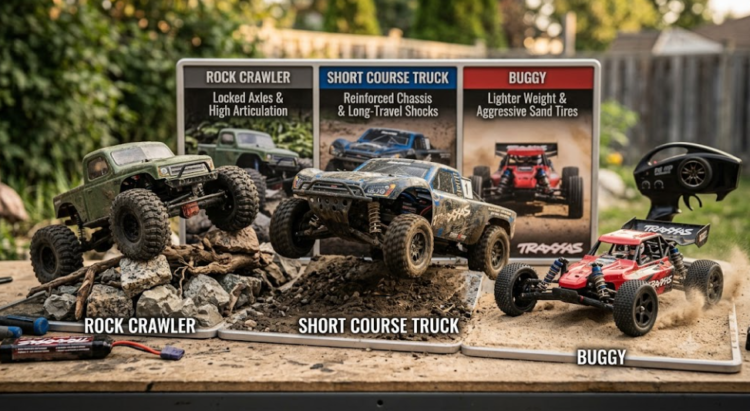
If your terrain involves actual rocks, roots, or steep technical climbs, a rock crawler is the right tool. These run slow on purpose, with a low center of gravity, long wheel travel, and locked axles that let them creep over obstacles instead of launching over them. Speed is not the point here, control is, and once you get the hang of throttle modulation, crawling over a boulder feels weirdly satisfying.
Short Course Trucks for Speed and Jumps
For backyard bashing, jumps, and general chaos, short course trucks hit a nice middle ground between speed and toughness. They’re built with reinforced bumpers and beefy suspension arms specifically because people crash them constantly, myself included. If you’re torn between two well-known trucks in this category, I actually broke down the differences between the Traxxas UDR and the Arrma Mojave in a separate comparison of these two off-road trucks, since they take pretty different approaches to handling rough terrain.
Buggies for Loose Dirt and Sand
Buggies are lighter, quicker to turn, and honestly a blast on loose dirt or sandy lots where a heavier truck would just dig itself in. They’re also usually the more beginner-friendly entry point into off-road RC, since parts are cheaper and repairs are simpler when something inevitably goes wrong. If you’re just getting started, I put together a full rundown of what actually matters when picking a beginner-friendly off-road buggy, because speed specs on the box are almost never the thing that matters most early on.
Features Worth Checking Before You Buy
Tire Compound and Tread Pattern
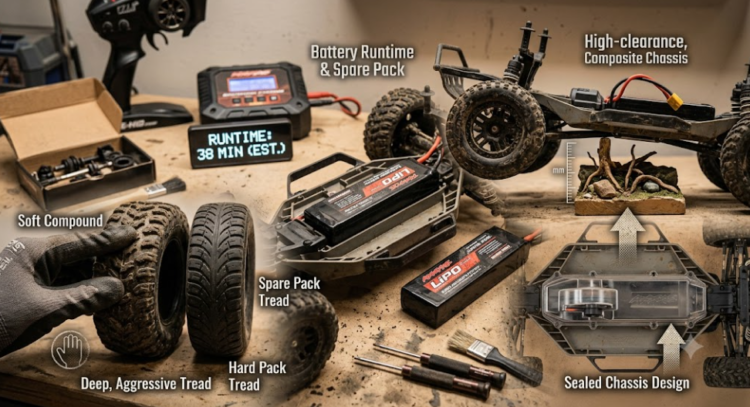
Tires make a bigger difference than most people expect. A soft compound tire grips loose dirt and gravel far better than a hard one, even if the hard one looks tougher. Deep, aggressive tread patterns matter for mud and sand, while a smoother pattern works better on hard-packed trails. If you’re buying online without touching the tires first, read a few reviews specifically about grip on your local terrain type, since manufacturer photos rarely tell you anything useful here.
Ground Clearance and Chassis Design
Low ground clearance is basically an invitation for your chassis to get hung up on every root and rock along the trail. A few extra millimeters of clearance sounds minor, but it’s the difference between rolling over an obstacle and getting stuck straddling it while the wheels spin uselessly. Sealed chassis designs also help keep dirt and grit away from moving parts, which cuts down on maintenance considerably.
Battery Runtime for Longer Sessions
Nothing kills the mood faster than packing up all your gear, driving out to a good spot, and getting twelve minutes of runtime before you’re stuck waiting around for a recharge. Off-road driving tends to draw more power than smooth pavement runs because the motor is constantly working against uneven terrain, so it’s worth budgeting for a slightly bigger battery than you think you need. A spare pack is honestly one of the best purchases I’ve made, right up there with a decent charger.
Common Mistakes People Make When Buying Off-Road RC Cars
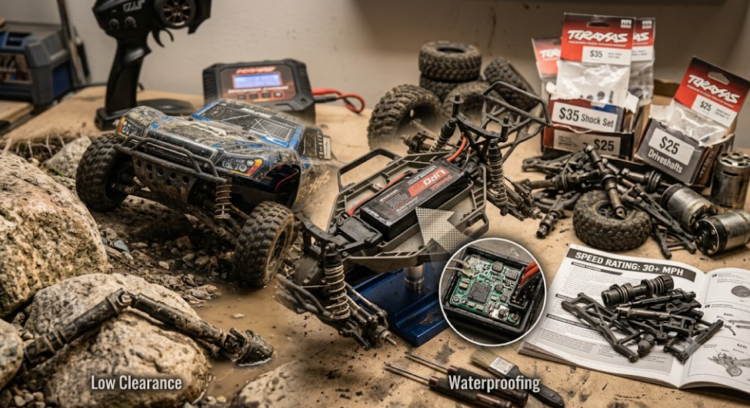
The biggest mistake is buying based purely on top speed numbers. A car that hits thirty miles per hour on a flat parking lot might be completely unusable on your actual terrain if the suspension and clearance weren’t built for it. Another common one is skipping the waterproofing question entirely, assuming “outdoor use” automatically means the electronics can handle moisture, which is often not the case at all. People also tend to underestimate how much replacement parts cost over time, and a cheaper upfront price can end up costing more once you factor in the driveshafts, tires, and shocks you’ll eventually need to replace.
My Honest Picks After Months of Testing
After going through more chassis than I’d like to admit, the pattern I noticed was pretty consistent. The cars that held up were the ones with sealed electronics, a chassis rated specifically for the terrain I was driving, and tires matched to my ground type rather than whatever looked coolest in photos. Price mattered less than I expected going in. A mid-range truck built with the right suspension geometry outlasted a flashier, more expensive one that just wasn’t designed for the terrain I was actually running it on.
Finding the best off-road RC car really comes down to matching the build to your terrain instead of chasing whatever has the highest speed rating on the box. Suspension travel, waterproofing, and tire compound will tell you more about how a car will actually perform than any spec sheet headline. Take the time to figure out what your local terrain demands first, and the right car tends to become pretty obvious after that.