Scooter Cable Lubricant Problems: Sticky Brakes and Throttles
Scooter cable lubricant is one of those things you don’t think about until a brake lever starts feeling rough or the throttle doesn’t snap back the way it should. By then, the cable may have been dragging for quite a while. The easy reaction is to grab whatever spray is nearby and give it a shot.
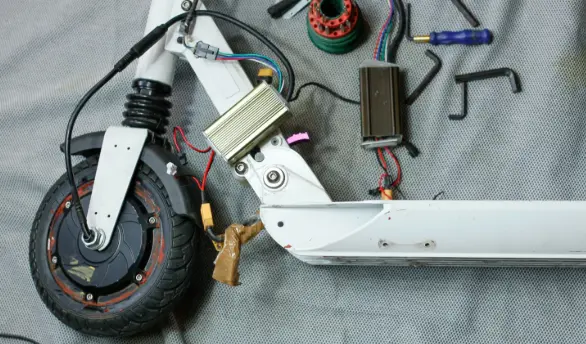
Before buying anything, figure out what type of cable your scooter actually uses. Many electric scooters use a thumb or twist throttle wired to the controller, so there’s no throttle cable to oil at all. The brake side varies. Cable-pulled disc or drum brakes have an inner cable running through a housing, while hydraulic brakes use fluid and lines instead. Gas scooters are different again, since the twist grip on those pulls a throttle cable (some manuals call it the accelerator cable). A quick look at the handlebar should tell you which one you have.
Could the Cable Be the Problem?
A cable that’s starting to stick can show up as a stiff lever, slow return, or a lever that doesn’t come all the way back. On a brake, that can leave the pads lightly touching the rotor or drum.
Quick check first: lift the braked wheel, let go of the lever, and spin the wheel by hand. If it stops almost immediately or you hear a light scraping sound as it turns, something may be rubbing. That kind of brake drag has more than one possible cause, and the cable isn’t always the culprit. A caliper that’s out of alignment or worn pads can cause the same rub.
A lever that pulls almost to the grip before the brake bites points more toward cable stretch than friction. Try the barrel adjuster near the lever before any lube.
How to Check a Sticky Cable
Start with the housing before reaching for any lubricant. Look for kinks, cracks in the outer sleeve, or any section that’s bent sharply. Folding scooters need a little more attention here. On some models, the cable runs close to the folding hinge and gets pinched or pulled whenever the stem is folded.
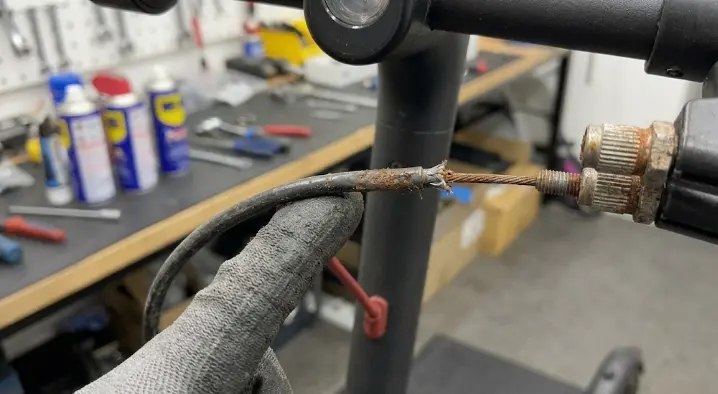
Next, release the inner cable at the caliper end and pull it through the housing by hand. It should move smoothly. If it feels gritty or catches in the same spot, there’s probably dirt, rust, or damage inside. If the inner wire is frayed or visibly rusty, replace the cable rather than trying to save it with lubricant.
What Lubricant Should You Use?
You want something that gets inside the housing without turning into a dirt magnet. A dedicated brake cable lubricant, dry PTFE lubricant, or light machine oil are the options I’d consider first. If the cable has a plastic liner, check what the cable maker recommends, since some liners are meant to run dry.
Heavy grease feels like the right choice and often isn’t. A thick layer inside the housing can stiffen in cold weather depending on the grease, and it holds onto grit. The cable ends up dragging more than it did before. A general-purpose spray such as WD-40 is better suited to flushing out dirt and moisture than providing long-lasting lubrication. Cleaning a gritty cable with one and following up with a proper cable lube makes more sense than relying on the spray alone.
When you’re lubricating a scooter cable, getting the lube inside counts as much as the product. Disconnect the cable first. Hold the housing with the upper end facing up, then add a few drops of lubricant and let it run down through. A quick spray at the lever end can wet only the first few inches. Move the inner cable back and forth several times so the lubricant can work its way through, then wipe away any excess.
Be careful where the lubricant lands. Lubricant on a brake pad, rotor, or drum surface cuts braking power, and overspray near the caliper happens fast. If the cable end sits close to the brake, disconnect it and treat it away from the scooter, or cover the rotor with a rag. If lubricant gets on the rotor, clean it with isopropyl alcohol or a proper brake cleaner. Pads that have soaked up oil may need replacing, and your model’s manual should have the final word.
If the cable checks out but the brake still feels wrong, see my guide to scooter brake problems.
What About the Throttle?
The same basic check applies to a gas scooter’s throttle cable: clean it, add a light lube, and make sure the grip snaps back. With the engine off, turn the handlebars all the way left and right. The throttle should return to closed both times. A grip that hangs open isn’t something to ride with until it’s sorted out.
On an electric scooter with a thumb or twist throttle, don’t spray lubricant into the throttle housing. Those parts sit close to the electronics, and a sticky one is more likely a dirty or worn part than a dry cable. Depending on the model, it may be worth a closer look or a question to the manufacturer.
Replacement cables vary by scooter model, so match the length and end fittings to the original. If the cable still catches in the same spot after cleaning and lubrication, replace it.