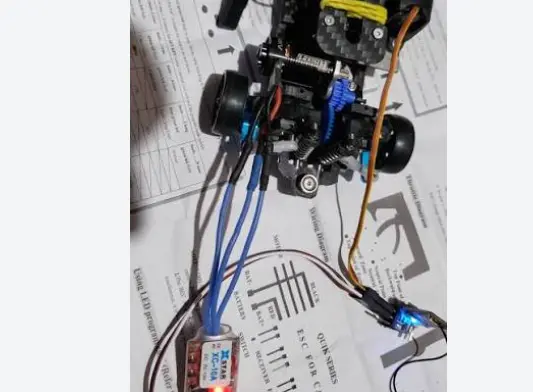
ESC Beeps After a Few Seconds at Zero Throttle? What I’d Check First
ESC beeps after a few seconds at zero throttle, and the first thing you might think is that the ESC is going bad. What’s weird is that the car may drive completely normally as soon as you pull the trigger. That doesn’t necessarily mean the ESC is dying, though. There are a few simple things I’d check before spending money on a replacement.
On many brushless setups the sound comes from the motor itself, with the ESC pulsing the windings to make noise. Brands use different beep counts and spacing for different warnings. I’d still check the manual for your exact ESC before matching the sound to any beep-code list.
Start With the Battery
I’d start with the battery. The ESC is still watching the pack voltage while the throttle is sitting at neutral, so a voltage problem can show up even when the car isn’t moving. Many ESCs warn you when the voltage drops below the cutoff.
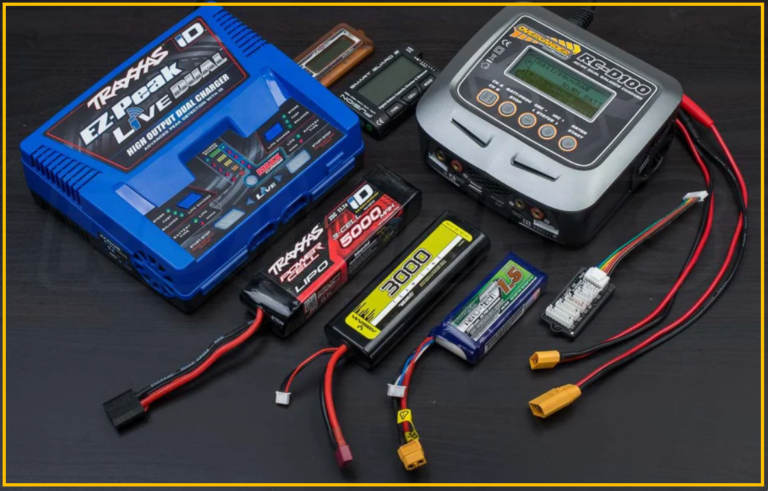
A tired pack or a weak cell can look normal at first, then trigger the warning a few seconds after you connect it. Put a LiPo checker on the balance lead and look at the individual cell voltages. If one cell is noticeably lower than the others, that’s where I’d look first.
Cell count can also cause trouble. Some ESCs count cells at power-up, and a partly discharged pack can be misread depending on the model. If your ESC has a battery type setting, make sure it matches what you’re running, since LiPo and NiMH cutoffs aren’t the same. A pack that keeps setting off the warning shouldn’t go back in the car until you know why, and a puffy pack should be retired.
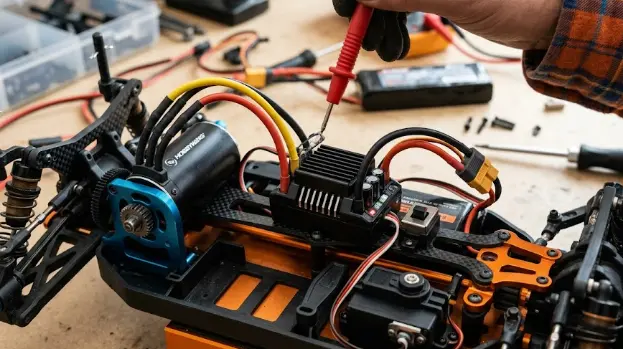
Could It Be Losing the Signal?
The next thing I’d check is the radio signal. Some ESCs will beep when they stop getting a proper throttle signal, and that short delay can make the problem look like something else. Try turning the transmitter on first, wait for the receiver to connect, and then plug in the battery. Then check the transmitter batteries, because low ones can cause odd behavior long before the radio quits.
Reseat the throttle lead in the receiver and look along the wire for nicks. A connector that’s only half seated can work for a few seconds and then drop out.
Throttle trim is easy to overlook, too. If the neutral point has drifted, the ESC may not see zero throttle where you think it does. Recalibrate the throttle range following your ESC’s manual, since the button sequence differs by brand and the wrong sequence can leave the settings worse than before. Let the ESC cool down as well if the car just came off a hard run, because some models beep for temperature.
Settings That Can Cause It
If your ESC is programmable, I’d also take a look at its settings. Depending on the model, you may be using a program box, an app, or the button on the ESC itself. The wording isn’t always the same between brands, so don’t worry if your ESC uses a slightly different name for the same setting.
A cutoff set too high for an older pack that sags can make the ESC warn early. Your ESC may not have a setting called low RPM cutoff at all, so I wouldn’t hunt for one that isn’t in the manual.
I wouldn’t blame the drag brake first. It mainly changes how the car behaves when you let off the throttle, so by itself it isn’t where I’d start looking for a beep. If you’ve changed several settings recently, though, putting everything back to the factory defaults is a quick way to see whether a setting caused it.
On a sensored setup, I’d also unplug and check the sensor cable. A loose or damaged cable can cause its own warning on some ESCs.
If the beeping is happening along with another problem, I’ve also covered ESC failure symptoms and fixes here: RC ESC failure symptoms and how to fix them.
If the beep still doesn’t match anything above, I’d record a short video with the sound clearly audible. Sending the actual sound to the manufacturer is a lot more useful than trying to describe the pattern in an email.