Electric Scooter Safety: How Risky Are They Really?
Electric scooter safety looks different once you think about how easily a small mistake can turn into a nasty fall. The road you’re riding on, your experience, and how quickly you’re moving can make a big difference too.
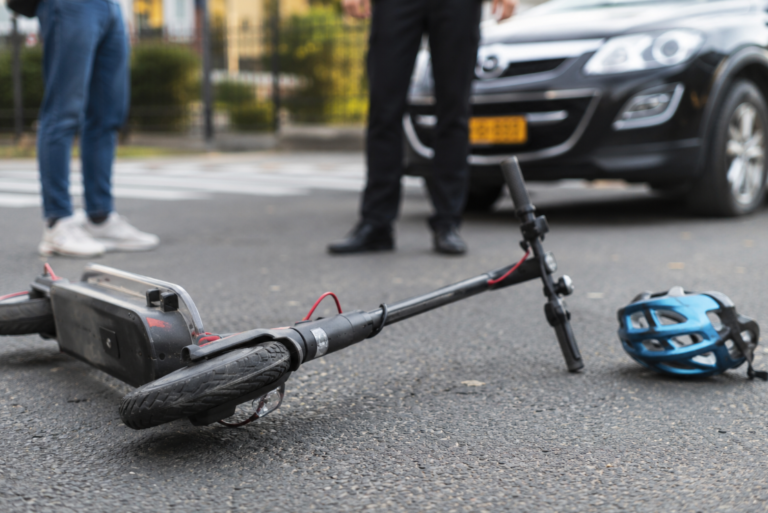
So is an electric scooter dangerous? It can be. You stand on a narrow deck with your feet close together and your weight fairly high over small wheels, which leaves very little margin when something unexpected happens. Injuries often happen in ordinary situations, like losing your balance and hitting the pavement. Collisions with cars happen too and are worse, but the everyday injuries are wrists, elbows, faces, and heads.

Where the falls come from
If I were choosing a scooter for everyday riding, wheel size would be one of the first things I’d check. A bicycle can handle small cracks and uneven pavement pretty well. A scooter is a different story. A crack, a raised seam, or a pothole edge can deflect or stop a small wheel dead, and the rider keeps moving forward. Many adult commuter scooters run somewhere around eight to ten inches, and the smaller end of that range is less forgiving on rough ground.
Tire type changes the picture too. Solid, airless tires never go flat, which is the reason people like them, but they transmit more vibration and can feel skittish on wet pavement. Pneumatic tires grip better and soak up more of the road, and they can puncture. Personally, I’d look at where I planned to ride before deciding between the two.
Wet manhole covers, painted road markings, and fallen leaves all take grip away in a hurry. A rider carrying a bag on the handlebars or looking at a phone with one hand is a common way to end up on the ground, and the same goes for night riding with a weak headlight.
If you’re new to electric scooters, don’t assume riding one is as easy as it looks. Acceleration on some scooters is quicker than people expect, and a hard squeeze on the throttle while you’re still working out your balance goes badly. Spending your first hour practicing in an empty parking lot might not sound exciting, but it’s a good way to get comfortable with the controls.
Brakes and rider weight
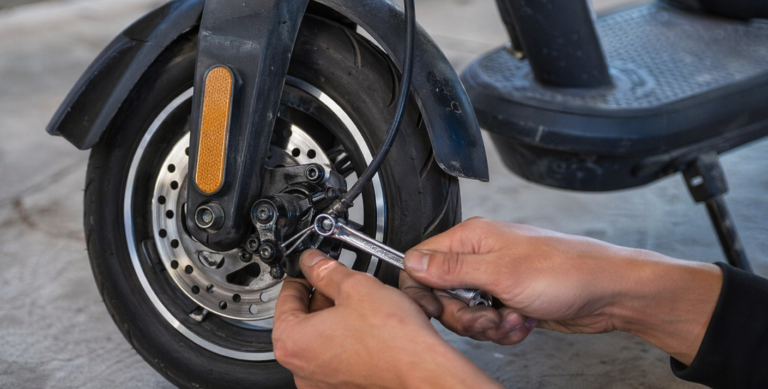
Brake setups vary a lot. Some scooters rely mostly on an electronic brake that feels gentle and smooth, others add a drum or disc brake, and many have a rear foot brake as well. A scooter might feel perfectly fine when you’re riding on flat ground, but that doesn’t tell you how it’ll handle a steep downhill. On a long downhill with a heavier rider, an electronic brake by itself may not be enough, and that’s when a mechanical brake earns its place.
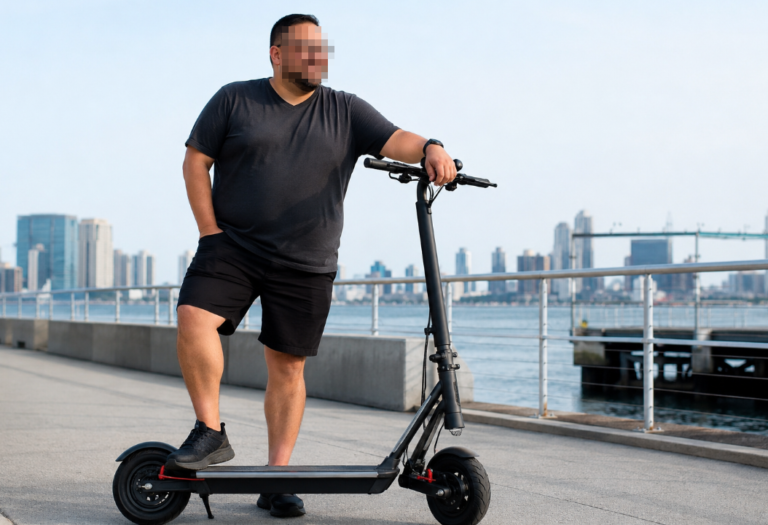
Check the maximum rider weight in the manual and take it seriously. The motor, the brakes, and the frame were all sized around that number, and a scooter loaded near its limit will stop slower and climb hills more slowly than the spec sheet suggests. Keep in mind that the range and top speed you see in the product description won’t always match what you get in real life. Hills, cold weather, and extra weight can all change how the scooter performs.

Battery fires and charging
Riding isn’t the only thing you need to think about. Charging the battery comes with its own set of risks. Lithium-ion battery fires involving e-scooters and e-bikes have been reported, and they’re often linked to charging, damaged packs, or unbranded replacement batteries and chargers. A scooter certified to UL 2272, the electrical safety standard for personal e-mobility devices, has at least been tested as a complete system. Certification on the box doesn’t make a battery immune to damage, but it’s a reasonable filter when you’re comparing cheap models.
Safe charging habits matter with a lithium-ion battery. Use the charger that came with the scooter, charge it while you’re home and awake, keep it on a hard surface away from anything flammable, and don’t leave it plugged in near an exit. If your scooter has been in a serious crash or the battery case is damaged, don’t just put it back on the charger. Have it checked first.
The helmet question
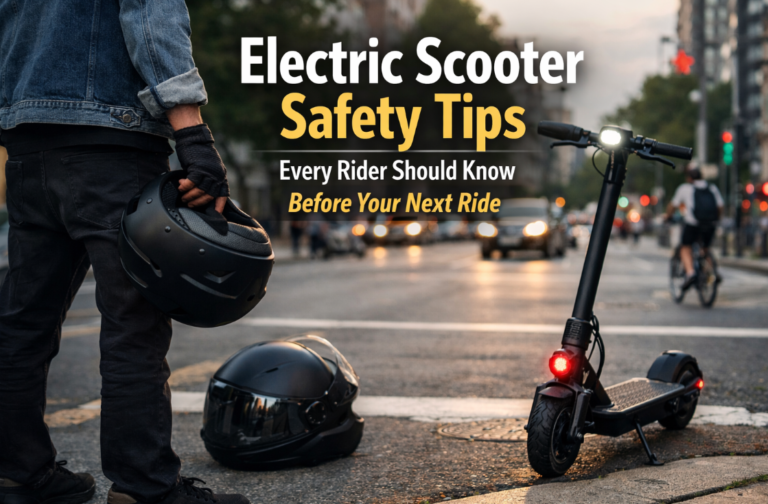
Wearing a helmet is one of those things that can feel unnecessary until you actually need it. I’d rather have one on than regret skipping it after a fall. Lights, decent gloves, and shoes with some grip are also worth having on the list.
Local rules differ on where scooters are allowed: sidewalk, bike lane, road, or none of the above. That affects the risk about as much as anything else here, so it’s worth checking your city’s rules before the first ride.
Articles you might find helpful:
👉 Electric Scooter Safety Tips Every Rider Should Know Before Your Next Ride
👉 Fastest Electric Scooters in 2026 – What Actually Delivers Real Speed