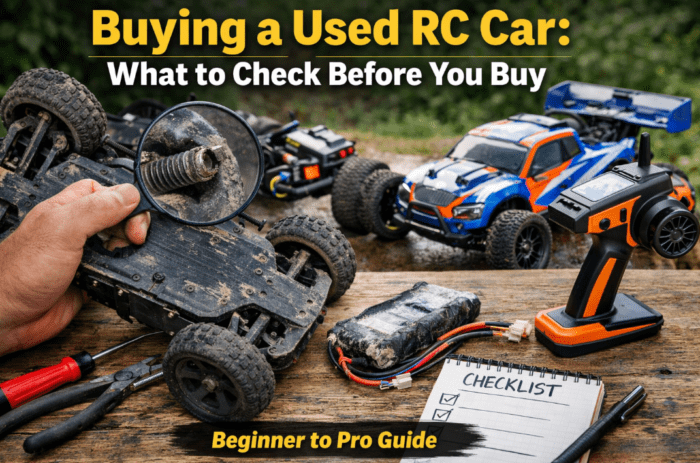
Buying a Used RC Car – What I Always Check Before I Hand Over My Money
I still remember the first time I almost bought a used RC car that looked like a steal.
Clean body. Upgraded parts. Price was way below retail.
I was seconds away from pulling the trigger… until I noticed one tiny thing—grinding in the drivetrain.
That “great deal”? It would’ve cost me more to fix than buying a brand-new one.
Since then, I’ve bought (and passed on) dozens of used RC cars. And if there’s one thing I’ve learned, it’s this:
Used RC cars can be amazing deals—but only if you know what you’re looking at.
Why I Actually Prefer Buying Used RC Cars
Honestly, I check the used market before I even think about buying new.
Here’s why:
- Most RC cars lose value fast after the first few runs
- A lot of hobbyists upgrade, then sell perfectly good setups
- You can get high-end models for mid-range prices
But there’s a catch…
Not everyone tells the full story when they’re selling.
And some problems? You won’t see them unless you know where to look.
First Thing I Check – Overall Condition
Body and Chassis Tell You a Lot
I always start with the obvious stuff.
Scratches? Normal.
Cracks? That’s a different story.
If the body shell has deep cracks or sloppy repairs, that usually means hard crashes.
Then I flip it over.
The chassis is where the truth lives.
- Light scratches = normal use
- Deep gouges or bends = aggressive driving
I’ve walked away from cars just based on this alone.
Small Details = Big Clues
This is something most beginners miss.
Look closely at:
- Screws (are they stripped or mismatched?)
- Missing parts
- Cheap replacements
If it looks like it was “quick-fixed,” it probably was.
Electronics (Where Things Get Expensive Fast)
This is the part that burns most people.
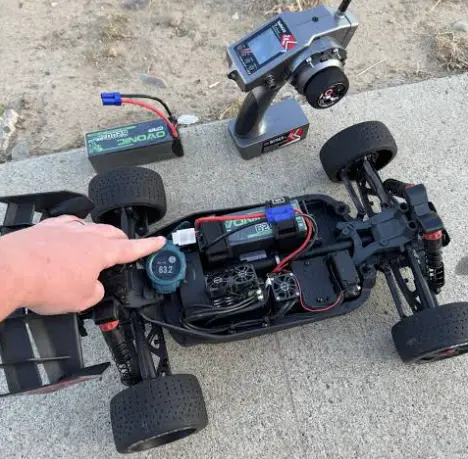
Motor Check
I gently spin the motor if I can.
- Smooth = good
- Grinding or resistance = problem
And I always ask:
“Has this motor been replaced or maintained?”
The hesitation in their answer tells you a lot.
ESC (Speed Controller)
If the seller lets you power it on, do it.
Watch for:
- Delayed throttle response
- Jerky acceleration
- Weird startup sounds
Bad electronics = hidden costs.
Battery Condition
Never ignore the battery.
If it’s:
- Swollen
- Old
- Not holding charge
…it’s basically useless.
And replacing batteries isn’t cheap.
Suspension & Steering – How It Actually Feels
Shock Absorbers
I press the car down and let go.
What I want:
- Smooth rebound
- No bouncing like a toy
Oil around the shocks? That means maintenance is overdue.
Steering Response
Turn the wheels with the controller.
If it:
- Twitches
- Delays
- Feels inconsistent
…your servo is probably on its way out.
And yeah, that matters more than people think.
A bad steering setup makes the car way less fun to drive.
Drivetrain – Listen More Than You Look
This part is all about sound and feel.
Gears
When the car moves, listen closely.
Grinding or clicking = worn gears.
That’s not a “maybe fix later” issue.
Differential & Driveshafts
I lift the car and rotate the wheels.
I’m checking for:
- Smooth movement
- No weird resistance
- No wobbling
Loose drivetrain parts turn into expensive problems real quick.
I Never Skip a Test Run
Even a 30-second run tells you everything.
I watch:
- Acceleration
- Turning
- Braking
- Strange vibrations
And honestly?
This is where gut feeling kicks in.
If something feels off… it usually is.
Questions I Always Ask the Seller
This part separates good deals from bad ones.
“How often did you use it?”
Weekend use? Fine.
Daily bashing? Different story.
“What kind of terrain?”
Off-road = more wear. Always.
“How did you maintain it?”
If they hesitate here, that’s a red flag.
“Why are you selling it?”
Underrated question.
Sometimes the answer tells you everything you need to know.
Is It Actually a Good Deal?
Here’s how I look at it:
Don’t just compare price.
Think about:
- Repair costs
- Replacement parts
- Time investment
A “cheap” RC car that needs fixing?
Not cheap.
Biggest Mistakes I See People Make
I’ve seen these way too many times:
- Buying without testing
- Ignoring small issues
- Focusing only on looks
A clean RC car can still be a mess inside.
And yeah… I learned that the hard way.
Don’t Rush It
Buying a used RC car is kind of like treasure hunting.
Sometimes you find something incredible.
Other times… you dodge a disaster.
The biggest advantage you have?
Patience.
The right deal will show up.
And when it does, you’ll know exactly what to look for.
If you’re just getting into the hobby and want to avoid beginner mistakes, this guide will help a lot:
👉 https://trvbaby.net/rc-car/rc-basics/how-long-do-rc-cars-last/