Best 4WD RC Cars That Actually Survive My Backyard
Best 4WD RC Cars That Actually Survive My Backyard
As an Amazon Associate I earn from qualifying purchases.
Three years ago I bought my daughter what I thought was a toy. It was not a toy. It was the start of a garage full of spare tires, a drawer of stripped screws, and more opinions about drivetrains than any reasonable adult should have.
Why 4WD Ends Up Winning in Most Backyards
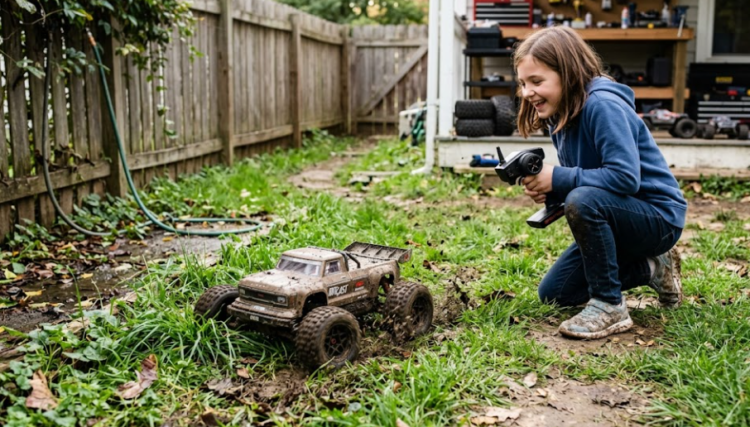
My first RC car was a cheap 2WD thing from a big box store, the kind that spins one back tire uselessly in the grass while your six year old stares at you like you personally betrayed her. That happened. More than once. Grass, gravel, the slightly muddy patch by the fence where the sprinkler always overshoots, all of it turned into a graveyard for that poor little car.
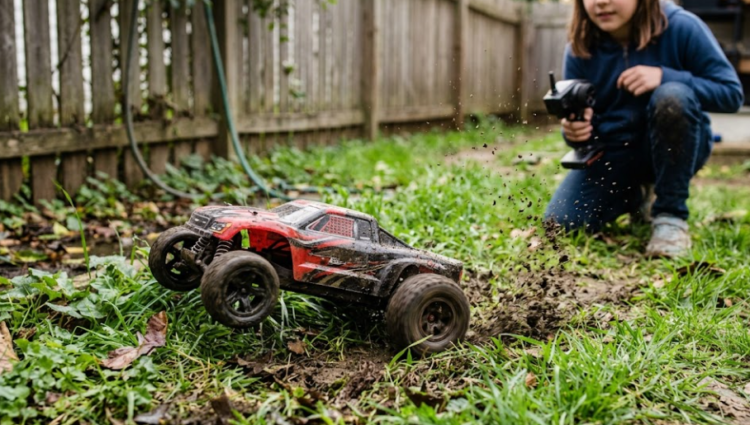
Switching to a 4WD model changed the whole experience, and not in a subtle way. Suddenly the thing climbed over roots, pushed through wet leaves, and did not flip itself into a ditch every time we hit a bump. If you have ever watched a kid’s face fall because the car just spun in place, you already know why 4WD matters more than most spec sheets let on.
4WD vs 2WD: What Actually Changes
The short version is that a 2WD car sends power to either the front or back wheels, usually the back, while a 4WD car powers all four at once. On smooth pavement you honestly might not notice much difference. The second you hit anything loose, sandy, wet, or uneven, the 4WD car keeps pulling itself forward while the 2WD car starts to spin and slide.
There is a tradeoff, and it is worth saying out loud instead of pretending it does not exist. 4WD cars tend to cost more, drink through batteries a little faster because two extra wheels are working, and have more moving parts that can eventually need attention. For a driveway-only setup, 2WD might be all you need. For yards, parks, trails, or a kid who insists on driving through every single puddle, 4WD earns its keep fast.
When You Can Honestly Skip 4WD
If your entire RC car life happens on a smooth garage floor or a paved driveway, I am not going to pretend you need 4WD. Plenty of 2WD cars are lighter, cheaper, and plenty fast for that kind of casual driving. The moment grass, dirt, or gravel enters the picture though, the math changes fast.
What to Actually Check Before Buying a 4WD RC Car
I learned most of this the expensive way, so consider this the shortcut version.
Ground Clearance and Tire Type
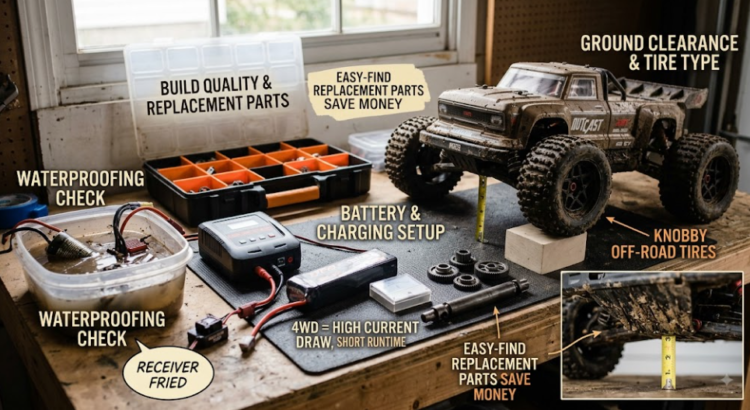
A 4WD drivetrain only helps if the car can physically get over what is in front of it. Low ground clearance means the chassis drags on rocks, roots, and thick grass no matter how much power is going to the wheels. Look for a decent gap between the belly of the car and the ground, and pay attention to whether the tires are knobby off-road tires or smooth street tires, because the wrong tire on the wrong surface undoes a lot of the 4WD advantage.
Battery Life and Charging Setup
Nobody warns you that the battery is basically the whole hobby. A 4WD car pulling more current will usually run shorter on the same battery than a 2WD car would, so check the runtime estimate and be honest with yourself about whether fifteen minutes of driving followed by an hour of charging fits your patience level, or your kid’s.
Waterproofing, Because Puddles Happen
If there is a puddle within a hundred feet of my daughter, she will find it, and the car is going through it whether I like it or not. I actually wrote up exactly what happened the first time I ignored this and fried a receiver in about four minutes flat, along with which models actually held up, in this waterproof RC car breakdown if you want the full story before you buy.
👉 ISDT 608AC Lipo Battery Charger Balance Charger or Spektrum Smart Charger
👉 Fireproof LiPo Safe Bag for Battery Charging & Storage
Build Quality and Replacement Parts
This is the boring part that saves you real money later. Cheaper 4WD cars sometimes use plastic gears and thin driveshafts that snap the first time the car lands wrong off a curb. Before buying, it is worth a quick search to see whether replacement parts are actually easy to find, because a great car with no spare parts available turns into an expensive paperweight the day something breaks.
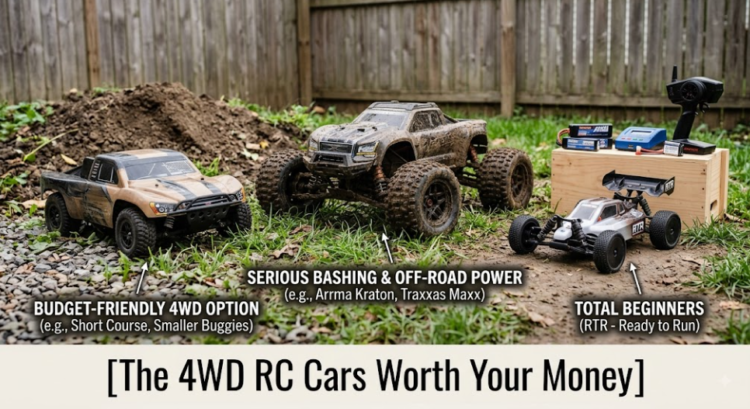
The 4WD RC Cars Worth Your Money
I am not going to pretend I have tested every 4WD car on the market, nobody has, but these are the categories that actually hold up in real use, not just in a marketing photo.
Best for Serious Bashing and Off-Road Power
If you want something that shrugs off jumps, mud, and general abuse, you are looking at the bigger monster truck class, think Arrma Kraton or Traxxas Maxx territory. These are not cheap and they are not subtle, but the 4WD system on trucks like this is built for punishment rather than just looking tough. I put two of the most popular options head to head after months of actually using them, and the results genuinely surprised me, so if you are stuck deciding between that kind of power, my full Kraton 6S vs Maxx comparison lays out exactly where each one wins and where it falls apart.
👉 ARRMA RC Car 1/8 Typhon 6S V5 4WD BLX Buggy with Spektrum Firma RTR
Best Budget-Friendly 4WD Option
You do not need to spend monster truck money to get a real 4WD experience. Mid-range short course trucks and smaller off-road buggies in the 4WD lineup give you most of the traction benefit without the eye-watering price tag, and they are usually a lot more forgiving to learn on since a crash costs less in both money and pride.
👉 ARRMA RC Car 1/8 Typhon 6S V5 4WD BLX Buggy with Spektrum Firma RTR
Best for Total Beginners
Ready to run, meaning it comes basically fully assembled and just needs a battery and charge, is the way to go if this is your first 4WD car or your kid’s first car. Skip anything that requires soldering or a separate electronic speed controller setup right out of the gate. I put together a much longer honest starter breakdown after fumbling through my own first purchase, including the exact mistakes I made, in this RC car for beginners guide, and it will save you from repeating them.
👉 HYPER GO H16BM 1/16 Brushless Fast RC Cars for Adults
Mistakes I Made So You Do Not Have To
The single biggest mistake was assuming bigger meant better right out of the gate. I bought a large scale 4WD monster truck as my very first RC car, and it was genuinely too much car for someone who had never driven one before, let alone for a six year old asking to take a turn. Start with something you can control comfortably, then size up once you actually understand throttle control and how the thing handles turns.
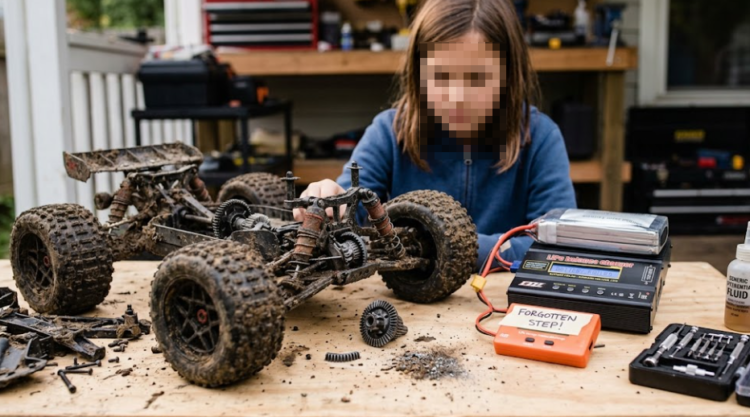
The second mistake was ignoring the battery until it was already dead in the middle of a good afternoon. LiPo batteries especially need proper storage charging if you are not using them for a while, and skipping that step shortens their life fast. I now keep a cheap storage charger next to the good one specifically so I stop forgetting this step.
The third mistake, and this one stings a little, was never checking the differential fluid or gear mesh until something started grinding. A 4WD system has more gears and more moving parts than a simple 2WD setup, which means more spots where dirt and grit can slowly wreck something if you never open it up and take a look.
Keeping a 4WD RC Car Running Longer
A quick wipe down after every muddy or grassy run does more than people expect, since dirt packed into the gearbox is one of the most common reasons a 4WD car starts sounding rough. Checking tire wear every few sessions matters too, because uneven wear usually points to an alignment or suspension issue worth catching early instead of ignoring. And honestly, just listening to the car matters more than any checklist. A new grinding noise, a sudden pull to one side, or a battery that drains way faster than it used to are all the car telling you something before it becomes a bigger repair.
Final Thoughts on Picking a 4WD RC Car
If I could go back and give myself one piece of advice before that first purchase, it would be to buy based on where I actually planned to drive, not based on which truck looked coolest in the box. My daughter does not care about horsepower numbers or gear ratios. She cares about whether the car can make it through the muddy patch by the fence without getting stuck, and a solid 4WD setup is what finally made that happen for us.
Whatever you end up choosing, start a little smaller than your ego wants, keep it clean, and check the battery situation before you are standing in the yard with a dead car and a disappointed kid staring back at you.