How to Drive an RC Car (The Way I Actually Learned It)
How to Drive an RC Car the Right Way.
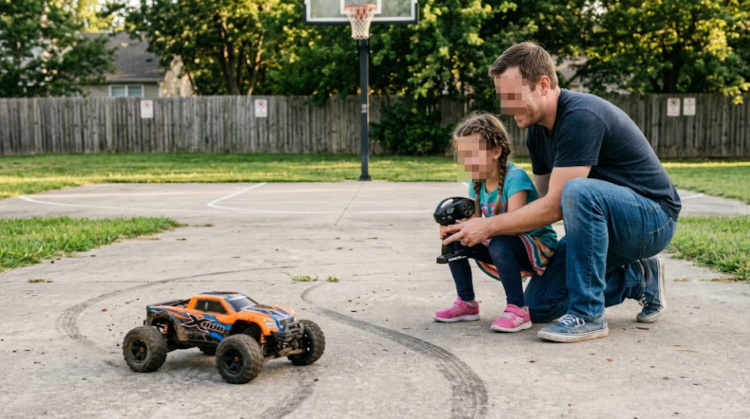
My daughter is six, and she is the reason I own three RC cars and one permanently scuffed pair of sneakers. The first time we took our truck out to the driveway, I nearly put it through the neighbor’s fence in under a minute. If you just unboxed your first RC car and you are staring at the controller like it owes you money, this is the guide I wish someone had handed me that day.
Why Driving an RC Car Is Harder Than It Looks
People assume an RC car basically drives itself. You push a stick, the thing goes, how complicated could it be. Then you actually try it and the car either barely creeps forward or launches like it is trying to qualify for a rally championship. There is no in-between setting on most stock throttle curves, which is exactly why so many beginners either baby the trigger the whole time or send the car straight into a flower bed.
The truth is that driving an RC car is a small, physical skill, not something you understand just by reading a manual. Your thumb and your eyes need to learn how the car actually behaves, and that only happens with reps. The good news is that once it clicks, it clicks fast, usually within a single afternoon.
Getting to Know Your Transmitter First
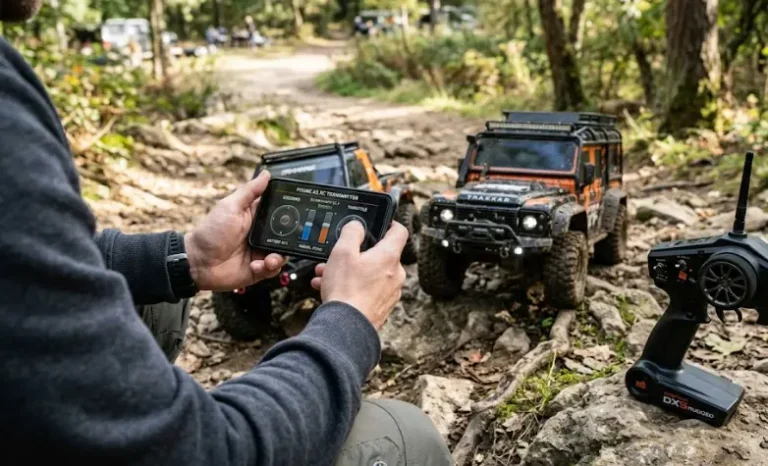
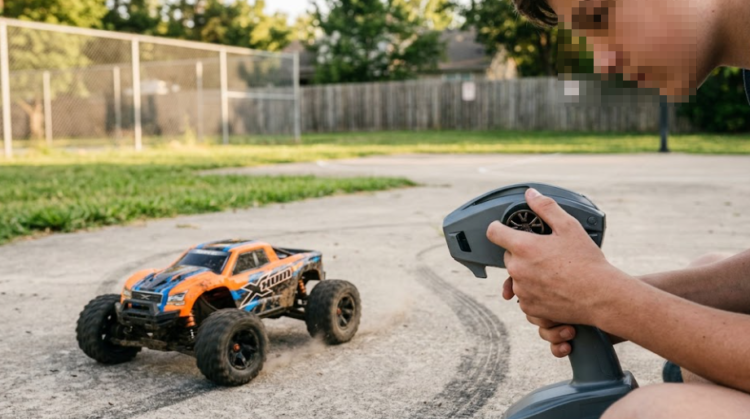
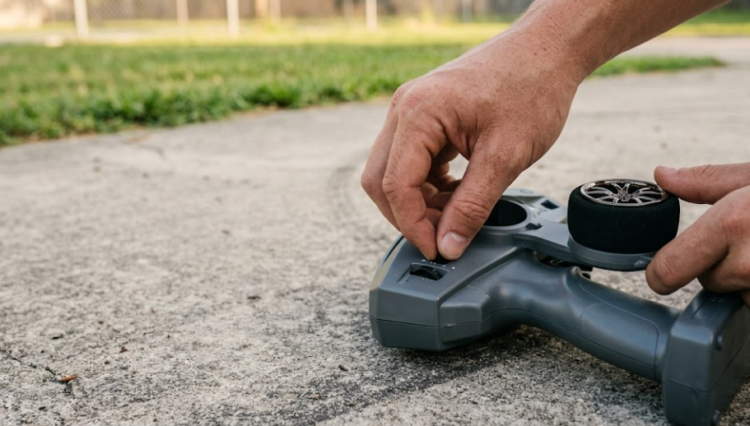
Before the car ever touches pavement, spend five minutes just holding the transmitter. Most controllers put steering on the wheel or left stick and throttle on the trigger or right stick, with your trigger finger doing double duty for both gas and brake.
Throttle Trim and Steering Trim
Set the car on a flat surface, turn everything on, and watch what the wheels do with no input at all. If the front wheels are not sitting dead straight, or the car creeps forward on its own, use the trim dials to zero it out now. Skipping this step is the number one reason new drivers think their car is broken when it is actually just untrimmed.
Feel the Dead Zone
Every transmitter has a small dead zone in the middle where nothing happens no matter how hard you push. Find that zone before you start driving. It saves you from the jerky, all-or-nothing inputs that make cars snap sideways for no obvious reason.
Choosing the Right Spot to Practice
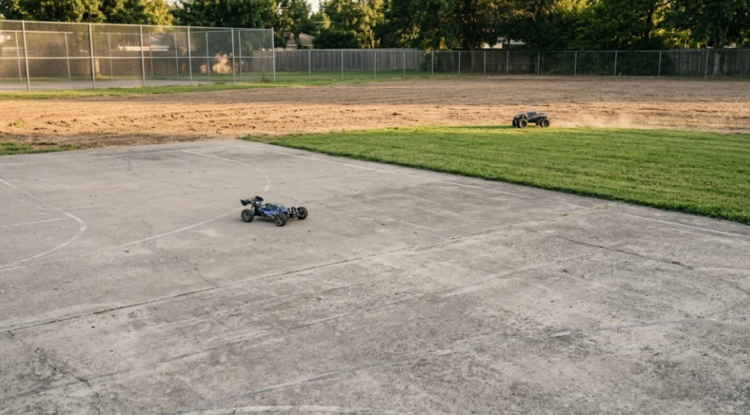
Do not learn on your street. Do not learn in a parking lot with cars backing out. Find an empty basketball court, a flat patch of grass, or a wide driveway with nothing breakable within twenty feet. Pavement is honestly the easiest surface for a first session because the car behaves predictably, and once you feel confident there you can move on to grass or dirt.
If you are still deciding what kind of car fits your situation in the first place, our RC Car For Beginners starter guide breaks down what actually matters before you buy, instead of just chasing the biggest number on the box.
The Actual Steps to Driving an RC Car
Start With Slow, Straight Lines
Forget corners for the first ten minutes. Point the car away from you and practice gentle throttle, letting off, gentle throttle again. You are building a feel for exactly how much trigger pressure equals how much speed, which sounds simple until you realize every car has a slightly different threshold.
Add Gentle Turns
Once straight lines feel boring, start weaving the car in wide, lazy S shapes. Keep your inputs smooth. Jerky steering at low speed is forgivable, but that same habit at higher speed is what flips cars and snaps steering links.
Practice the Figure Eight
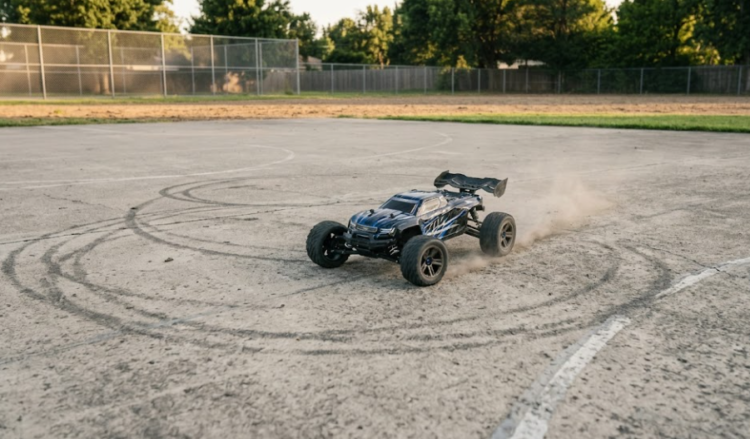
This is the classic drill for a reason. Driving a figure eight forces you to manage throttle and steering at the same time while the car is both coming toward you and moving away from you, which is exactly the coordination you need for real driving later on. Slow it down as much as you need to at first. Speed comes later.
Learn to Brake Without Panic
New drivers tend to stab the brake the second something goes wrong, and that sudden weight transfer is what sends a car up on two wheels or into a spin. Practice easing off the throttle first, then applying brake gradually, especially on anything other than smooth pavement.
Mistakes That Slow Down Your Progress
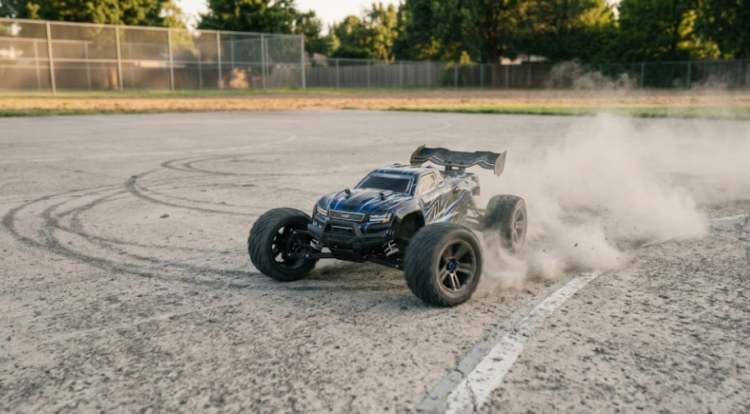
Full throttle from a dead stop is the classic beginner move, and it almost always ends in wasted wheel spin instead of actual speed. Driving toward yourself instead of away is another one that trips people up constantly, because your brain has to flip steering direction in your head, and that reversal is genuinely disorienting the first few times.
I made almost every one of these mistakes myself, sometimes more than once, and wrote up the full list after I finally stopped repeating them. If you want the longer version, our post on common beginner RC car mistakes covers the ones that cost the most time, money, and dignity.
Building Real Confidence Behind the Wheel
Confidence with an RC car does not come from watching videos of other people doing it well. It comes from putting in laps, even boring ones, until your thumb starts making corrections before your brain fully processes what happened. Give yourself permission to be slow for the first week. Every driver who looks effortless now spent a stretch of time looking exactly as awkward as you feel right now.
Set a small, specific goal each session instead of just driving aimlessly. One day it might be clean figure eights, the next it might be smooth braking into a turn without spinning out. Small, boring reps beat sporadic bursts of speed every single time.
How to Drive an RC Car
Learning how to drive an RC car is less about the car and more about training your hands to trust what your eyes are seeing. Start slow, pick a forgiving surface, and give yourself real practice time before you judge whether you are any good at this. My six year old picked this up faster than I did, mostly because she was not overthinking every input the way I was. There is a lesson in that somewhere, and it is probably just to relax and drive.