RC Car For Beginners – An Honest Starter Guide
I still remember standing in my garage with a half-charged battery, a controller I did not fully understand, and a car that kept veering hard left no matter what I did. Looking back, nobody ever handed me a real RC car for beginners guide, so I just figured it out the expensive way. If you are about to start the same road, let me save you some of that trial and error.
What Got Me Hooked On RC Cars In The First Place
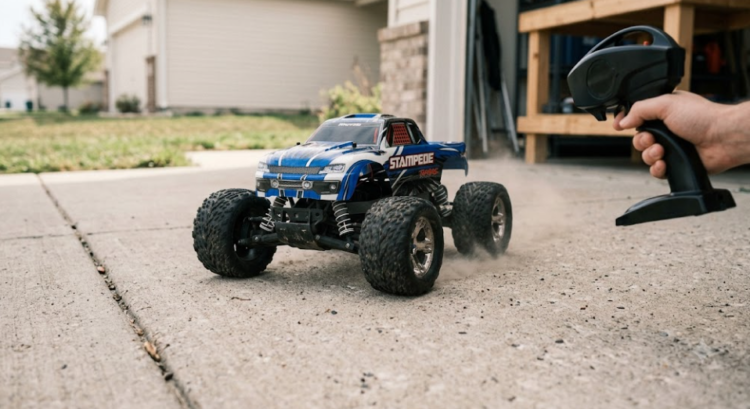
There is something about hearing that little motor spin up for the first time that just does it for people. Maybe it is the sound, maybe it is the speed, maybe it is just an excuse to spend a Saturday outside instead of scrolling on the couch. Whatever it was for me, one drive around the driveway turned into a full blown obsession that ate up a good chunk of my free time and a not so small chunk of my bank account.
The good news is you do not need to make the same expensive mistakes I made. RC cars have a bit of a learning curve, but once the basics click, everything else falls into place fast.
👉 RC Cars for Beginners – RC Geeks
What The RC Car Hobby Actually Involves
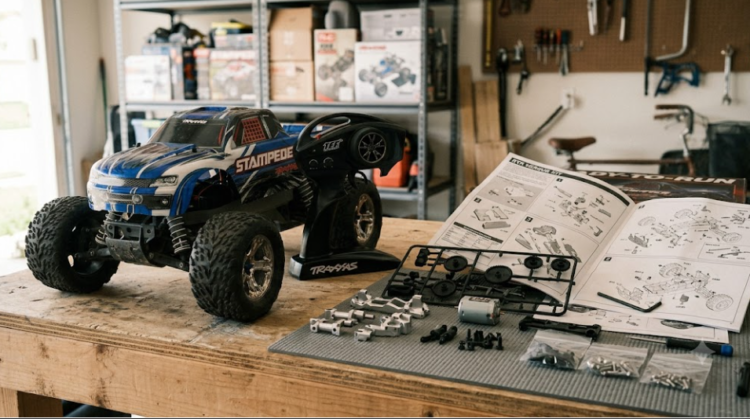
At its core, this hobby is about controlling a small vehicle by radio signal, usually gas powered or battery powered, on dirt, pavement, grass, or a dedicated track. Some people treat it as pure backyard fun. Others get deep into racing, upgrading parts, and chasing lap times. There is no wrong way to do it, which is honestly one of the best parts.
Where most beginners trip up is trying to figure out the terminology and the buying process before they have even touched a controller. Terms like brushless, RTR, and scale size get thrown around like everyone already knows what they mean. Nobody does at first. That confusion is exactly why so many people quit before they even get started.
RTR Versus Kit – The First Real Decision
One of the earliest forks in the road is choosing between a Ready To Run car and a kit you assemble yourself. I went back and forth on this for way longer than I should have, and honestly wrote a full breakdown on it after learning the hard way. If you are stuck on this exact question right now, my RTR versus kit comparison walks through which option actually makes sense for someone just getting started, instead of just telling you the obvious answer.
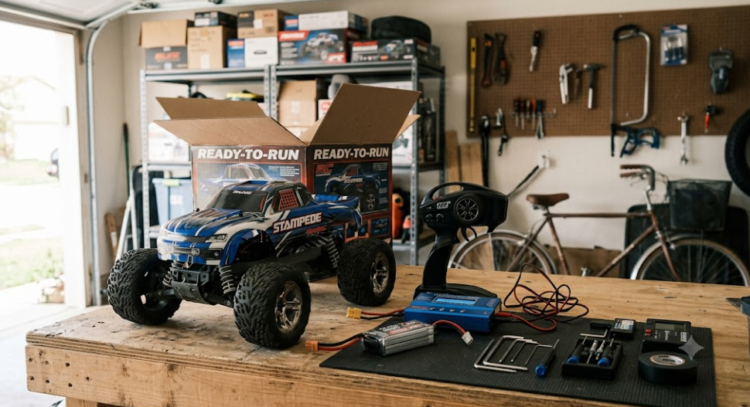
Short version, RTR gets you driving the same day you open the box. Kits teach you the mechanics but demand patience most beginners do not have yet. Pick based on how much you want to learn versus how much you just want to drive.
Picking Your First Car Without Wasting Money
This is where I burned through more cash than I want to admit. I bought a flashy looking truck because the packaging promised insane speed, and within a week the plastic gears stripped and half the fun disappeared with them. Speed on the box does not mean quality underneath it.
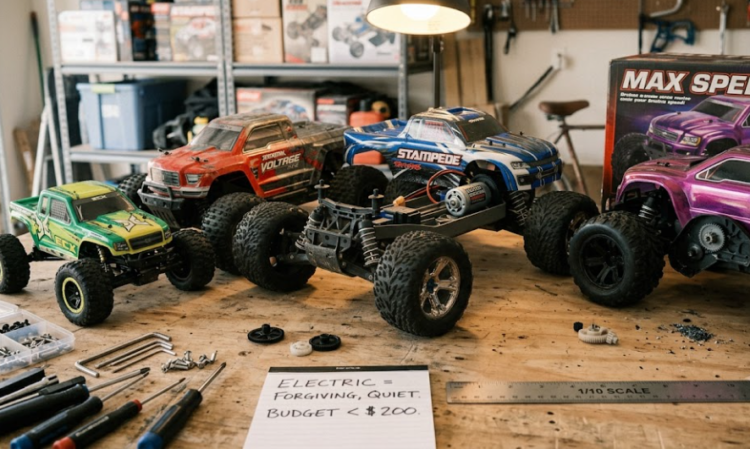
If your budget is tight, and for most beginners it should be, stick to something reasonable while you figure out whether this hobby is even for you. I put together a full rundown of solid options that will not break the bank in my guide to budget RC cars under two hundred dollars, based on cars I actually put through real use instead of just specs on a page.
Electric Or Nitro
Electric is where almost every beginner should start. It is cleaner, quieter, cheaper to maintain, and far more forgiving when something goes wrong. Nitro is a whole different animal involving fuel, tuning, and a learning curve that will frustrate you before you even leave the driveway. Save nitro for later once you actually know what you are doing.
Scale Sizes Explained Simply
You will see numbers like 1/10 or 1/8 attached to almost every car. That number just tells you how much smaller the RC version is compared to a real vehicle. Smaller scales are usually cheaper and easier to store. Larger scales feel more powerful and durable but cost more and eat batteries faster. For a first car, 1/10 scale hits a nice sweet spot most people are happy with.
Basic Gear You Actually Need To Get Rolling
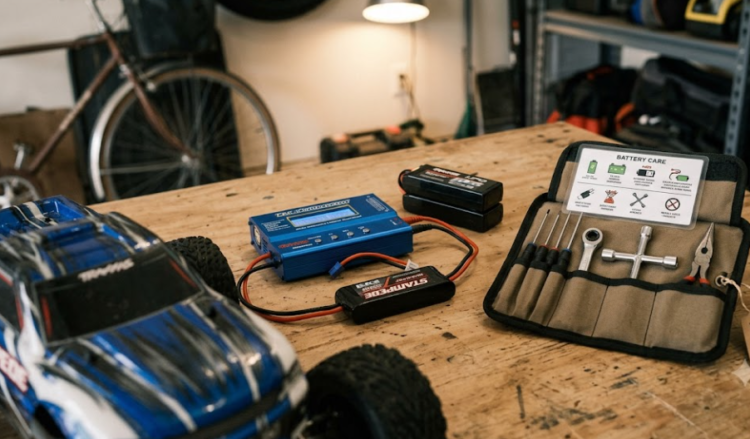
Beyond the car itself, you really only need a handful of things to start. A decent charger that matches your battery type matters more than people realize, since a cheap mismatched charger can ruin a battery fast. A spare battery keeps your driving time from ending the second the first one dies. A small toolkit for basic adjustments will save you a trip to the hobby shop for tiny fixes you can handle yourself.
Everything else, upgraded parts, extra bodies, fancy tires, can wait until you actually know what your car needs instead of guessing.
Mistakes I Made So You Do Not Have To
I judged cars purely on top speed and regretted it almost immediately. I ignored battery care instructions and shortened the life of more than one pack. I drove on terrain that was clearly wrong for the tires I had and wondered why nothing handled right. None of these mistakes were expensive lessons in the grand scheme of things, but they were annoying enough that avoiding them will make your first month a lot more enjoyable than mine was.
Where To Practice And Actually Get Better
A flat driveway or empty parking lot is honestly all you need at first. Grass and dirt come later once you have a feel for steering and throttle control. Local hobby shops often know about nearby tracks or informal meetups, and those communities tend to be far more welcoming to beginners than people expect. Watching someone with more experience for even ten minutes can teach you more than an hour of trial and error alone.
RC cars are one of those hobbies that reward patience early on and pay you back with a genuinely good time later. Start simple, do not overspend chasing speed you cannot control yet, and lean on people who have already made the mistakes you are about to make. That is really all it takes to get going the right way.