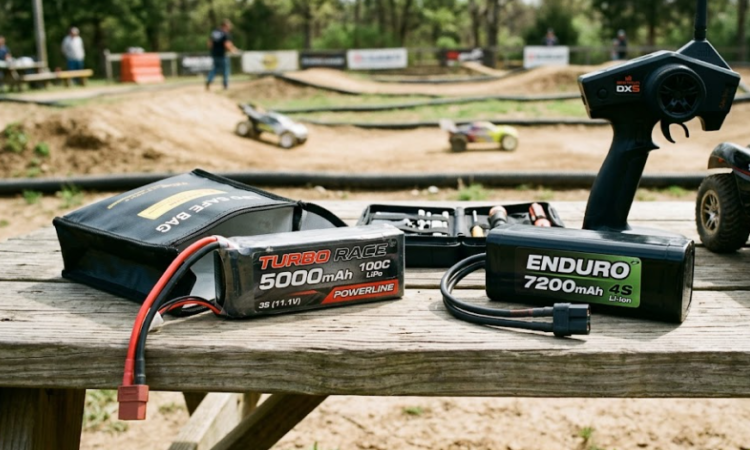
LiPo vs Li-Ion RC Car Battery – Which One Actually Wins
I killed my first LiPo pack in about six weeks because nobody told me storage voltage was a real thing. So when a buddy at the track handed me a Li-Ion pack and said “just try it,” I figured it was worth burning a Saturday to find out if the hype was real.
👉 Li-Ion RC Car Battery – Amazon
As an Amazon Associate I earn from qualifying purchases.
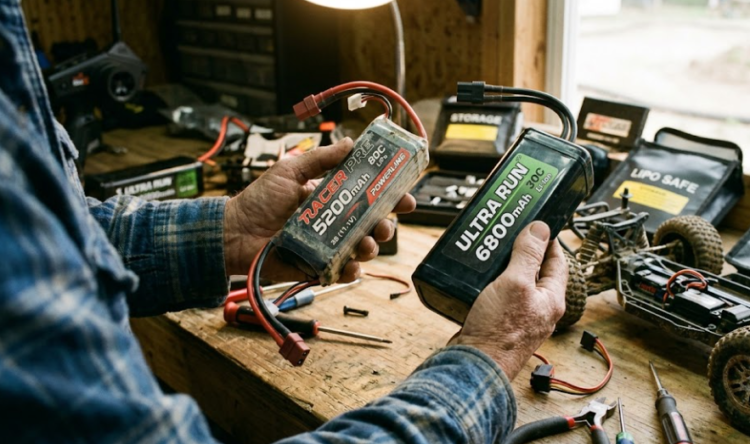
LiPo vs Li-Ion RC Car Battery-What I Wish Someone Told Me Sooner
Every RC forum thread turns into a shouting match the second someone brings up LiPo versus Li-Ion, and honestly, both sides have a point. LiPo has been the default for hobby-grade cars for over a decade because it hits hard and it’s everywhere. Li-Ion is the newer kid that’s been sneaking into more RC batteries lately, mostly because it lasts longer between charges and it’s a lot less dramatic if you treat it badly.
What LiPo Batteries Actually Bring to the Table
LiPo cells are built for aggressive discharge. That’s why bashers and racers love them, the packs can dump a huge amount of current in a hurry, which is exactly what you want when you’re mashing the throttle out of a corner or trying to clear a jump. The trade-off is that LiPo cells are touchy. Overcharge one, puncture one, or leave one sitting at full charge for a month, and you’re rolling the dice. I learned this the hard way when I left a pack in my garage over a hot weekend and came back to a puffy, useless brick.
Where Li-Ion Quietly Wins
Li-Ion cells trade a bit of that raw punch for chemistry that’s just more forgiving. They handle heat better, they don’t swell nearly as easily, and they hold their charge over time instead of slowly degrading if you forget about them in a drawer. For anyone who drives casually instead of racing every weekend, that difference in patience alone is worth a lot.
Runtime, Punch, and Real World Driving Differences
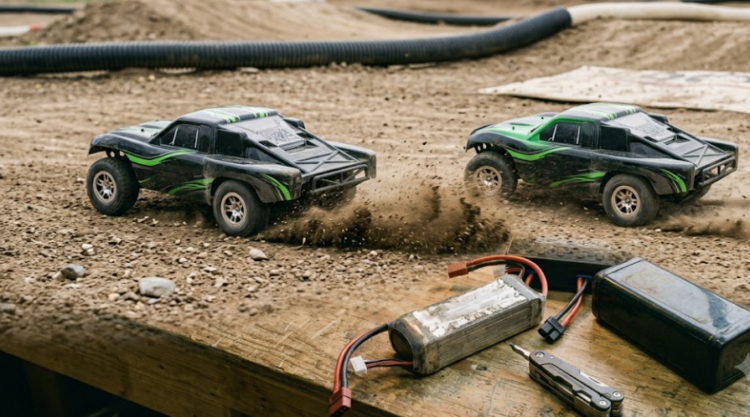
On paper, LiPo wins the drag race every time. In my own side-by-side test with two similarly sized packs in the same truck, the LiPo pack absolutely walked away from the Li-Ion pack in the first thirty seconds off the line. But once I settled into normal driving instead of full-send launches, the gap closed fast, and the Li-Ion pack actually outlasted the LiPo by close to twenty minutes.
Punch and Discharge Rate
If your driving style is mostly wide-open throttle, jumps, and short bursts of speed, LiPo’s higher C-rating is going to feel noticeably snappier. Li-Ion can still get you moving, it just doesn’t have that same instant slap of torque off the line.
Runtime Per Charge
This is where Li-Ion earns its keep. The energy density is higher, so for a similar size and weight, you’re getting more driving time before you’re back at the charging station. For a family bashing session in the driveway, that extra runtime means fewer interruptions and a lot less arguing over whose turn it is next.
Safety, Storage, and Not Burning Your Garage Down
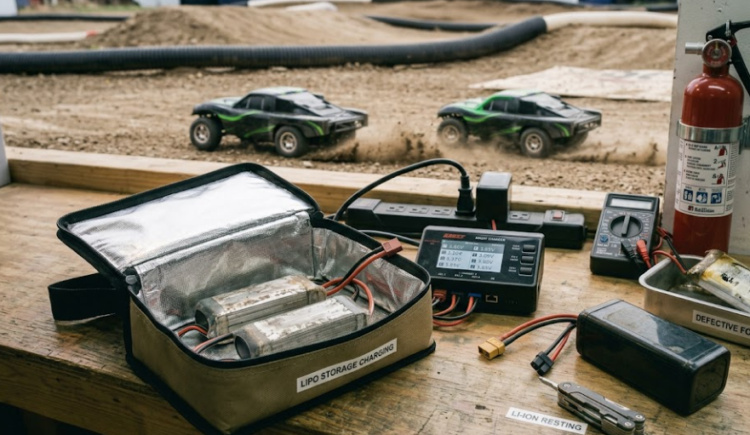
Nobody wants to talk about this part until something goes wrong, so let’s just get into it. LiPo requires actual discipline. You store it at storage voltage, not full charge, you charge it in a fireproof bag or container, and you never, ever leave it charging unattended. I didn’t take any of that seriously until I watched a pack swell up right in front of me at the field, and that was more than enough of a wake-up call.
LiPo Safety Habits That Actually Matter
The single biggest mistake I see beginners make is charging a LiPo pack the same way they’d charge a phone, plug it in and walk away. If you want your packs to actually last, a smart charger and a proper LiPo bag aren’t optional extras, they’re the baseline. I broke down exactly how I handle this now in my post on fast charging RC batteries without ruining them, which covers the routine that finally stopped me from cooking packs.
Li-Ion’s Safety Advantage
Li-Ion just doesn’t demand the same babysitting. It tolerates a wider range of charge levels without degrading fast, it’s more stable under heat, and the swelling issue that plagues LiPo packs is much rarer here. That doesn’t mean you can be careless, but the margin for error is noticeably wider.
Price, Lifespan, and Long Term Cost
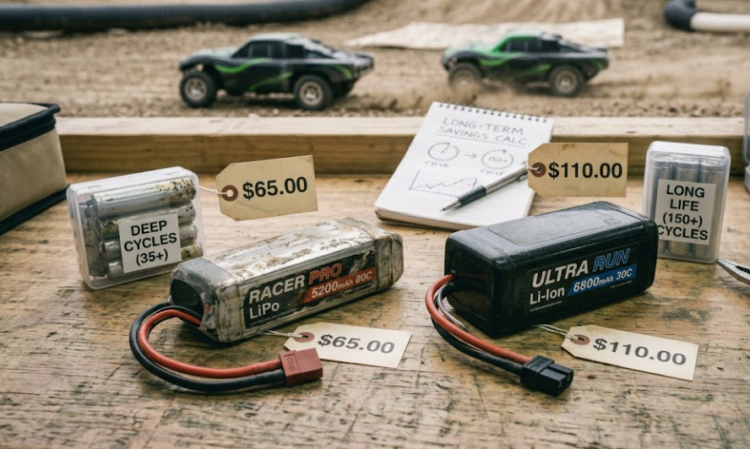
LiPo packs are usually cheaper upfront, which is a big reason they’re still the default recommendation for beginners. Li-Ion packs tend to cost more per pack, but they also survive more charge cycles before their performance starts dropping off, so the math evens out over a season or two of regular driving. If you’re trying to figure out which pack actually fits your truck and your budget before you buy anything, I put together a full breakdown in my guide on picking the right 4S LiPo battery without wasting money, which covers a lot of the same sizing and pricing questions that come up with Li-Ion too.
So Which Battery Should You Actually Buy
If you’re racing, jumping, or just chasing the fastest lap times you can get, LiPo is still the better tool for the job. The punch is real and nothing else quite matches it at this price point. If you’re driving casually, running longer sessions, or you’re the type of owner who forgets a battery in a bag for three weeks at a time, Li-Ion is going to save you money and headaches in the long run.
Neither pack is objectively better, they’re just built for different kinds of drivers. I still run LiPo in my race truck because I want every bit of that throttle punch, but the Li-Ion pack has permanently taken over bashing duty in my driveway truck. Figure out which kind of driving you actually do most, then build your battery choice around that instead of whatever pack has the loudest fans online.