I’ll be honest – brake problems are one of those things you don’t take seriously… until you have to.
A while back, my scooter started taking just a little longer to stop. Nothing crazy at first. Then came the squeaking. Then one day I had that moment where I squeezed the brake and thought, “Yeah… this isn’t right.”
If you’re here, you’re probably in that same situation.
The good news? Most scooter brake issues are way easier to fix than people think. I’ve dealt with this myself, and you don’t need to be a mechanic to get things back to normal.
Why Scooter Brakes Start Failing in the First Place
From my experience, brake problems don’t just randomly happen overnight. It’s usually small stuff that builds up.
The most common issue? Wear and neglect.
If you ride often—especially in stop-and-go traffic—your brakes are constantly working. Over time, parts wear down, things loosen up, and performance drops.
Here’s what I’ve personally run into:
- Brake pads wearing out faster than expected
- Brake cables loosening over time
- Dirt and grime messing with performance
- That one time I accidentally got oil near the brake (huge mistake)
It doesn’t take much to throw things off.
Signs Your Scooter Brakes Are Going Bad
Looking back, the signs were obvious. I just ignored them at first.
Here’s what to watch for:
1. Squeaking or Grinding Noise
Squeaking usually means your brake pads are dirty or worn.
Grinding? That’s worse—it likely means your pads are completely gone.
2. Longer Stopping Distance
This one’s the biggest red flag. If your scooter isn’t stopping like it used to, don’t wait.
3. Soft or Loose Brake Lever
If your brake lever pulls too easily or goes all the way in, something’s off—usually cable tension or hydraulic pressure.
How I Fixed My Scooter Brakes (Step-by-Step)
I used to think this stuff was complicated. Turns out, most fixes are pretty straightforward.
Adjusting the Brake Cable
This was actually the first thing I tried—and it worked instantly.
There’s usually a small adjustment barrel near the brake lever. I just turned it a bit to tighten the cable, and boom—better response right away.
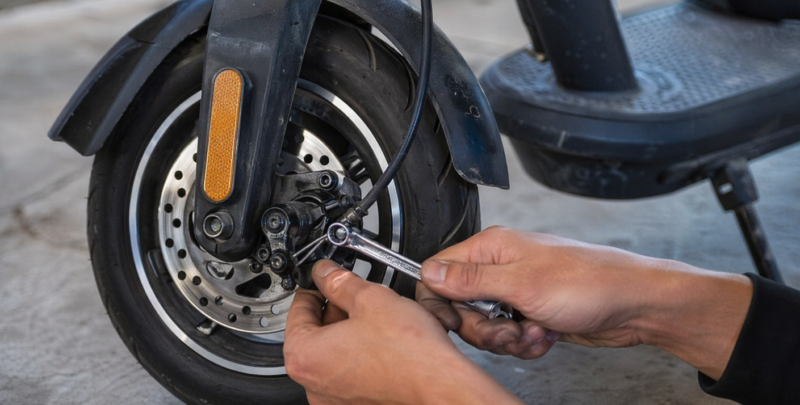
Replacing Brake Pads
Eventually, I had to replace the pads.
Not gonna lie, I thought it’d be a pain. It wasn’t.
- Took off the wheel
- Removed the old pads
- Installed new ones
- Made sure everything lined up properly
The difference was night and day.
If you’re riding regularly, this is something you’ll end up doing anyway.
👉 If you’re getting into DIY repairs, this guide helped me a lot:
https://trvbaby.net/electric-scooters/electric-scooter-maintenance-and-cleaning-guide/
Cleaning the Brake System
One time my brakes felt completely useless—and it turned out they were just dirty.
I grabbed a proper brake cleaner (don’t use random household stuff), sprayed everything down, and that fixed it.
Simple, but easy to overlook.
Bleeding Hydraulic Brakes
Okay, this one’s a bit more advanced.
If your brakes feel “spongy,” there might be air in the system. Bleeding the brakes removes that air.
I won’t lie—it takes patience. But it’s doable if you follow instructions carefully.
How I Avoid Brake Problems Now
After dealing with all that, I changed how I maintain my scooter.
Here’s what I do now:
Quick Checks Every Couple Weeks
Nothing crazy. Just:
- Listen for weird sounds
- Test braking power
- Look at pad condition
Keep Things Clean
I try to avoid puddles, mud, and anything oily.
If I do ride through something messy, I clean the brakes after.
Replace Parts Early
This was a big mindset shift.
It’s way cheaper (and safer) to replace brake pads early than to deal with bigger damage later.
👉 I also wrote about general riding safety here:
https://trvbaby.net/electric-scooters/electric-scooter-safety-tips-every-rider/
When I Decided to Go to a Pro
I’m all for DIY, but there are limits.
If you notice:
- Brake fluid leaking
- Uneven braking
- Problems that don’t go away after fixing
Just take it to a shop.
Sometimes it’s not worth guessing.
I used to think brake issues meant expensive repairs or complicated fixes.
Now I know better.
Most of the time, it’s just:
- Worn pads
- Loose cables
- Dirt buildup
That’s it.
Once you understand how your brakes work, it’s honestly not that intimidating anymore.
But one thing I won’t mess around with?
Bad brakes.
Fix them early, stay on top of maintenance, and your rides will feel smooth—and a whole lot safer.