
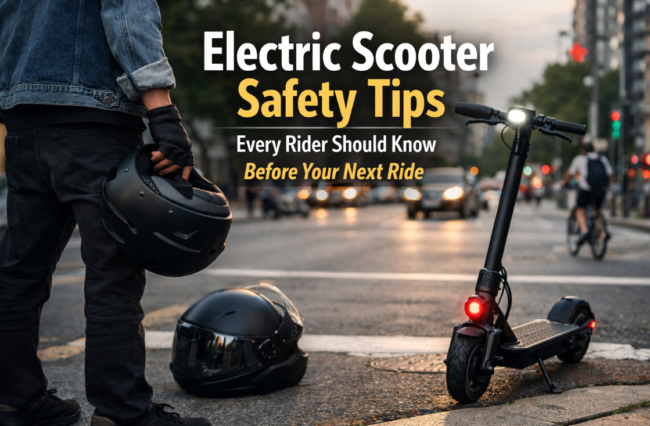
Electric Scooter Safety Tips Every Rider Should Know Before Your Next Ride
Electric scooters are everywhere now. Downtown, college campuses, quiet neighborhoods — you can’t walk a block without seeing one zip past.
I’ll be honest. The first few times I rode one, I didn’t think much about safety. I just stepped on, hit the throttle, and went. No helmet. No quick inspection. Just vibes.
That mindset? It’s exactly how people get hurt.
After a few close calls (including one sketchy intersection moment I’d rather forget), I started taking scooter safety seriously. If you ride regularly — commuting, running errands, or just cruising for fun — a few small habits can dramatically lower your risk.
Here’s what I’ve learned from actual riding experience.

Why Electric Scooter Safety Matters More Than Most People Think
Electric scooters look harmless. They’re compact. Lightweight. Almost toy-like.
But they’re not toys.
Most models hit 15–25 mph. That’s fast enough to do real damage if you hit a pothole or a car door swings open unexpectedly.
In cities like Austin and Los Angeles, emergency room visits related to scooters have increased over the past few years. That’s not meant to scare you — just to be realistic.
What surprised me most when I started riding regularly was how unpredictable the environment is. Wet pavement. Distracted drivers. Pedestrians glued to their phones. Uneven sidewalks. All of it adds up.
Once I stopped treating scooters casually, my rides got smoother and safer.

Wear the Right Gear (Yes, Even for Short Rides)
Helmet: Non-Negotiable
I used to skip it for “quick trips.” Big mistake.
A properly fitted helmet is the single best protection you have. Period.
If you’re unsure about helmet requirements, check local regulations. For example, California requires helmets for riders under 18, and some cities enforce additional rules.
Even where it’s not required, I wear one. I’ve seen enough near-misses to know better.
Gloves and Real Shoes Matter
The first thing that hits the ground in a fall? Your hands.
Light gloves improve grip and prevent nasty scrapes. And please — wear closed-toe shoes. Sandals and scooters do not mix.
I dress for the ride now, not just the destination. That mindset shift changed everything.

Control Your Speed (Your Ego Isn’t a Braking System)
Speed feels great. That quick burst of acceleration is addictive.
But almost every risky moment I’ve had involved going slightly too fast for the situation.
Crowded sidewalks? Slow down.
Intersections? Slow down.
Uneven pavement? Definitely slow down.
Scooters feel smaller than bikes or motorcycles, so it’s easy to underestimate speed. But physics doesn’t care how small your wheels are.

Learn and Respect Local Traffic Rules
Scooter laws vary depending on where you live. Some cities allow street riding only. Others restrict sidewalks. Some enforce speed caps.
Before riding regularly, I checked my local city transportation site. It took five minutes.
Knowing the rules protects you legally and builds respect between riders, drivers, and pedestrians.
Signal clearly. Stop at red lights. Yield when required.
Being predictable keeps you safer than being fast.
Stay Visible — Especially at Night
Scooter lights are usually… minimal.
If you ride at dawn, dusk, or nighttime, consider adding brighter front and rear lights. Reflective strips on a jacket or backpack make a bigger difference than you’d think.
Visibility is your invisible shield.
At intersections, I try to make eye contact with drivers. If they see you, they’re far more likely to yield.

Do a 60-Second Scooter Check Before Riding
I didn’t use to do this. Now I do it every time.
- Check tire pressure
- Test brakes
- Make sure throttle responds smoothly
- Look for loose parts
It takes less than a minute.
If you own your scooter, regular maintenance matters. If you rent, avoid damaged-looking units.
Small habits prevent big problems.
Be Extra Careful in Bad Weather
Rain changes everything.
Painted road lines become slick. Metal grates turn into slip hazards. Braking distance increases.
If I can avoid riding in heavy rain, I do. If not, I cut my speed way down and avoid sharp turns.
Smooth, controlled movements are your friend.
Watch for Road Hazards
Scooters have small wheels. That means potholes and gravel are bigger threats than they would be on a bike.
I learned to scan 10–15 feet ahead instead of staring down at the front wheel. That one adjustment improved my reaction time dramatically.
Also — don’t jump curbs. Social media makes it look easy. Real life is less forgiving.
Adopt a Defensive Riding Mindset
This might be the most important tip.
Assume drivers don’t see you.
Assume pedestrians might step sideways suddenly.
Assume car doors can open without warning.
When you expect unpredictability, you react faster and smoother.
Instead of reacting to danger, start anticipating it.
That mindset shift turned me from a casual rider into a responsible one.
Know When to Step Off
Sometimes the smartest move is simply walking your scooter.
Extremely crowded sidewalks. Complicated intersections. Event traffic. Pride isn’t worth a collision.
Thirty seconds of walking beats weeks of recovery.
Ride Smart So You Can Ride Long
I love electric scooters. They’re efficient, affordable, and honestly fun.
But convenience should never override caution.
The safest riders aren’t necessarily the most skilled. They’re the most consistent with smart habits:
- Wear protective gear
- Control speed
- Stay visible
- Respect traffic laws
- Inspect your scooter
- Ride defensively
These aren’t complicated changes. They’re practical choices.
And those choices decide whether your ride ends with a smile — or a hospital bill.
If you apply even half of these electric scooter safety tips, you’ll dramatically improve your chances of riding confidently for years.
Ride smart. Your future self will thank you.
Related Posts
👉 Fastest Electric Scooters in 2026 – What Actually Delivers Real Speed
👉 Best Scooter for College Students – Smart Picks That Actually Make Campus Life Easier
👉 Best Electric Scooter Under $1000 – What Actually Held Up After Real Riding