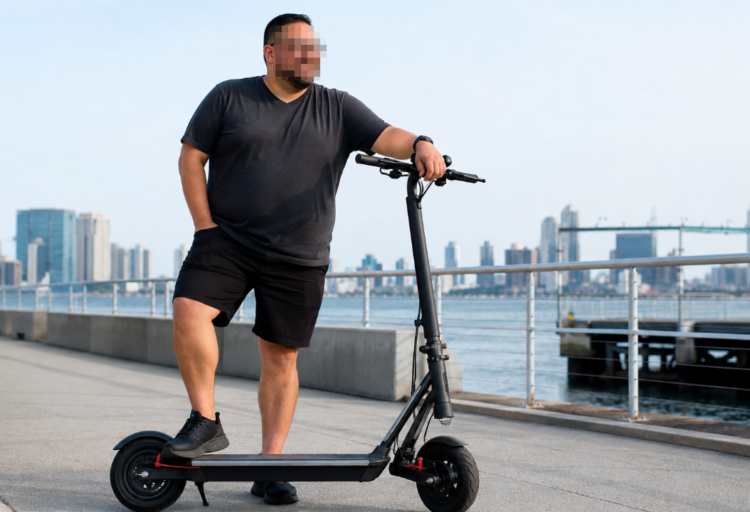
Best Scooter for Heavy Riders
A few years ago, I made the mistake of buying an electric scooter based on photos and marketing claims.
On paper, it looked perfect. Great range, decent speed, and hundreds of positive reviews. What those reviews didn’t mention was how different the scooter felt once a heavier adult stepped on it. Hills became a struggle, acceleration felt sluggish, and every crack in the pavement seemed twice as noticeable.
That experience taught me something important: finding the best scooter for heavy riders isn’t about buying the most expensive model. It’s about understanding which features actually matter in the real world.
Why Most Scooter Reviews Miss the Point
If you’ve spent any time researching scooters online, you’ve probably noticed that most reviews focus on top speed and battery range.
Honestly, those numbers only tell part of the story.
When you’re a heavier rider, things like frame strength, suspension quality, motor power, and deck space often matter more than whether a scooter can go 25 mph or 28 mph.
I learned this after testing several scooters over the years for commuting, weekend rides, and everyday errands. Some looked impressive on the spec sheet but felt uncomfortable after ten minutes. Others weren’t flashy at all but delivered a smooth and confident ride every single day.
If you’re new to electric scooters in general, I recommend checking out my guide on city commuting scooters:
https://trvbaby.net/electric-scooters/best-electric-scooters-for-city-commuting/
That article covers many of the everyday factors that manufacturers rarely talk about.
Why Weight Capacity Matters More Than You Think
One of the biggest mistakes people make is treating the published weight limit as a target.
In reality, the listed capacity should be viewed as the absolute maximum, not the ideal operating range.
For example, if a scooter is rated for 265 pounds and you weigh 250 pounds, the scooter will technically work. But performance may not be as impressive as the marketing suggests.
Acceleration becomes slower.
Battery range decreases.
Hill-climbing ability suffers.
Components experience more stress.
That’s why I usually recommend choosing a scooter with extra capacity beyond your current weight whenever possible.
I also think this provides a much more comfortable ownership experience over the long run.
What Makes the Best Scooter for Heavy Riders?
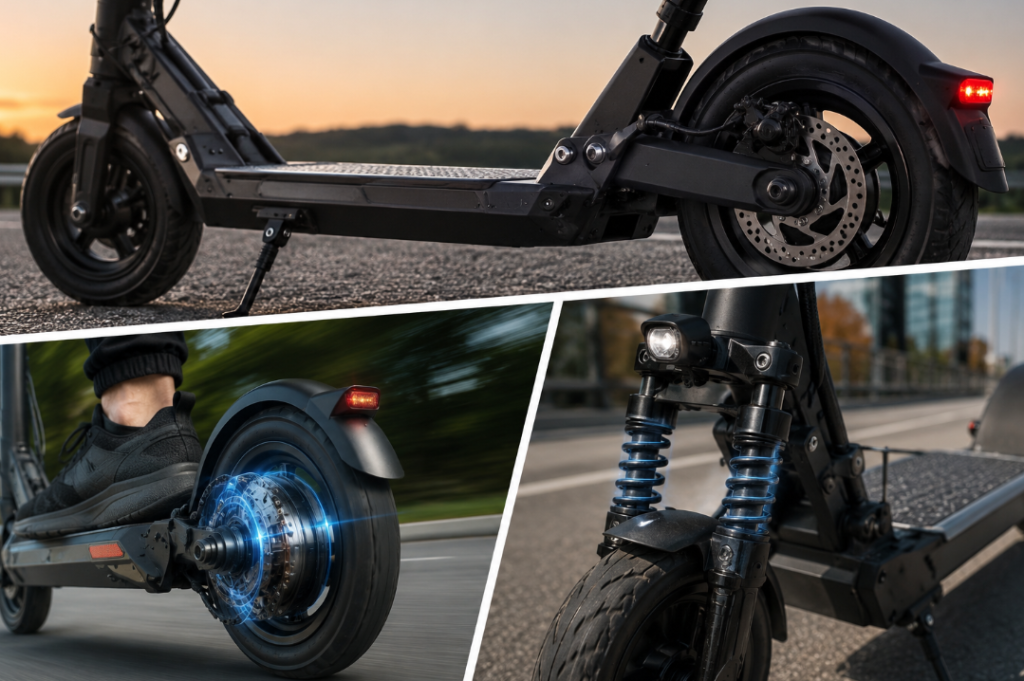
A Strong Frame Changes Everything
The frame is the foundation of the entire scooter.
A quality aluminum alloy frame feels solid under your feet and inspires confidence when riding over uneven roads.
Cheaper scooters often develop wobble over time. Once that starts happening, every ride becomes less enjoyable.
Motor Power Matters More Than Advertised Speed
Many first-time buyers focus on top speed.
Personally, I’d rather have a scooter with strong torque than one that advertises a slightly higher maximum speed.
More power means:
Better acceleration.
Improved hill climbing.
Less strain on the motor.
More consistent performance during daily use.
For heavier riders, this difference becomes obvious almost immediately.
Suspension Is Worth Every Penny
I didn’t fully appreciate suspension until I spent several weeks riding a scooter without it.
Every pothole felt like a personal attack.
A good suspension system absorbs impacts before they reach your knees, wrists, and lower back.
In my opinion, suspension contributes more to ride comfort than almost any other feature.
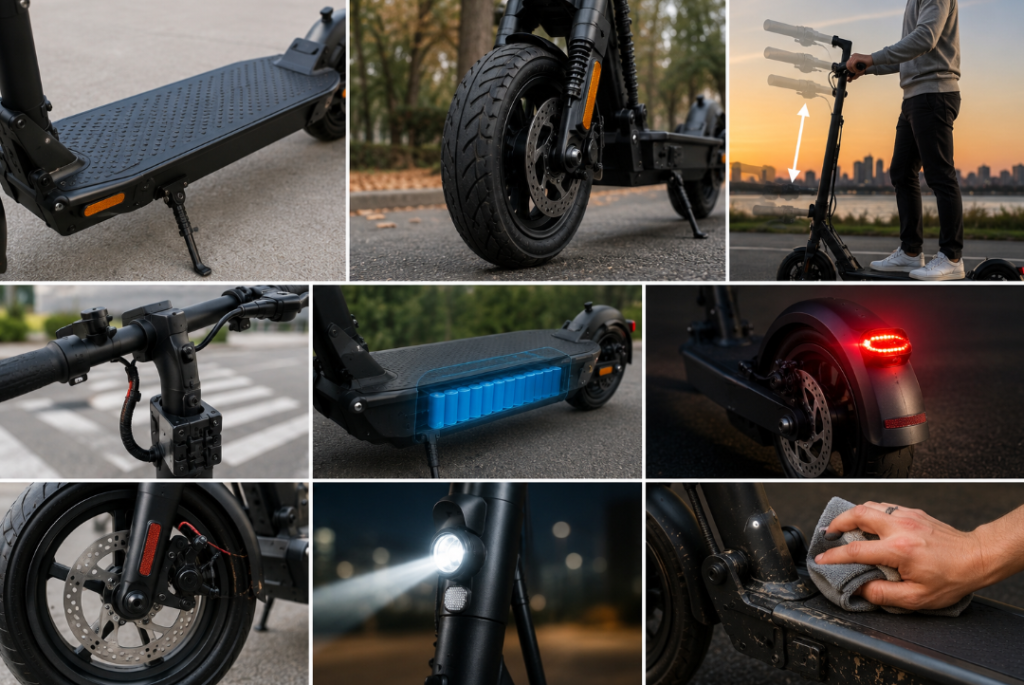
Comfort Features That Actually Matter
Wider Decks Create More Stability
A larger deck gives your feet room to move naturally.
That may sound like a small detail, but during a 20-minute commute, it makes a huge difference.
Many heavier adults find wider decks significantly more comfortable than compact designs.
Larger Tires Improve Ride Quality
Tire size affects comfort, traction, and confidence.
Pneumatic tires absorb road imperfections much better than solid tires.
The result is a smoother ride and better overall control.
Adjustable Handlebars Reduce Fatigue
The wrong handlebar height can quickly make a ride uncomfortable.
Scooters that allow adjustment help maintain a natural riding posture and reduce strain on your shoulders and wrists.
Battery Range – Ignore the Marketing Numbers
Here’s a lesson I learned the hard way.
Manufacturers test battery range under ideal conditions.
Flat roads.
Perfect temperatures.
Lightweight riders.
Real-world conditions are rarely that friendly.
Heavier riders naturally consume more energy, which means actual range often falls below the advertised figure.
My personal rule is simple.
If I think I need 20 miles of range, I buy a scooter rated for at least 30 miles.
That extra buffer removes a lot of stress from everyday riding.
Safety Becomes Even More Important
As rider weight increases, safety features become more important.
Reliable braking systems should never be treated as optional.
The same goes for tire quality, visibility, and overall stability.
I also recommend reading my electric scooter maintenance guide:
https://trvbaby.net/electric-scooters/electric-scooter-maintenance-and-cleaning-guide/
A surprising number of ride quality issues actually come from neglected maintenance rather than poor scooter design.
Common Mistakes Heavy Riders Make
The most common mistake is chasing the cheapest option.
I’ve done it.
Many people have.
The problem is that budget scooters often cut corners in exactly the areas heavier riders need most: frame strength, suspension, motor power, and braking performance.
Another mistake is focusing entirely on speed.
A scooter that feels comfortable after six months is far more valuable than one that is only exciting during the first week.
Finding the best scooter for heavy riders isn’t really about weight.
It’s about comfort.
It’s about confidence.
And it’s about choosing a scooter that feels just as good after hundreds of miles as it did on day one.
I also believe that most riders are happier when they focus on real-world usability instead of marketing numbers. A strong frame, quality suspension, dependable brakes, and realistic range will improve your experience far more than an extra few miles per hour.
After testing enough scooters over the years, that’s the lesson that keeps proving itself over and over again.
The best scooter isn’t the one with the biggest specs.
It’s the one that makes you want to keep riding.