How to Choose the Best RC Battery Charger Without Wasting Money
You can buy the fastest RC car on the market, throw on expensive upgrades, and spend way too much money on aluminum parts you probably didn’t actually need (ask me how I know), but if your charger is bad, the whole RC experience gets annoying fast.
A lot of beginners focus entirely on the RC car itself and barely think about the charger. I did the exact same thing years ago. I figured, “A charger is a charger.”
Yeah… not exactly.
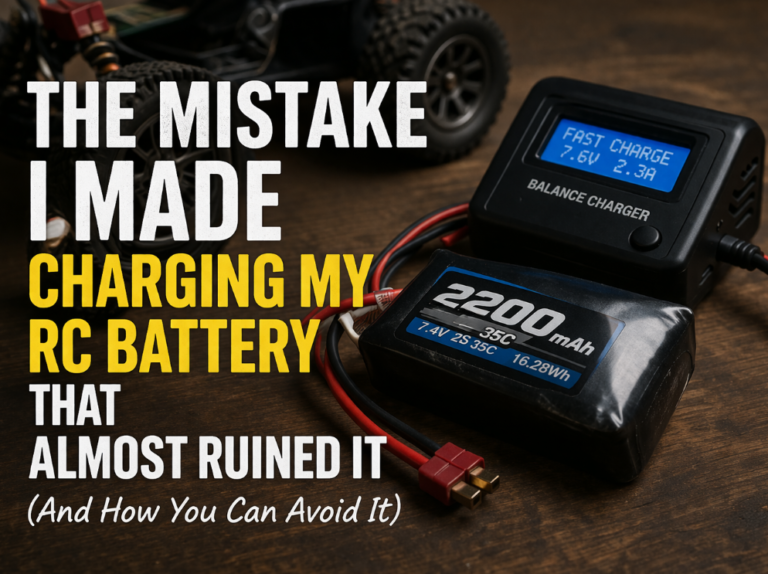
The first cheap charger I bought took forever to charge batteries, got weirdly hot, and eventually helped destroy one of my LiPo packs. That was the moment I realized a good charger is not some optional accessory. It’s one of the most important parts of the hobby.
Honestly, once you use a proper smart charger with balance charging and storage mode, you’ll never want to go back.
If you’re brand new to RC, you may also want to read my beginner breakdown on what RTR RC cars actually mean before buying anything:
What Does RTR Mean in RC Cars?
Why Your RC Battery Charger Actually Matters
Most people think chargers just refill batteries.
Not true.
A good RC charger helps:
- Protect battery lifespan
- Charge more consistently
- Prevent overheating
- Reduce puffed LiPo packs
- Improve charging speed
- Keep cell voltages balanced
- Save money long term
Cheap chargers usually cut corners on safety and balancing. At first, everything seems fine… until batteries start losing runtime or swelling earlier than expected.
And replacing LiPo packs constantly gets expensive fast.
In my opinion, a solid charger is one of the few RC accessories that’s worth spending extra money on immediately.
Know Your Battery Type First
Before buying any charger, you need to know what kind of batteries you’re using.
This sounds obvious, but beginners mess this up all the time.
I definitely did.
LiPo Batteries
LiPo batteries are the most popular option in modern RC cars because they deliver strong power and lighter weight.
But they also require proper charging habits.
If you use LiPo batteries, your charger absolutely needs:
- Balance charging
- Cell monitoring
- Storage mode
- Automatic cutoff protection
Skipping balance charging is one of those “it’ll probably be okay” mistakes that eventually bites people later.
Trust me.
NiMH Batteries
NiMH packs are more beginner-friendly and less sensitive than LiPo batteries.
They’re easier to maintain, but they still benefit from smart charging features that prevent overheating and overcharging.
LiHV Batteries
LiHV batteries operate at slightly higher voltages than regular LiPos.
Not every charger supports them, so compatibility matters.
One of the most frustrating beginner mistakes is buying a charger first and realizing later it doesn’t support your batteries.
Single Port vs Dual Port Chargers
This depends entirely on how you use your RC cars.
Single Port Chargers
Single-port chargers are great if:
- You only run one battery at a time
- You drive casually
- You mostly run weekends
- You want something simple
Honestly, most beginners are perfectly fine starting here.
Dual Port Chargers
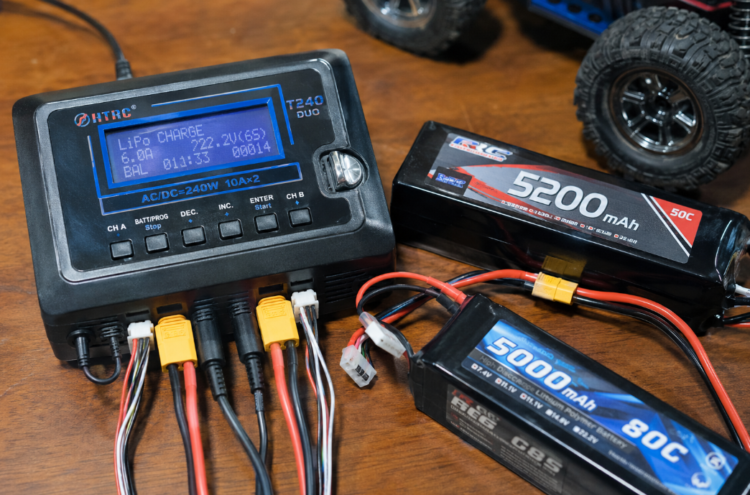
Dual-port chargers let you charge two batteries simultaneously.
And once you own multiple batteries, this becomes incredibly useful.
I originally thought dual-port chargers were overkill.
Then I got tired of sitting around waiting for batteries to charge one at a time.
Now I honestly think most RC hobbyists eventually upgrade to dual-port chargers anyway.
Pay Attention to Wattage (Most Beginners Ignore This)
This is probably the most overlooked charger spec.
Higher wattage chargers can:
- Charge batteries faster
- Handle larger packs
- Support future upgrades
- Run higher cell counts more comfortably
A tiny 50W charger may work fine for small beginner setups.
But once you start running larger 4S or 6S batteries, low wattage becomes painfully slow.
Personally, I think 100W–200W is the sweet spot for most hobbyists.
Even if you don’t need that much power yet, you probably will later.
And in RC, upgrading later usually costs more than buying slightly better equipment the first time.
AC vs DC Chargers
This part confuses almost everyone at first.
AC Chargers
AC chargers plug directly into wall outlets.
They’re convenient and beginner-friendly.
Perfect for home use.
DC Chargers
DC chargers need an external power supply or car battery.
They’re popular with experienced hobbyists because they often offer higher performance.
AC/DC Combo Chargers
These support both wall outlets and DC input.
Honestly, this is probably the best long-term option for most people.
If you charge at home but occasionally drive at RC tracks or parks, AC/DC flexibility becomes really useful.
Speaking of driving locations, I actually wrote about the safest places to run RC cars because a surprising number of beginners accidentally get themselves into trouble:
Where Can You Safely Drive an RC Car?
Safety Features You Should Never Ignore
This stuff matters way more than beginners realize.
A good charger should include:
Balance Charging
Mandatory for LiPo batteries.
Uneven cells can damage packs and reduce performance.
Temperature Protection
Prevents overheating during charging.
Automatic Charge Cutoff
Stops charging once the battery is full.
Storage Mode
Honestly, storage mode is one of the most underrated features in RC.
LiPo batteries should not stay fully charged for long periods.
Leaving packs fully charged for weeks can absolutely damage them over time.
I learned that lesson the expensive way.
Smart Chargers Are 100% Worth It
Modern smart chargers make RC life dramatically easier.
Many now include:
- Real-time voltage monitoring
- Touchscreen controls
- Battery diagnostics
- Preset charging profiles
- Firmware updates
- USB connectivity
- Automatic battery detection
Some even remember your preferred charging settings automatically.
Once you get used to that convenience, basic chargers start feeling ancient.
Common RC Charger Mistakes Beginners Make
Buying the Cheapest Charger Possible
Cheap chargers often skip important safety protections.
And weirdly enough, the cheapest charger can become the most expensive decision later when batteries start dying early.
Ignoring Future Upgrades
A lot of people buy chargers only powerful enough for their current setup.
Then six months later they upgrade vehicles and need another charger.
Charging Too Aggressively
Fast charging sounds cool until battery lifespan starts dropping.
Sometimes slower charging is healthier long-term.
Skipping Balance Charging
I used to skip balancing occasionally because I was impatient.
Eventually one battery puffed badly enough that I had to throw it away completely.
Lesson learned.
So What’s the Best RC Battery Charger?
Honestly, there isn’t one perfect answer.
It depends on:
- Your budget
- Battery type
- Number of batteries
- Vehicle size
- Future upgrade plans
But generally speaking:
- Beginners → Reliable AC smart charger around 100W
- Intermediate users → Dual-port smart charger
- Advanced hobbyists → High-wattage DC charger with external power supply
Instead of chasing the most expensive charger immediately, focus on:
- Reliability
- Safety features
- Compatibility
- Expandability
Those matter way more.
A good RC battery charger doesn’t just charge batteries faster.
It protects your investment, saves frustration, and honestly makes the hobby way more enjoyable.
I genuinely think chargers are one of the few RC accessories worth buying properly the first time.
Because once you’ve dealt with swollen batteries, inconsistent charging, or waiting three hours for a pack to finish charging… you realize very quickly why experienced RC hobbyists care so much about chargers.
Take your time, think about your future RC plans, and buy something you can grow into.
Your batteries — and your wallet — will thank you later.