RC Car Treads on Gravel: What Actually Changes on Loose Terrain
RC car treads on gravel matter more than most people expect, especially the first time a car that handles fine on pavement suddenly starts sliding around on loose stone.
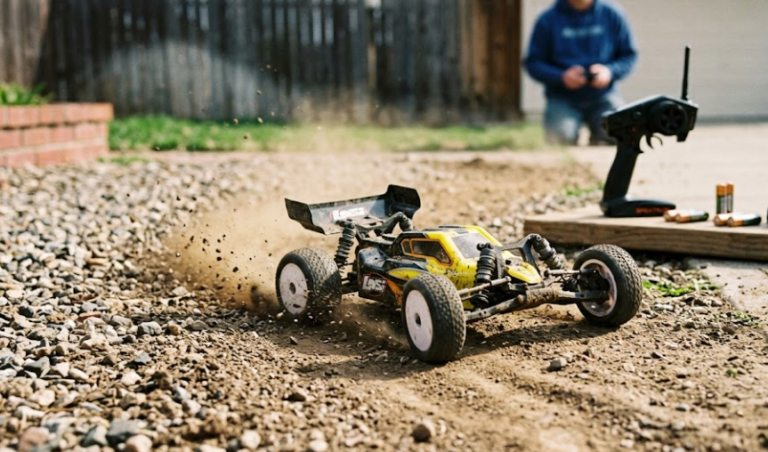
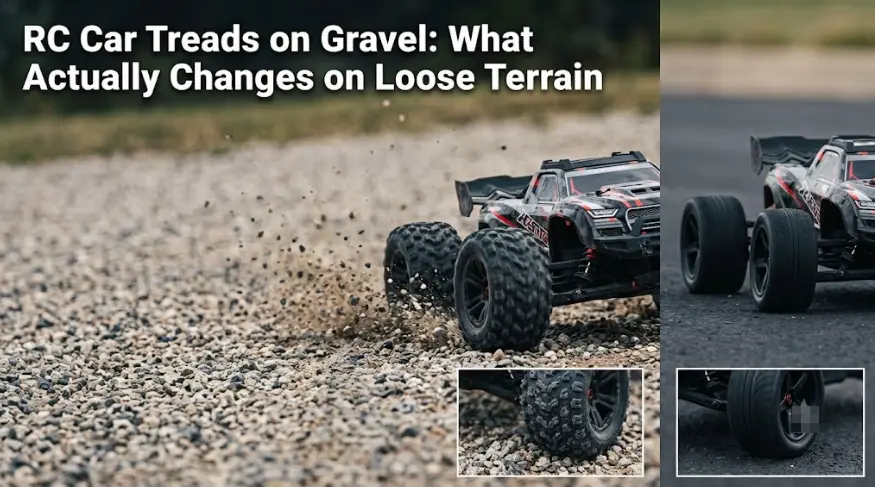
Loose gravel moves the moment torque hits the ground. A car that feels planted on a driveway or a basketball court can start wandering, digging, or spinning in place as soon as it rolls onto a gravel lot or a loose shoulder. That shift is usually what sends people looking at their tires first.
Tread definitely helps on gravel, but changing tires won’t automatically fix every traction problem.
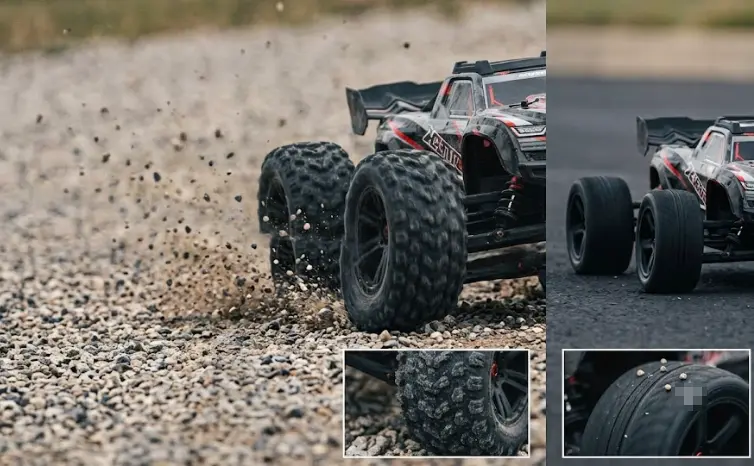
On pavement, a smoother or lower-profile tire usually performs fine, since the surface itself provides most of the grip. Gravel works differently. The surface isn’t solid. Stones roll and shift under load, so the tire isn’t gripping a fixed surface so much as trying to bite into something that keeps moving underneath it.
Why Gravel Trips Up the Wrong Tires
Tread depth and pattern matter here in a way they don’t on hard surfaces. Deeper, more aggressive lugs have more edges to dig into loose material. They also leave more space between the lugs for stone and dirt to get pushed aside instead of packing up underneath the tire. A smoother tire, or one built mainly for on-road grip, tends to ride on top of the loose layer instead of getting into it. That’s usually the “skating” feeling people describe.
Block-pattern tires, the kind common on short-course trucks and basher-style buggies, tend to handle gravel more predictably than a slick or fine-rib tire built for smoother terrain. It’s not that a smoother tire has zero grip. The grip just becomes inconsistent, since the tire keeps finding and losing contact as the gravel underneath shifts.
New Tires Won’t Fix Everything
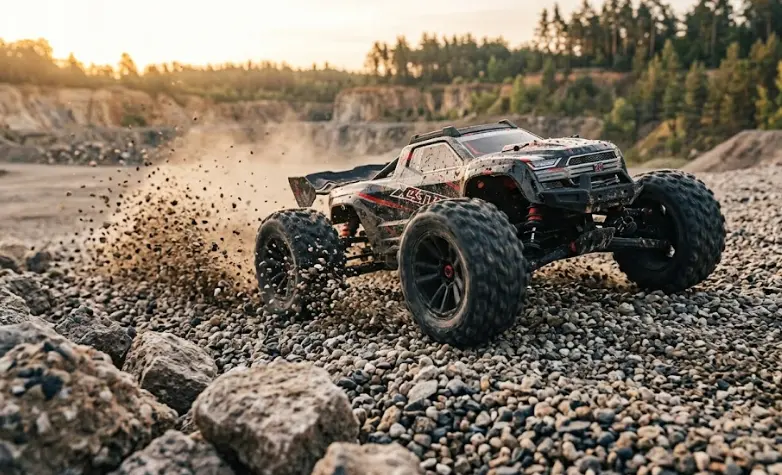
Tread pattern is only one part of what’s happening on gravel, though. Weight balance, foam or insert density, and how aggressively power gets sent to the wheels all affect how a car handles loose surfaces. A car with aggressive tread but very stiff suspension can still bounce and skip across gravel, because the suspension isn’t letting the tire stay in contact long enough to use that tread in the first place.
Gravel size matters too. Fine pea gravel behaves differently than larger, chunkier landscaping rock. Smaller gravel is usually manageable with a moderately aggressive all-terrain tread. Bigger stones can still throw a car around even with good tread, especially once the rocks get close to the size of the tread blocks themselves. At that point the tire ends up climbing over rocks instead of gripping between them.
What’s Worth Checking Before Buying New Tires
If a car already has decent all-terrain or off-road tires and is still struggling on gravel, tread probably isn’t the real issue. It’s worth checking front-end weight, throttle response, and insert firmness before assuming new tires will fix it. Softer inserts let the tire flex and conform to uneven ground, which sometimes makes a bigger difference than the tread pattern molded into the tire.
For a car still running stock on-road or low-profile tires, though, a proper off-road tread is usually the first upgrade worth trying. The difference tends to show up fast — less wheelspin, less sideways drift under acceleration, and a car that tracks in the direction it’s pointed instead of hunting for grip with every throttle input.
👉 RC Car Tire Types Explained – Asphalt vs Dirt
👉 Best RC Car Tires for Different Surfaces