RC Car Not Moving? What I Check Before Replacing the Motor
RC Car Not Moving? It’s easy to assume something expensive has gone wrong. The annoying part is when everything looks normal, but the car still won’t move.
The lights work, the transmitter connects, and the steering responds when I move the stick. But when I pull the throttle, the car just sits there. I ran into this with a basher that had been sitting for a few months. Since the motor is what drives the wheels, that was the first part I suspected. Before replacing the motor, I’d check the ESC and its connections first.
Could the ESC Capacitor Be the Problem?
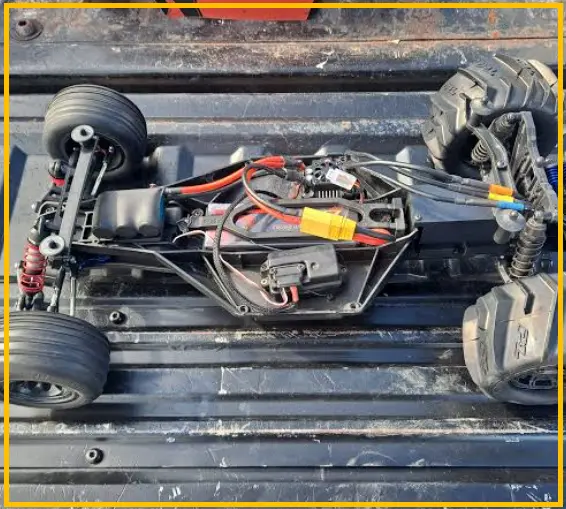
One part worth checking is the capacitor pack attached to the ESC. On many brushless setups, you’ll find a few capacitors near the ESC’s battery or power connections. They help handle electrical ripple and voltage spikes, so they’re worth checking if you’re chasing an ESC-related problem.
A damaged capacitor can cause problems in the ESC’s power circuit, but the symptoms depend on the ESC and the type of failure. In some cases the electronics may still power on even though the motor won’t run.
If you notice a capacitor with a bulging top, that’s a reason to stop and inspect the ESC more closely. It can be a sign of damage, but it doesn’t tell you the entire story by itself.
A Few Checks Before Blaming the ESC
I wouldn’t start by opening the ESC or pulling the motor apart. There are a few quick checks that can narrow things down first.
With the battery disconnected, spin the wheels by hand. Do they move smoothly, or is there resistance and grinding? If something feels off mechanically, I’d look at the drivetrain before assuming the ESC is bad.
Next, pay attention to what the ESC does when you connect the battery. Does it play the usual startup tones, or is something different? Check the manual for your specific ESC before trying to interpret the beeps, because the patterns aren’t the same across every brand.
How I’d Check the Motor
If the drivetrain feels normal and the ESC doesn’t show any obvious warning signs, I’d move on to the motor and its wiring.
With the motor disconnected from the ESC and the vehicle powered down, check whether the motor shaft turns smoothly. A little magnetic resistance can be normal on a brushless motor, so don’t treat that alone as proof that the motor is faulty or healthy.
If the shaft feels rough, locks up, or has an unusual amount of play, the motor deserves a closer look. That could point to a bearing or mechanical problem, but you’ll need more testing to confirm an electrical fault.
If you’re still not sure whether the ESC is the problem, I wrote a separate guide that goes into more detail about common ESC failure symptoms and the checks I’d start with: a closer look at ESC failure symptoms.
I’d Check Before Buying a New Motor
I wouldn’t buy a replacement motor just because the car won’t move. I’d want to rule out the ESC, wiring, and battery connection first.
A new motor won’t help if the real problem is somewhere else in the power system. That’s why I’d check the basics before spending money on another part.
A few basic checks can help you narrow down the problem before you start buying replacement parts. Sometimes the motor isn’t the part that needs replacing.