RC Car Stutters on Acceleration: What to Check First
RC car stutters on acceleration, and it only happens in the first few feet from a standstill. If that sounds familiar, you’re most likely dealing with cogging on a sensorless brushless setup. The car shudders, maybe buzzes or growls, and then smooths out once the wheels are turning.
Most of the time, it comes down to the load at launch: gearing, drivetrain drag, or a battery that sags the moment you pull the trigger. The motor itself is rarely the culprit, so there’s no need to start swapping parts just yet.
Why a Sensorless Setup Does This
A sensorless ESC figures out where the rotor is by reading the back-EMF the motor generates while it spins. At a dead stop, there isn’t any, so the ESC has to get the motor moving without knowing its exact position. If the load is light enough, the motor catches on and takes off. If the load is too heavy, the rotor can’t keep up with the ESC’s timing, and you get that stuttering.
That’s why the problem often fades once the car is rolling. The ESC can read the motor’s back-EMF once it’s spinning.
Lift the Wheels First
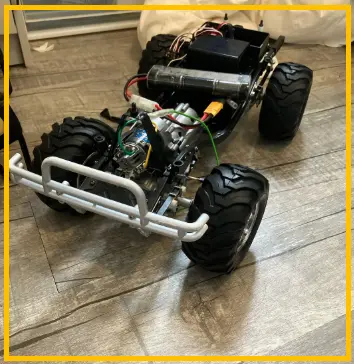
Before changing anything, put the car on a stand or hold it up so the wheels are free, then bring the throttle up slowly.
If it spins smoothly in the air but stutters on the ground, look at the gearing, drivetrain drag, and power delivery. If it stutters even with the wheels off the ground, check the motor wire connections and solder joints first. Then make sure the motor and ESC are compatible before digging into the ESC settings.
Sounds almost too basic, but it can save you a lot of guesswork.
Check the Gear Mesh and Pinion
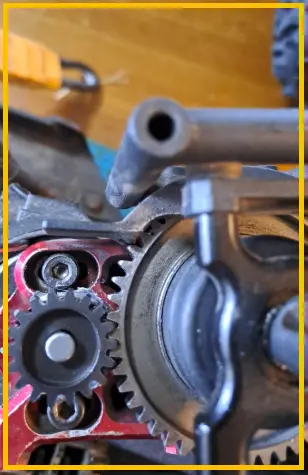
A pinion that’s too big for the spur, or a gear mesh that’s too tight, makes the motor work against a lot of resistance. Tires can be part of the problem, too. A heavy truck with tall tires and aggressive gearing puts a lot of demand on the motor at 0 RPM.
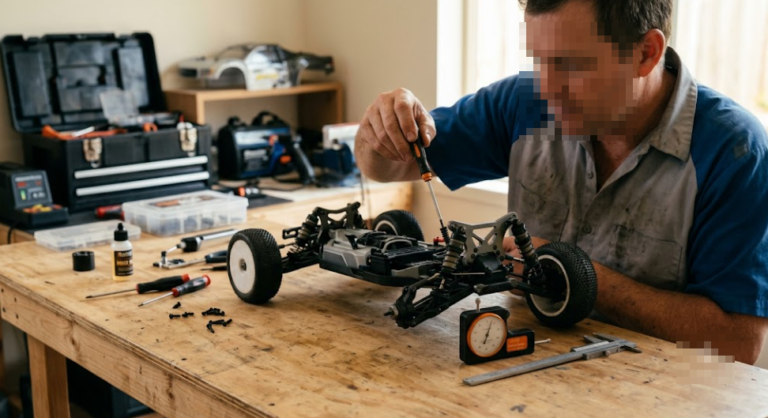
Pull the motor out of mesh and spin the drivetrain by hand. It should turn freely, without tight spots or grinding. Then check the gear mesh itself. A little play between the pinion and spur is normal. Dropping a few teeth on the pinion is a cheap test, though you’ll give up some top speed.
Differentials, bearings, and, on some cars, an overly tight belt can add drag, too. It’s easy to blame the electronics when a dry bearing is the real problem.
Could the Battery Be the Problem?
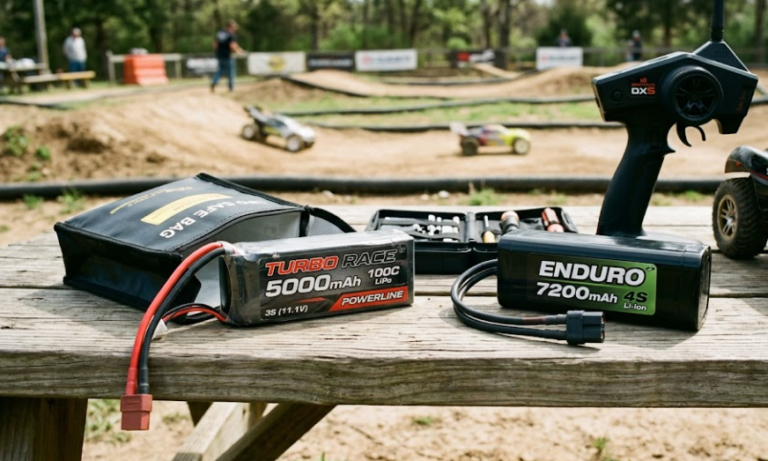
A launch puts a lot of demand on the battery. If the pack is old, doesn’t have enough discharge capability for the motor, or is nearly empty, the voltage can drop right when the ESC needs it most. A weak pack can make an otherwise good setup stutter.
Connectors matter, too. A dirty or loose Deans, XT60, or XT90 connector, or a poor solder joint, can add resistance that’s hard to spot. Check for loose connections, and pay attention if a connector gets unusually warm after a short run.
If a fresh, healthy pack makes the car launch smoothly, you’ve probably found the problem.
Where ESC Settings Come In
Many ESCs let you adjust timing, punch, and drive frequency through a program card or an app. Lowering timing is worth trying on some setups, since high timing can make low-speed behavior rougher with certain motor and ESC combinations.
Punch is less straightforward. Depending on the ESC, a softer punch can calm a hard launch, while a bit more start power may help the motor catch. There’s no universal setting that works for every setup.
Write down the original values, change one setting at a time, and test after each change. That way, you’ll know what actually helped.
| What you notice | What I’d look at first |
|---|---|
| Stutters only on the ground | Gearing, drivetrain drag, tire size |
| Stutters with wheels in the air | Motor wires, solder joints, ESC and motor compatibility |
| Worse with an older or nearly empty pack | Battery condition, connectors |
| Improves after a setting change | Keep the new setting and note it |
If It Still Cogs, Is Sensored the Answer?
A sensored motor and ESC use a sensor cable to read the rotor’s position, so the ESC doesn’t have to guess during a standing start. That’s why crawlers and drift cars often use sensored setups, where smooth low-speed control matters more than raw speed.
Switching to a sensored setup costs more, so I’d work through the cheaper fixes first. If you’re already running sensored and still get stuttering, check the sensor cable and its plug. A damaged cable or loose connection can cause similar symptoms, and the problem isn’t always obvious.
Before replacing the motor or ESC, make sure you’ve ruled out the simpler causes. Cogging can be frustrating, but a few basic checks will often point you in the right direction.
Recommended Reading
👉 Why Is My RC Car ESC Flashing Red and Beeping?