RC Car Grinding Noise From Rear Differential: Causes and Fixes
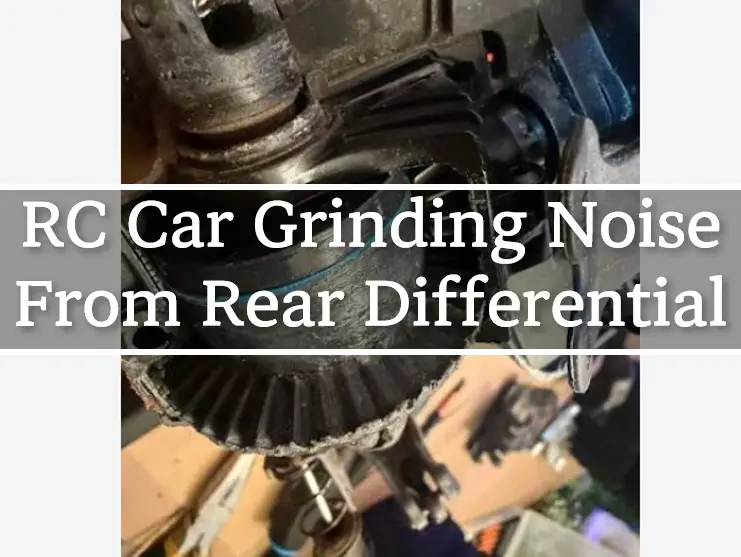
An RC car grinding noise from the rear differential often points to worn or stripped gears, incorrect gear mesh, loose bearings, or contaminated diff oil: worn or stripped gears inside the diff, a poorly set mesh between the ring gear and the pinion (or bevel) gear, loose bearings, or old diff oil carrying metal particles. Shimming can fix a loose mesh, but it won’t bring back teeth that are already chewed up. If the gears are damaged, they need to be replaced.
Pick the car up, spin the rear wheels by hand, and listen. A smooth diff is close to silent. A gritty feel or a scraping sound at certain points in the rotation tells you the problem is mechanical and worth opening up before the next run.
Worn or Stripped Gears Inside the Diff
Hearns Hobbies, a hobby retailer, describes a few different diff sounds. Clicking in turns points to diff gears starting to wear. A harsh crunch under hard acceleration or braking points to stripped diff gears or a damaged outdrive.
Catching the clicking early may mean only reshimming or replacing the internal gears. If the crunch has already started, plan on replacing parts, and look at the outdrives while you’re in there.
Ring Gear and Pinion Mesh That Is Off
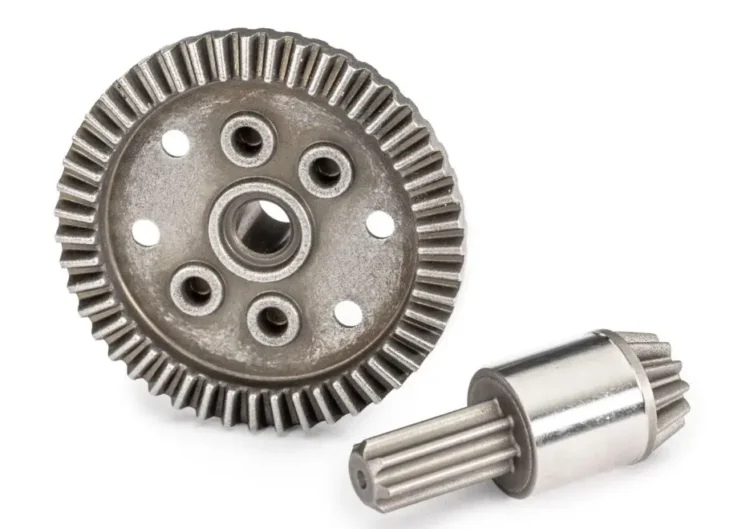
In a shaft-driven car, the ring gear in the diff meshes with a bevel gear (the pinion) at the end of the driveshaft. Petit RC’s diff shimming guide says a mesh that’s too loose will be noisy and wear the gears faster, while one that’s too tight puts pressure on the bevel gear, driveshaft, and bearings.
Both extremes are hard on the drivetrain. A loose mesh grinds under load. A tight one runs hot and wears the gears from the other direction.
Bearings With Too Much Play
Diff and outdrive bearings hold the gears in position. Hearns Hobbies notes that a bearing with too much play can throw off gear mesh, which means a gear problem can start as a bearing problem. A bearing that feels gritty or rough when spun by hand is worth replacing before you touch any shims.
Old Oil Full of Metal Bits
Hearns Hobbies also links grinding to metal particles circulating in the diff oil, which act like sandpaper on the gears. They point to oil that hasn’t been changed in a long time as a likely source. If the oil you drain looks dark or has a metallic shimmer in it, the gears have been wearing for a while.
A Cracked or Warped Housing
If the diff housing or case has cracked or warped, the gears can shift under load. Check it for cracks or spreading at the seams while the diff is open. New gears in a flexed housing may end up grinding just like the old ones.
How to Find Which One You Have
Do these with the battery unplugged.
- Spin the rear wheels by hand. Feel for roughness, catching, or a gritty spot.
- Remove the wheels and spin each hub on its own. Hearns Hobbies suggests isolating parts this way, because it separates wheel bearing noise from diff noise.
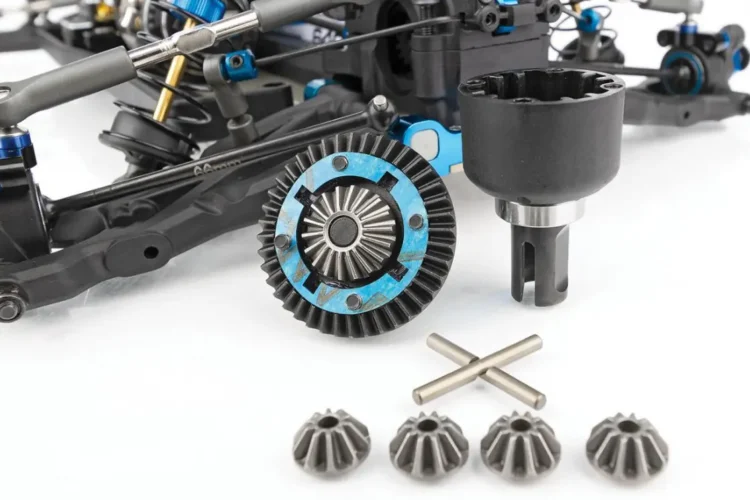
- Take out the diff and look at it. Check the ring gear teeth, the pinion or bevel gear, and the spider gears for chipped or rounded teeth, shiny wear patches, and metal dust.
- Spin each bearing by hand. A bearing that feels gritty, catches, or has noticeable play should be inspected and replaced if necessary.
- Look at the oil. Dark oil with a metallic glitter points to gear wear.
If every gear looks intact and the bearings are fine, the mesh is the next thing to check.
How Diff Shimming Works
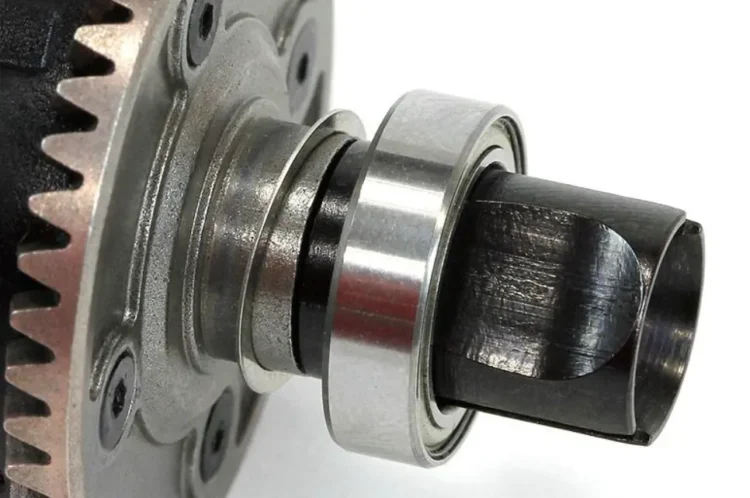
Shims are thin washers that act as spacers. According to Petit RC, the most common place to shim is on the outdrives, between the bearing and the inside of the diff housing. Moving a shim from one side to the other shifts the ring gear toward or away from the bevel gear.
A few details from that same guide matter in practice:
- Aim for a little play, not zero. A properly set ring-to-bevel mesh has just a bit of play. The bevel gear itself should sit at close to zero play, with the full width of the ring gear making contact.
- Shim behind the bevel gear to change contact. The bevel gear is conical, so adding or removing shims behind it changes how the two gears line up.
- Shim for slipping spider gears. If the spider gears keep stripping, a shim or two behind the outdrive gear can help hold them in place. Too many will make the diff bind, and it can also make the diff act a little more locked.
- Helical gears need tighter settings. Because helical gears are thinner and strip more easily, Petit RC says they should be shimmed with even less play.
Which side gets the extra shim depends on how your chassis is built, so follow your car’s manual for the direction. The principle holds across most designs: the ring gear and pinion should touch cleanly across the tooth face, turn without binding, and still have a trace of play.
What to Check After Shimming
Roll the car by hand. It should turn smoothly, with no tight spots as the gears rotate through a full revolution. A diff that feels notchy or stiff has too many shims. A diff you can rock back and forth with obvious clunking has too few.
Worn gears get smaller over time, so a mesh that was right when the parts were new can drift. Petit RC recommends checking the wear every so often and adding shims to bring the mesh back, and keeping shims of different thicknesses sorted so they don’t get mixed up.
Could Shims Be Making It Worse?
Yes, if the diff was built with too many of them. A diff that feels tight, runs warm, or whines more as speed climbs is a sign the gears are pressed together too hard. Pulling a shim back out can quiet it.
A new gear set doesn’t skip this step either. Even with fresh gears, the mesh still needs checking, because the housing and bearings aren’t identical from one car to the next.
Recommended Reading
👉 RC Car Steering Glitching When Throttle Pulled: What to Check and Fix
👉 RC Car Stutters on Acceleration: What to Check First
👉 Why Is My RC Car ESC Flashing Red and Beeping?
A Couple of Things That Aren’t So Obvious
Fresh diff oil won’t repair damaged gears. Replacing contaminated oil can remove suspended debris, but worn or damaged parts still need to be inspected and replaced if necessary.
A bearing swap is cheap compared to a gear set, so it’s worth ruling bearings out early. When a bearing has play, it can pull the gears out of line, which looks like a gear problem even when the gears are fine.
Sources for the details above: Petit RC, “Shim a Diff and Bevels Gears” and Hearns Hobbies, “Warning Sounds That Save Your RC From Costly Repairs”.
When the diff goes back together, roll the car across the bench once more and listen. After reassembly, roll the car by hand and check for binding or unusual noise. During the first run, listen for changes in sound and inspect the drivetrain again if anything seems off.