FPV Drone ESC Smoke When You Plug In the Battery: What to Check First
Unplug the battery as soon as you see FPV drone ESC smoke, and leave it unplugged until you’ve checked the power path with a multimeter. Smoke at the moment of plug-in often points to a short circuit, reversed polarity, or another electrical fault in the battery power path. The ESC may not be the only component affected, so leave the battery disconnected until you’ve inspected the circuit. Everything in the diagnosis below is done with the battery disconnected.
The First Few Minutes
Disconnect the battery, put the drone on a non-flammable surface, and let everything cool down. Take the props off before any later powered test.
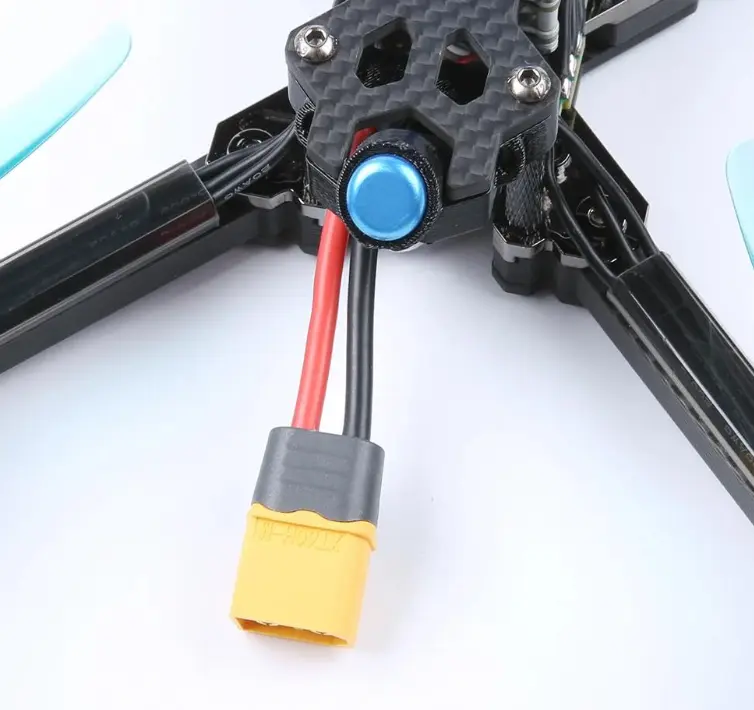
Look at the XT60 connectors on both the drone and the battery. In one IntoFPV forum thread, both connectors came out burned after a plug-in without a smoke stopper. The replies recommended replacing the burned connector and the damaged board, and re-soldering a new connector on the battery.
Don’t plug the battery straight back in. Unmanned Tech says every build leaving its workshop gets its first power-up through a smoke stopper, and that includes repairs where wiring was changed.
Could It Be a Short or a Reversed Connection?
Several faults can produce smoke at plug-in:
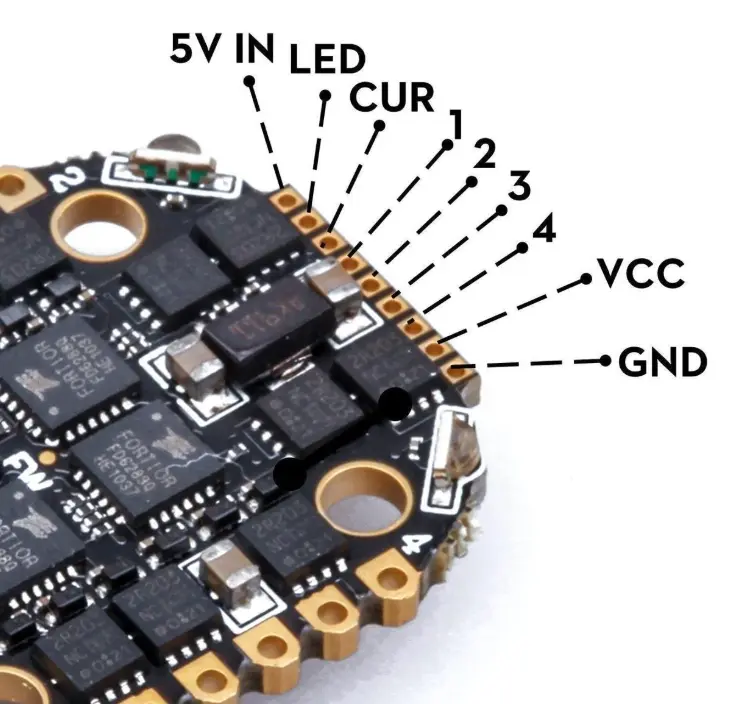
- Solder bridges. Unmanned Tech calls these the most common fault on its bench. Two closely spaced pads get joined by a blob you can’t see without magnification.
- Stray wire strands. A single strand can curl back and touch a neighboring pad when a connector is pushed home.
- Reversed polarity. This means positive wired to ground, or a connector plugged in backward. A forum reply in the thread above says reverse polarity at the drone often gives a zap and some sparks because many ESCs have some protection. Don’t assume it’s the cause just because the timing fits.
- A backward capacitor. Electrolytic capacitors have a polarity, and the striped side is the negative lead, which goes to ground. The same forum reply describes a reversed low-ESR capacitor as an instant, loud pop. GetFPV’s electrical checks guide mentions catching a backward capacitor during a visual inspection before powering up.
- Motor screws touching the windings. When a reader’s ESC smoked, Oscar Liang’s reply in the comments of his ESC burn-up article suggested looking for a short and checking whether the motor screws were touching the windings inside the motor. That’s a suggestion from a comment, not a documented finding.
- A faulty board. Unmanned Tech notes that a brand-new ESC occasionally arrives as a dead short. In the IntoFPV thread, the poster eventually found a cracked component on the flight controller.
Recommended Reading:
- Best Drone for Real Estate Listings That Actually Sell
- Best Foldable Drone That’s Actually Worth Packing
- Best Drone Under $300 That Actually Feels Worth It
How I’d Check for a Short With a Multimeter
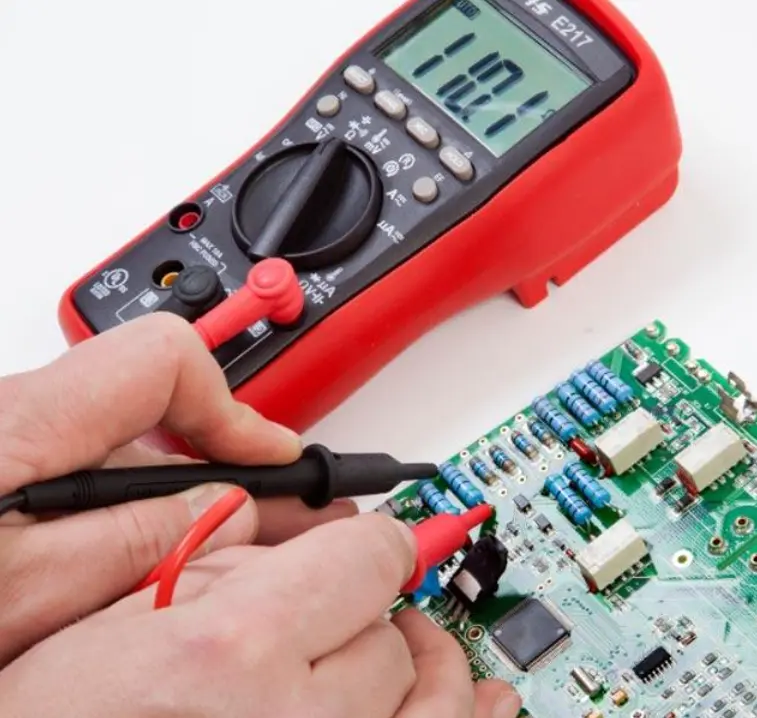
Continuity checks are done with no power connected. GetFPV describes continuity mode as the way to find out whether a solder blob has bridged two pads.
- Disconnect the battery and set the multimeter to continuity mode.
- Touch the probes to the positive and negative XT60 pads on the drone. A sustained beep or a resistance reading close to zero can indicate a short between the main positive and negative power rails. However, some circuits may produce a brief beep during capacitor charging, and a continuity test alone cannot confirm which component has failed. A brief chirp that fades can be a capacitor charging, so watch whether the beep keeps going.
- Check each motor pad against both positive and negative. A forum reply in the thread above recommends this check even after a repair.
- Look over the board with a magnifier for charred components, solder bridges, and loose strands.
- Confirm the capacitor’s striped lead goes to ground, and check that no motor screw reaches the windings.
If a check fails, the beep tells you a short exists but not where it is. Fix what you find, repeat the continuity test, and only then think about powering the drone.
Can a Smoked ESC Be Saved?
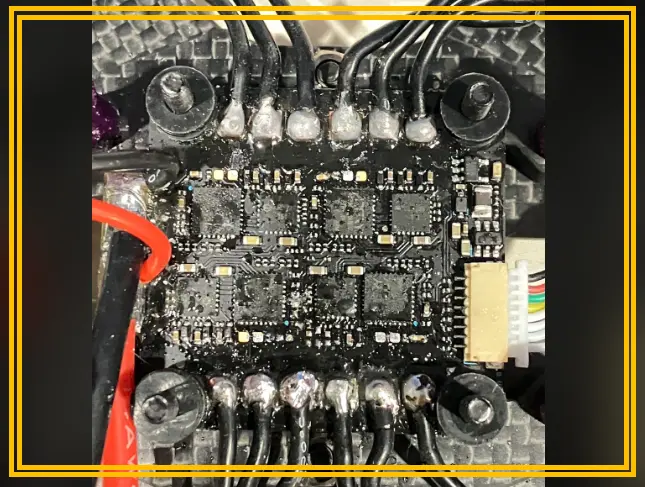
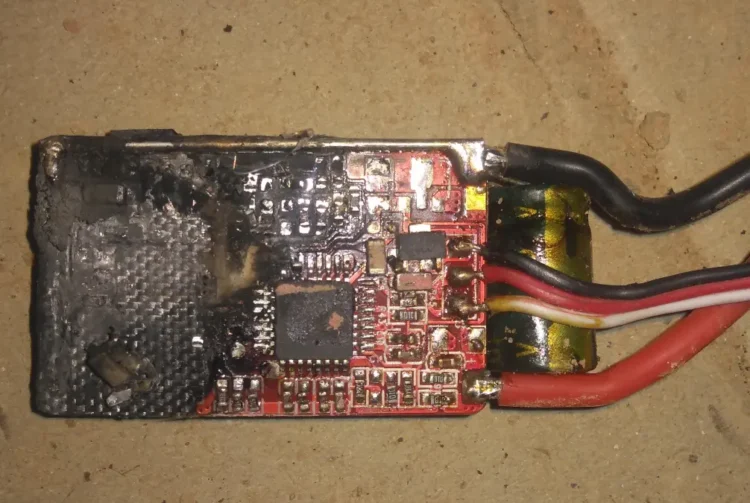
If a component or chip is visibly charred, treat the board as damaged and don’t power it up again until the fault has been identified. Depending on the damage, replacing the ESC may be more practical than attempting a component-level repair. Replacing a MOSFET is difficult. In the IntoFPV thread, one member said it’s hard without hot air equipment, and another said the tiny resistors packed around it make it harder.
A board that still talks to the computer isn’t necessarily healthy. In that thread, the poster could connect the board to Betaflight and the receiver still worked, yet the fault turned out to be a cracked component on the flight controller. The VTX was the one thing they hadn’t tested, so anything sharing the same power rail deserves a look too.
I also wouldn’t fly on an ESC that has smoked. Oscar Liang describes an ESC fire in flight in his ESC burn-up article, and a part that has already failed once is a poor thing to trust over a field.
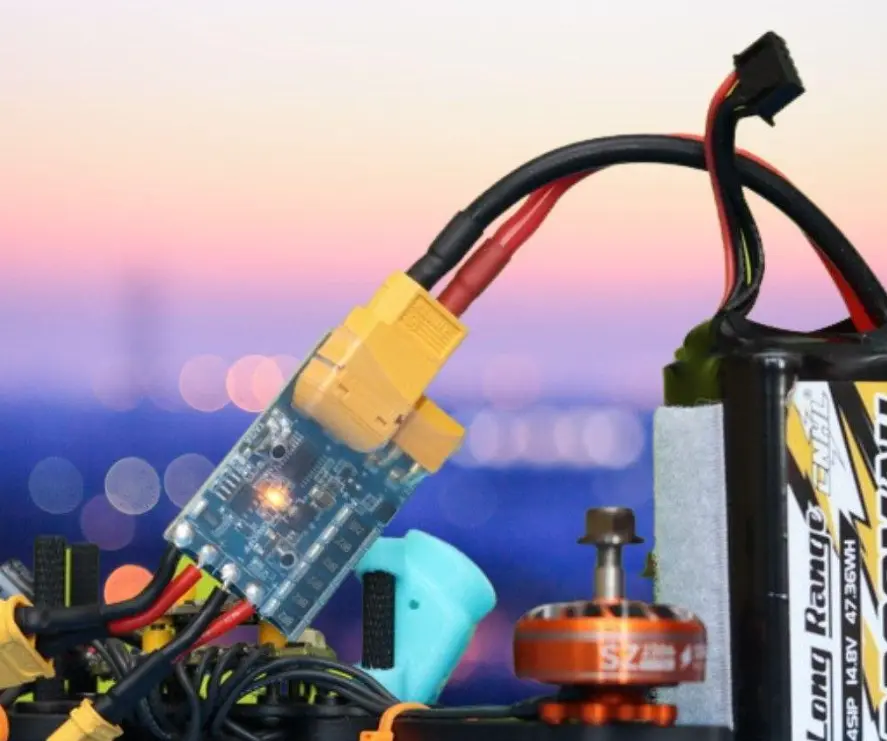
Using a Smoke Stopper for the Next Power-On
A smoke stopper goes between the battery and the drone and limits current if there’s a short. Two types are common:
- Bulb type: a 12V, 21W automotive bulb wired in series with the battery.
- Electronic type: a PTC resettable fuse that throttles current when it trips and recovers once the fault clears.
Remove the props, connect the stopper, and power on. If the flight controller boots normally through the smoke stopper, that’s a useful initial check, but it doesn’t prove that all wiring and components are healthy. Check for shorts and verify the expected voltages before proceeding with further tests. If the stopper trips or the bulb lights, unplug right away and go back to the multimeter.
GetFPV points out that you shouldn’t arm or fly with the smoke stopper attached, since the extra current draw will burn it out. Unmanned Tech adds that a stopper won’t catch a connection that feeds the wrong voltage to a pin without shorting, such as 5V into a 3.3V pad. The multimeter’s voltage mode is what catches that kind of mistake.
A clean continuity result still doesn’t say which part took the hit. The forum case above came down to a small cracked component that was hard to see. If the board keeps acting strangely after every check passes, replacing it may end up being the practical decision.
Sources: