
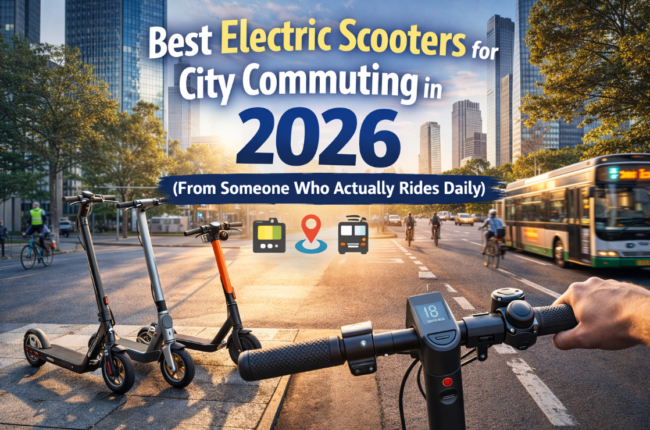
If you’ve only tested an electric scooter in a store parking lot, you haven’t really tested it.
Try riding five miles through actual city streets. Cracked sidewalks. Bike lanes that randomly disappear. Potholes that show up out of nowhere. A surprise rain shower halfway to work.
That’s when you find out whether you bought a commuter… or a headache.
I’ve been riding electric scooters regularly for city errands and short commutes, and I can tell you this: spec sheets don’t tell the whole story. Top speed sounds cool. “Up to 45 miles of range” sounds impressive. But what actually matters is whether the scooter starts every morning, feels stable at 7:45 a.m., and doesn’t rattle itself loose after three months.
Here’s what I’ve learned — and which models are actually worth considering in 2026.
What Actually Makes a Good City Commuter Scooter?
Before naming models, let’s talk about what separates daily riders from weekend toys.
Real-World Range (Not Marketing Range)
Manufacturers test range under perfect conditions. Flat road. Lightweight rider. Ideal temperature. Moderate speed.
Real life? Not so much.
From my experience, most scooters deliver about 70–80% of their advertised range in actual city use. Hills, stoplights, wind, and heavier riders eat into battery life fast.
My rule:
If your daily round trip is 12 miles, buy a scooter rated for at least 18–20 miles. That buffer reduces charging stress and helps battery longevity.
Ride Comfort Is Underrated
You don’t think about suspension… until you hit rough pavement.
Smaller solid tires feel fine on smooth concrete. On older downtown streets? They’re brutal. Your knees will feel it.
I’ve found that:
- Pneumatic (air-filled) tires are way more forgiving
- Basic suspension makes a noticeable difference
- A wider deck helps stability on longer rides
Comfort isn’t a luxury — it’s the difference between enjoying your commute and counting down the seconds until you’re off the thing.
Portability Matters More Than You Think
If you ever:
- Carry it upstairs
- Bring it into an office
- Fold it for public transit
Weight matters. A lot.
Around 28–35 pounds feels manageable. Once you get into the 45–50 lb range, you’ll feel it quickly.
Also — pay attention to the folding latch. A weak locking mechanism develops wobble over time. And wobble at 18 mph is not fun.
Best Electric Scooters for City Commuting in 2026
These are the models I’ve personally ridden or seen used long-term by daily commuters.
Segway Ninebot Max G2
Segway Ninebot Max G2
This one keeps showing up in commuter conversations for a reason.
It’s not flashy. It’s not the fastest. But it’s consistent.
The upgraded suspension makes it noticeably smoother than older Ninebot models. Real-world range is closer to advertised numbers than most competitors. And the water resistance gives peace of mind if you get caught in light rain.
If you just want something that works every day without drama, this is hard to beat.
Xiaomi Electric Scooter 4 Ultra
Xiaomi Electric Scooter 4 Ultra
Xiaomi has refined their commuter line over the years, and this one feels mature.
Acceleration is smooth instead of jerky. Build quality feels tight. It handles moderate hills without sounding like it’s about to give up.
What I like most? It feels lightweight but not fragile — a tough balance to get right.
The folding system is also quick, which matters when you’re running late.
Apollo City 2026 Edition
Apollo City 2026 Edition
This one feels slightly more performance-oriented while still being practical.
Dual suspension makes rough pavement much more tolerable. Braking is responsive. Integrated lighting is bright enough for early mornings or evening rides.
If your commute includes cracked streets or longer distances, this one feels confidence-inspiring.
NIU KQi3 Pro
NIU KQi3 Pro
NIU is known for electric mopeds, but their scooter lineup has built a solid reputation.
The wide handlebars improve control. The deck feels stable. Throttle response is predictable — which matters more than people think when riding in traffic.
I’ve also heard from multiple owners that customer support has improved, which makes long-term ownership less stressful.
How I Personally Choose a Commuter Scooter
Here’s the checklist I use.
1. Match Motor Power to Your Terrain
Flat city? Moderate motor is fine.
Hills? Don’t underbuy.
An underpowered scooter drains battery faster because it’s constantly working at max effort.
2. Think About Maintenance Early
Things that will wear out:
- Tires
- Brake pads
- Battery over time
Check if replacement parts are easy to find. Check if there’s local service. Downtime is annoying when this is your daily transportation.
Long-term ownership cost matters just as much as purchase price.
3. Safety Features That Actually Matter
Forget flashy RGB lights.
What matters:
- Bright front and rear lights
- Stable frame with minimal flex
- Predictable throttle response
- Solid braking
Regenerative braking is a bonus — it slightly extends range and reduces brake wear.
Urban transportation isn’t getting easier. Parking is expensive. Traffic is worse. Gas isn’t cheap.
Electric scooters have matured a lot in the last few years. Early models felt experimental. Today’s good commuter scooters feel refined and dependable.
The best electric scooter for city commuting in 2026 isn’t the fastest one.
It’s the one that:
- Fits your route
- Handles your terrain
- Feels stable every morning
- Doesn’t stress you out
If you prioritize comfort, realistic range, and brand reliability over marketing numbers, you’ll be much happier long term.
And honestly? When you get the right one, your commute stops feeling like wasted time.
It becomes the best part of your day.