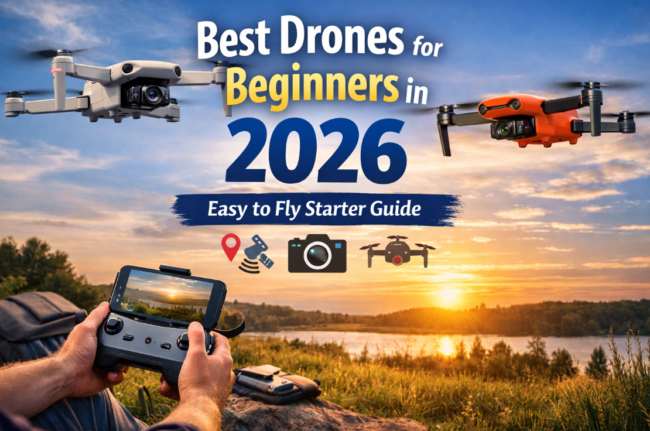
Best Drones for Beginners (Easy to Fly in 2026): What I’d Actually Recommend
The first time I flew a drone, I was 100% sure I was about to crash it.
I drove to a big open park, waited until no one was around, and hit the takeoff button. The drone lifted into the air… and just hovered there. Steady. Calm. Way more stable than I expected.
That moment changed everything.
If you’re searching for the best drones for beginners in 2026, here’s my honest take: you don’t need the fastest drone. You don’t need cinematic marketing hype. You need something stable, predictable, and forgiving.
I’ve tested a few entry-level models over the years (and yes, I’ve clipped a tree or two). This guide is based on real-world beginner experience — not spec-sheet obsession.
If you’re brand new to drones, this will help you choose something you’ll actually enjoy flying.
What Makes a Drone Truly Beginner-Friendly?
Before we talk models, let’s talk features that actually matter.
1. Stable Hover (GPS Is Non-Negotiable)
If a drone can’t hold its position on its own, it’s going to frustrate you fast.
Modern beginner drones use GPS and vision sensors to stay locked in place. When I first started, this was the single biggest confidence booster. I could take my hands off the sticks, and it wouldn’t drift away like a balloon.
If you’re buying your first drone, I strongly recommend choosing one with GPS stabilization.
2. Return-to-Home (RTH)
Return-to-Home is the “panic button” every beginner needs.
Low battery? Signal loss? Press one button and the drone flies back to where it took off.
The first time I tested RTH, I purposely flew farther than I felt comfortable… then hit the button. Watching it automatically return was honestly reassuring.
This feature alone can save you hundreds of dollars.
3. Obstacle Sensors (Helpful, Not Magic)
Obstacle avoidance doesn’t make you invincible.
But it does reduce beginner mistakes.
Forward sensors especially help prevent that classic “first tree branch crash.” I still recommend flying carefully, but having sensors gives you a little safety net while you’re learning.
4. Lightweight (Under 250g Is Ideal)
In the U.S., drones under 250 grams are generally easier to manage from a registration standpoint.
They’re also less intimidating. Smaller drones feel more like learning tools than expensive flying robots.
If you’re just starting, lightweight is the way to go.
Best Drones for Beginners in 2026
These are the models I’d personally suggest looking at.
DJI Mini 4K
DJI makes some of the most beginner-friendly drones on the market, and the DJI Mini 4K is a perfect example.
What I like:
- Very stable hover
- Easy-to-use flight app
- Solid image quality for the price
- Beginner-friendly controls
It feels steady even in light wind. The app walks you through setup step-by-step, which makes your first flight way less stressful.
For most beginners, this drone is more than enough.
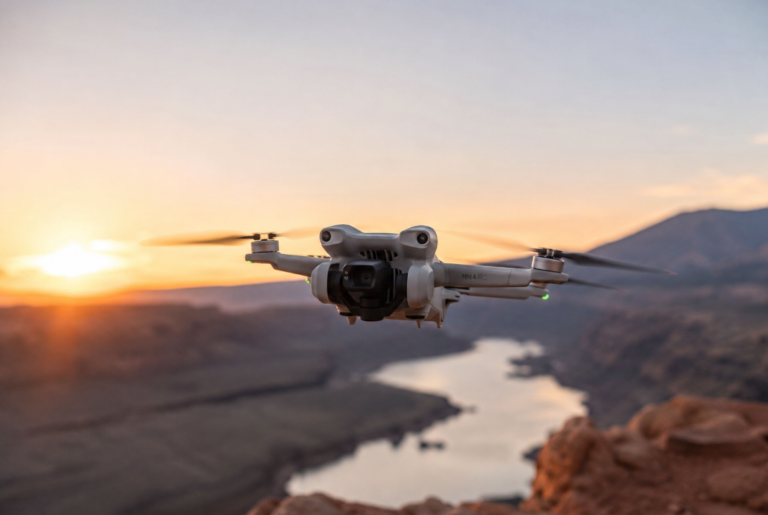
DJI Mini 3
If you want a little room to grow creatively, the DJI Mini 3 is a strong step up.
What stands out:
- Vertical shooting mode (great for social media)
- Better low-light performance
- Same lightweight convenience
I’ve seen a lot of new YouTube creators start with this one. It’s simple enough for beginners but doesn’t feel like a toy.
If content creation is your goal, this might be the smarter long-term pick.
Autel EVO Nano+
The Autel EVO Nano+ from Autel Robotics surprised me.
Pros:
- Great color straight out of camera
- Obstacle sensing
- Compact and portable
It feels slightly more “premium,” but still very beginner-friendly. If you want something different from DJI but still reliable, this is worth considering.
Ryze Tello (Budget Starter)
If you just want to test the waters, the Ryze Tello is the ultra-budget option.
It doesn’t have full GPS like the others. It’s more of a learning platform than a serious aerial camera.
But for indoor flying or basic control practice? It’s fun and affordable.
Just don’t expect cinematic footage.
How I’d Choose as a Beginner Today
If I were starting over in 2026, here’s how I’d decide.
Step 1: Define Your Goal
- Just flying for fun → Mini 4K level is perfect
- YouTube / travel content → Mini 3 or EVO Nano+
- Learning cheaply → Tello
Don’t overspend unless you know you’ll stick with it.
Step 2: Budget for Extra Batteries
This is something beginners overlook.
Most drones fly around 20–30 minutes per battery. When you’re learning, that disappears fast.
I always recommend buying a combo bundle with at least two batteries.
Waiting for charging kills momentum.
Step 3: Start in an Open Field (Seriously)
My first mistake? Flying near trees.
Start somewhere wide and empty. Practice:
- Hovering
- Slow forward/backward movement
- Gentle rotations
Master basics before trying dramatic cinematic shots.
Final Thoughts: What Actually Matters
In 2026, flying a drone is easier than ever.
The technology does a lot of the work. GPS stabilization, auto return, smart flight modes — beginners today have it much easier than early drone users did.
But here’s my honest opinion:
The best drone for beginners isn’t the one with the longest feature list.
It’s the one that makes you excited to fly again tomorrow.
Choose something stable. Lightweight. From a brand with good app support. Practice patiently.
You’ll be surprised how fast you go from nervous first takeoff… to smooth aerial shots that look like you’ve been flying for years.