
How to Make an RC Car Faster – 7 Simple Fixes That Actually Work
How to Make an RC Car Faster
Last weekend, I took one of my older RC trucks out for a quick run in an empty parking lot. Within minutes, a kid down the street showed up with a completely stock budget truck and somehow managed to leave me behind every single pass. My daughter, who is six and was supposed to be cheering for me, just laughed and said the other truck looked cooler anyway.
That was enough to send me straight back to the workbench.
After a few simple changes, the difference was night and day. The truck felt quicker, more responsive, and honestly more fun than it had in years. If your RC car feels slow, don’t assume it’s time to buy a new one. In many cases, a few upgrades and some basic maintenance can wake it up dramatically. Let’s go through the things that made the biggest difference for me, and figuring out how to make an RC car faster turned out to be a lot simpler than I expected.
Clean and Lubricate the Drivetrain First
Before spending a single dollar on new parts, pull the truck apart and look at the drivetrain. Dust, dried grease, and packed-in dirt add resistance to every gear and bearing, and that resistance eats directly into your top speed. I was shocked at how much gunk had built up inside mine after just a season of casual driving.
A simple cleaning with a soft brush and some contact cleaner, followed by a fresh coat of light lubricant on the gears and diffs, often frees up more speed than people expect. This step costs almost nothing and takes maybe twenty minutes, so it should always come before any upgrade.
Upgrade to a Higher KV Motor
The motor is the heart of your speed, and swapping to a higher KV rating is usually the single biggest jump you’ll feel. Higher KV means more RPM for the same voltage, which translates directly into faster acceleration and a higher ceiling on flat ground.
That said, going too aggressive on KV without checking your gearing and battery setup can cook your motor fast. I learned this the hard way with a motor that lasted about four runs before it started smoking. Match the upgrade to your truck’s size and cooling setup, and you’ll get real gains without frying anything.
Start with the Battery
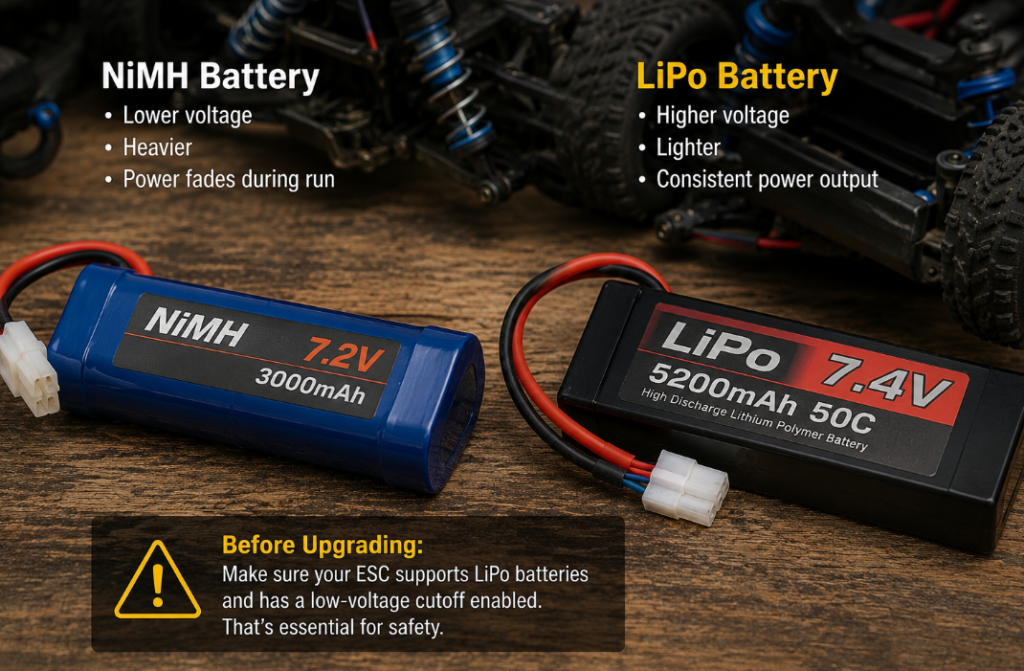
If you’re still running a NiMH battery, this is probably the easiest speed upgrade you’ll ever make.
I resisted switching to LiPo for a long time because NiMH batteries seemed “good enough.”
They weren’t.
The first time I installed a quality LiPo pack, the truck felt like an entirely different vehicle. Acceleration improved immediately, and the power stayed consistent throughout the run instead of gradually fading.
LiPo batteries deliver higher voltage and maintain performance much better under load.
Before upgrading, make sure your ESC supports LiPo batteries and has a low-voltage cutoff enabled. That’s not something you want to skip.
Switch to a Higher Voltage Battery
If your truck is still running on the stock battery, this is often the cheapest way to add noticeable speed. Moving from a 2S to a 3S pack, for example, pushes more voltage through the system and gives the motor more to work with on every throttle input.
Just make sure your electronic speed controller and motor are actually rated for the higher voltage first. Skipping that check is how people end up with a melted ESC instead of a faster truck.
Adjust Your Gear Ratio
Gearing is one of those things that sounds technical but is actually pretty forgiving once you understand the basic idea. A larger pinion gear relative to the spur gear pushes your top speed higher, while a smaller one favors acceleration and torque.
If your truck already feels strong off the line but tops out too early, nudging the gearing toward top speed is worth trying. Small adjustments here make a bigger difference than most people assume, and it’s a change you can test in an afternoon.
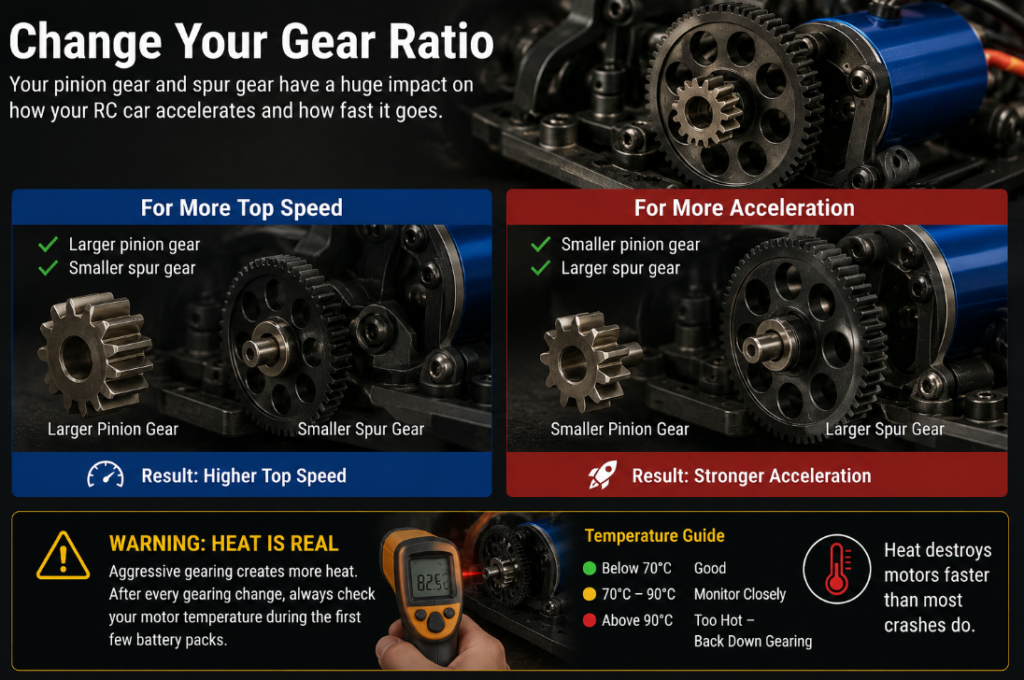
Your pinion gear and spur gear have a huge impact on how the vehicle behaves.
For more top speed:
- Larger pinion gear
- Smaller spur gear
For more acceleration:
- Smaller pinion gear
- Larger spur gear
I usually recommend making small changes and testing after each adjustment.
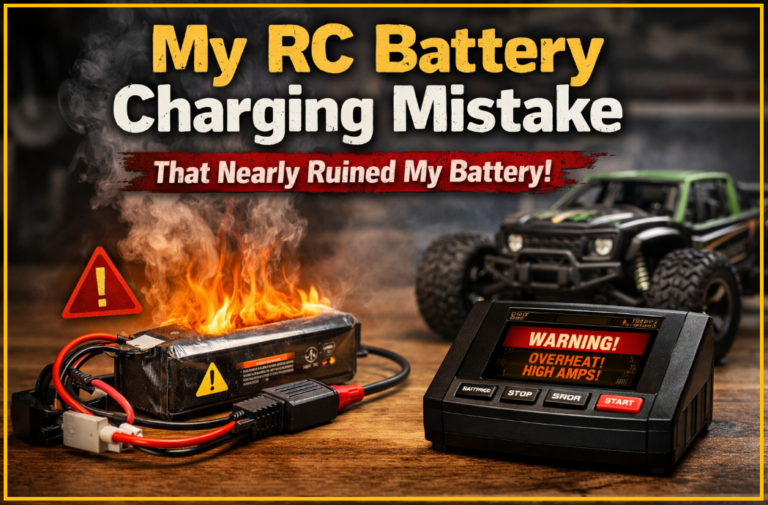
One warning though: aggressive gearing creates more heat.
After every gearing change, I always check motor temperatures during the first few battery packs. If the motor gets excessively hot, back the gearing down immediately.
Heat destroys motors faster than most crashes do.
Reduce Overall Weight
Every extra ounce on your truck is working against your motor and battery. Look at the body, the interior mounts, and any accessories that aren’t doing much besides looking good, and ask whether they’re worth the weight penalty.
I pulled a few unnecessary metal parts off mine and swapped in a lighter body shell, and the acceleration improvement was noticeable almost immediately. You don’t need to go extreme here. Even shaving off a modest amount of weight tends to pay off in how quickly the truck gets moving.
Change Your Gear Ratio
This is where things get interesting.
A lot of people focus on batteries and motors while completely ignoring gearing.
Your pinion gear and spur gear have a huge impact on how the vehicle behaves.
For more top speed:
- Larger pinion gear
- Smaller spur gear
For more acceleration:
- Smaller pinion gear
- Larger spur gear
I usually recommend making small changes and testing after each adjustment.
One warning though: aggressive gearing creates more heat.
After every gearing change, I always check motor temperatures during the first few battery packs. If the motor gets excessively hot, back the gearing down immediately.
Heat destroys motors faster than most crashes do.
Upgrade the Motor and ESC
After the battery, the motor is usually the next limitation.
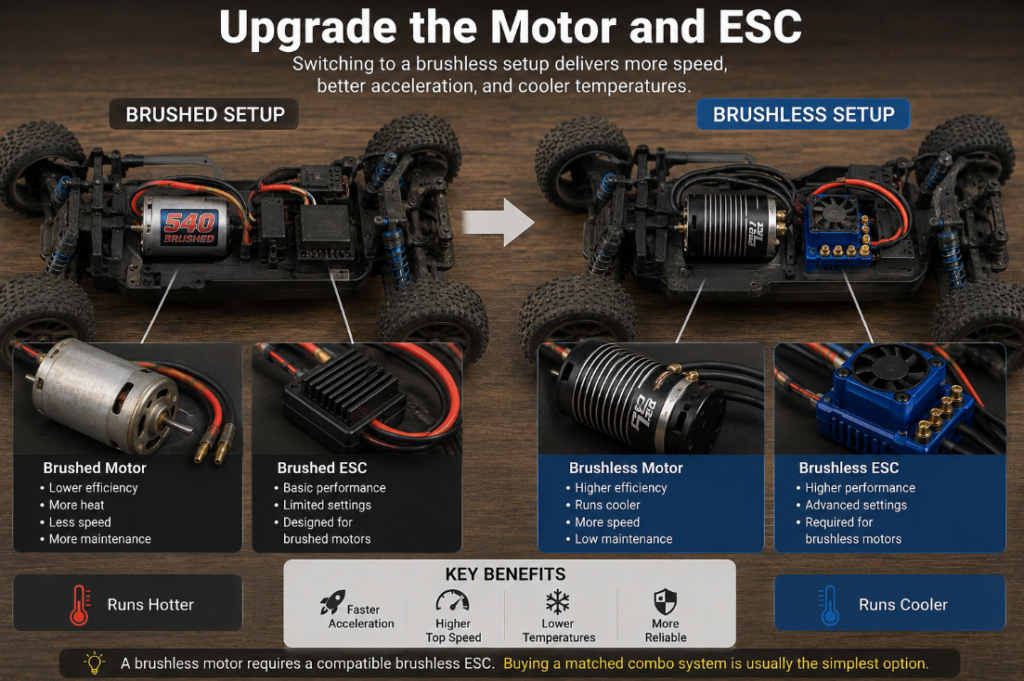
Many entry-level RC cars come with brushed motors. They’re reliable, inexpensive, and beginner-friendly, but they’re not exactly speed machines.
Switching to a brushless setup was one of the best upgrades I’ve ever made.
The truck ran cooler, accelerated harder, and reached noticeably higher top speeds without feeling strained.
If you’re considering this upgrade, remember that a brushless motor requires a compatible brushless ESC. Buying a matched combo system is usually the simplest option.
If you’re not sure whether your current motor is causing performance issues, I covered some common symptoms in my guide on RC motor problems:
👉 https://trvbaby.net/rc-car/rc-maintenance-fix/rc-car-motor-issues-explained-in-simple/
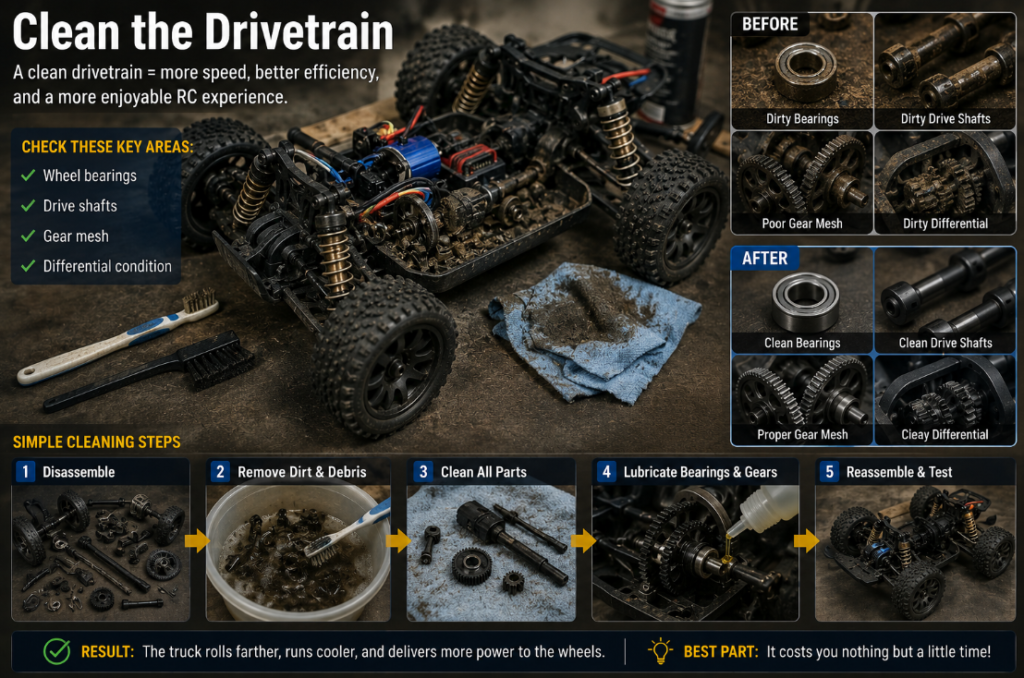
Clean the Drivetrain
This one costs absolutely nothing.
A surprising number of RC cars lose speed simply because they’re dirty. Dust, dried mud, old grease, and worn bearings all create resistance throughout the drivetrain. A few months ago, I cleaned a truck that hadn’t been serviced in nearly a year.
The bearings barely spun. After cleaning and lubricating everything, the truck rolled noticeably farther by hand and felt much more efficient under power.
If your RC car feels sluggish, check:
- Wheel bearings
- Drive shafts
- Gear mesh
- Differential condition
You might find the problem without spending a dollar.
Use the Right Tires
I learned this lesson the hard way.
For months I was running aggressive off-road tires on smooth pavement. The truck looked cool, but performance was terrible. The tires created unnecessary rolling resistance and wasted power.
Once I switched to proper street tires, acceleration improved and the truck tracked much more smoothly.
Different surfaces need different tire compounds and tread patterns. If you’re trying to maximize performance, tire choice matters far more than many beginners realize.
I break down tire selection in more detail here:
👉 https://trvbaby.net/rc-car/rc-maintenance-fix/best-rc-car-tires-for-different-surfaces/
Improve Tire Grip and Condition
Speed on paper means nothing if your tires can’t put the power down. Worn, hardened, or mismatched tires cause wheel spin, and wheel spin wastes energy that should be pushing the truck forward.
Fresh tires with a compound suited to your surface, whether that’s pavement, dirt, or grass, make acceleration feel sharper and more controlled. This is one of those upgrades that’s easy to overlook because the tires “still look fine,” even when the rubber has hardened past its useful life.
Check Your Radio and Throttle Settings
Sometimes the bottleneck isn’t the hardware at all. Many radios ship with throttle curves and end-point settings that hold back full power output, especially on beginner-friendly models designed to be forgiving for new drivers.
Digging into your transmitter’s settings and opening up the throttle curve, or adjusting the end points to allow full throttle travel, can unlock speed that was sitting there the whole time. It costs nothing and takes a few minutes, which makes it one of the easiest wins on this entire list.
None of these fixes require a completely new truck or a huge budget. Cleaning the drivetrain, upgrading the motor and battery, dialing in the gearing, cutting weight, refreshing the tires, and checking the radio settings all work together, and you don’t need to do everything at once to feel a difference.
I started with the free fixes, the cleaning and the radio settings, before spending anything on parts, and that alone brought my old truck back to life. Work through this list one step at a time, and there’s a good chance your RC car will surprise you the same way mine did.