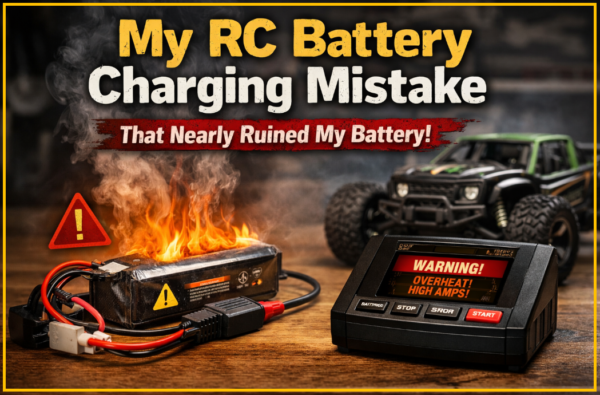
The RC Battery Charging Mistake I Made That Nearly Ruined My Battery
I still remember the moment I realized something was wrong.
My RC battery was charging like it always had, but when I touched it, it felt hotter than it ever should. Not warm—hot.
My first reaction was panic.
My second thought was even worse: This is my fault.
If you’ve been into RC cars, drones, or boats for a while, charging batteries feels routine. Plug it in, wait, unplug, done. That mindset is exactly what almost ruined my battery. It’s one of those mistakes that doesn’t get talked about enough, especially once you’re no longer a beginner.
After this happened, I went back and relearned the basics. This RC maintenance guide helped me reset some bad habits I didn’t even realize I had:
What Is an RC Car? A Beginner’s Guide to How RC Cars Really Work
Understanding RC Batteries Before You Charge Them
Why RC Batteries Are Less Forgiving Than You Think
RC batteries—especially LiPo batteries—are powerful but unforgiving.
They don’t tolerate shortcuts.
I used to believe I could “feel” when something was wrong. Looking back, that confidence was misplaced. LiPo batteries demand precise voltage control, proper balance charging, and the correct charge rate. The scary part is that breaking these rules doesn’t always cause instant failure. Damage often happens quietly, over time.
That delayed reaction is why so many people repeat the same mistake without realizing it.
The Role of C-Rating and Charger Settings
I understood C-rating in theory, but I didn’t respect it in practice.
I charged my battery faster than the manufacturer recommended, assuming my charger would handle the rest automatically.
It didn’t.
If you want a clear explanation of charger settings and why they matter, this guide breaks it down without overcomplicating things:
Redcat RC Car Battery and Charger Basics Explained
The Exact Charging Mistake I Made
Charging at the Wrong Current
This was the core mistake.
I charged my LiPo battery at a higher current than recommended simply because the charger allowed it.
At the time, I thought the battery felt “warm but fine.” That mindset is dangerous. During a normal charge, an RC battery should never feel hot. Heat is a warning sign, not reassurance.
Ignoring Battery Temperature and Balance
Worse, I skipped checking cell balance because I was in a hurry. That’s completely on me. Balanced charging is not optional, no matter how many times you’ve charged a battery before.
Not long after, I noticed slight swelling. That’s when it hit me. Once a LiPo battery starts puffing, internal damage has already begun.
What Almost Ruined the Battery Completely
Heat Buildup and Internal Damage
Heat is the silent killer of RC batteries. Rising temperatures speed up chemical reactions inside the pack, increasing internal resistance and reducing performance.
After that incident, the battery never felt the same. It discharged faster, delivered less punch, and behaved inconsistently. I kept telling myself I could “use it a bit longer,” but that was just denial.
Why I Should Have Stopped Immediately
The moment I noticed excessive heat, I should have stopped the charge. That single decision could have saved the battery completely.
If you’re unsure how to store batteries safely after charging, this storage guide is worth reading:
RC Car Battery Problems Explained for Beginners
What I Changed After That Mistake
Slower Charging, Better Results
Since then, I’ve changed my routine entirely. I always charge at the manufacturer’s recommended rate, even if it takes longer. Waiting an extra 20 minutes is nothing compared to replacing an expensive battery.
I also actively monitor voltage and temperature instead of assuming everything is fine. That alone noticeably improved battery lifespan.
Using the Right Equipment Consistently
I upgraded to a charger with better balance accuracy and clearer readouts. I also stopped charging batteries unattended. It’s advice everyone hears, but after almost ruining a battery, it finally stuck.
How You Can Avoid the Same RC Battery Charging Mistake
Follow Manufacturer Guidelines Exactly
Battery specifications aren’t suggestions. They exist for a reason. Once I started treating them as strict rules, most charging problems disappeared.
Pay Attention to Small Warning Signs
Slight warmth, longer charge times, or even minor swelling are not normal. They’re early warnings. Catching these signs early is often the difference between a battery that lasts years and one that fails quickly.
What This Mistake Taught Me
This mistake actually made me a better RC hobbyist. It forced me to slow down, respect the equipment, and stop taking shortcuts.
Most RC battery failures aren’t bad luck. They’re preventable mistakes—just like mine.
If you’re charging your batteries the way I used to, rethink your process now, not after something goes wrong.