Best Drone with Obstacle Avoidance.
The first time I took my drone up, I wasn’t thinking about the shot I wanted. I was thinking about the oak tree twenty feet to my left. My eyes bounced between the screen and the sky the whole flight, and by the time I landed I was more relieved than happy.
That flight taught me something I didn’t expect going in: the camera specs, the flight time, the range — none of it matters much if you’re too nervous to actually fly the thing. What changed everything for me later was picking up a drone that could actually see what was around it.
👉 Drones With Obstacle Avoidance Amazon.com
As an Amazon Associate I earn from qualifying purchases.

Why Obstacle Avoidance Ended Up Being the Feature I Cared About Most
When I was shopping for my first drone, I did what most people do. I compared megapixels. I read about battery life. I looked at top speed like it was going to matter for backyard footage of my dog. Obstacle avoidance barely made my list, and honestly, I didn’t fully get what it meant until I almost lost a drone to a fence post.
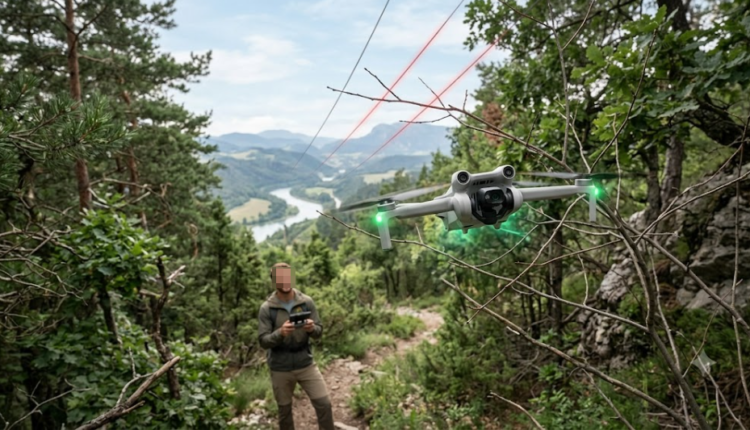
Basically, a drone with real obstacle avoidance is running sensors that are constantly scanning for stuff in its path — branches, walls, power lines, your neighbor’s shed, whatever — and adjusting on the fly before you even have time to react. It’s not magic and it won’t save you from every dumb mistake (trust me), but it buys you a margin of error that a plain drone just doesn’t have.
If you’ve ever read why drone flying feels so hard when you’re starting out, you already know that most of the stress in those early flights comes from exactly this — not knowing what’s around you and panicking about it. Obstacle avoidance takes a big chunk of that anxiety off your plate.

How These Sensors Actually Work
I used to assume “obstacle avoidance” was just one feature you either had or didn’t. Turns out there’s a real range depending on what you’re flying.
Directional sensors.
The cheaper end of things usually gets you front-facing sensors only, which helps but leaves you blind everywhere else. Once you move up to drones with sensors on the front, back, and sides, the difference is night and day. You stop white-knuckling every reverse maneuver.
Vision-based systems.
Better drones use cameras paired with software that doesn’t just measure distance — it actually reads the scene and decides what to do about it. Some will stop dead in front of an obstacle. Others will nudge around it and keep going. A few will hold position entirely rather than risk a bad move. This is the stuff that lets you focus on getting a nice shot instead of babysitting the controls the entire time.
Higher-end sensing.
The pricier models add extra layers of detection that hold up better in messy environments — tree cover, uneven ground, cluttered backgrounds. If you’re shooting for clients or just care a lot about your footage, this tier is where things stop feeling fragile.
I actually learned to appreciate this stuff the hard way after reading about the common reasons drones suddenly drop out of the sky — some of those failures have nothing to do with obstacles, but a good sensor suite still gives you a fighting chance in a lot of those situations.

What I’d Actually Look For Before Buying
Not all “obstacle avoidance” drones deliver the same experience. I’ve flown a few that technically had the feature but only worked in narrow conditions, and a couple that felt like they were genuinely watching my back the whole flight. Here’s what separates the two.
How many directions it covers.
A front-sensor-only drone is fine if you only ever fly forward in a straight line, which, let’s be honest, nobody does. Once you’re weaving around trees or backing away from a subject, you want sensors covering more angles. This one factor alone made the biggest difference for me as a beginner.
The camera has to hold up its end too.
Obstacle avoidance keeps your drone in one piece, but you’re still buying it to get good footage. Look for sharp resolution, steady video even when the drone is making small corrections, and decent performance once the light starts fading. A drone that dodges every branch perfectly but shoots mushy video isn’t the win it sounds like.
Stability underneath it all.
Sensors work a lot better on a drone that isn’t getting knocked around by every gust of wind. Solid positioning systems keep the drone locked in place, which in turn gives the avoidance tech a fair shot at doing its job properly.
Battery life, because nobody wants a five-minute flight.
This one gets overlooked constantly. A drone stacked with features isn’t worth much if you’re packing it up before you’ve even gotten warmed up. I’d say anywhere from 25 to 40 minutes per charge is the sweet spot — long enough to actually relax into the flight instead of watching the battery percentage the whole time.
If you’re still deciding between something more compact for everyday use or a beefier setup, it might also help to think about where you’ll be flying most. I went down that whole rabbit hole myself when I was figuring out indoor versus outdoor setups, and it changed which features actually mattered to me.
At the end of the day, obstacle avoidance isn’t about turning your drone into something crash-proof — nothing really is. It’s about giving yourself enough of a cushion that you can actually enjoy flying instead of white-knuckling the controller the entire time, which, honestly, is the whole point of getting a drone in the first place.

The Features Beyond Obstacle Avoidance That Actually Matter
Shopping for a first drone is a lot. Every brand throws a different number at you — megapixel counts, range in miles, “AI-powered” this and that — and it’s easy to get lost trying to compare specs that don’t actually tell you how the drone will feel to fly.
After going through a few different models myself, I noticed the features that actually made a difference weren’t the flashy ones. They were the ones that took stress off my plate.
Return-to-home, and why it’s better than it sounds.
This one seemed like a nice-to-have until I actually needed it — signal got shaky on a windy afternoon and the drone just calmly guided itself back to where it took off. Paired with decent obstacle sensing, it’s not just flying home in a straight line either; it’s actually reading the space it’s flying through on the way back. For anyone still building confidence, this alone is worth prioritizing.
Tracking modes that follow you automatically.
A lot of newer drones can lock onto a person, a car, or whatever’s moving and just follow along. I used this on a hike last year and it was the first time I got footage of myself actually enjoying the trail instead of always being the one holding the controller. It works a lot better when the drone can also dodge what’s around your subject, which is really where obstacle avoidance and tracking start working together instead of as separate features.
Controls that don’t require a manual.
Honestly, the fanciest sensor package in the world doesn’t help much if the controls themselves are a headache. Look for auto takeoff, auto landing, and steady hovering built in — the kind of stuff that lets you actually get comfortable instead of white-knuckling every single input for the first few weeks.
A Few Drones Worth Considering
I’m not going to pretend every drone on the market deserves a spot on this list, but a few have stuck with me after actually flying them.
The DJI Mini 4 Pro is the one I recommend most to friends asking for a first drone. It’s small enough to toss in a backpack without thinking twice, but the sensing system punches well above its weight class. Nothing about it feels stripped down — you get solid footage and genuine protection in a package that doesn’t feel like a compromise.
If you want more headroom, the DJI Air 3 is a step up worth the jump. It handles wind noticeably better than the smaller models, flies longer, and gives you more to work with on the camera side. I’d point anyone who’s regularly shooting outdoors — landscapes, road trips, that kind of thing — toward this one over the Mini.
For anyone chasing image quality above everything else, the DJI Mavic 3 Pro is in a different league. It’s not cheap, and it’s not the drone I’d hand to someone on their first flight, but if you’re shooting for clients or just care deeply about how the final footage looks, the camera system alone justifies the price tag.
Matching the Drone to How You’ll Actually Use It
The “best” drone really depends on what you’re doing with it, and I’ve made the mistake of ignoring that before.
If you’re just starting out, skip the drone with the biggest spec sheet. What actually helps is something forgiving — stable, simple to control, with enough sensor coverage that a rough first landing doesn’t end the hobby before it starts. Learning altitude control and camera angles takes a minute regardless of what you’re flying, so let the drone help you instead of fighting you.
If you’re the type who wants a drone along on every trip, prioritize portability over raw power. I learned this one the hard way after leaving a bigger drone at home more often than not simply because it was a hassle to pack. A smaller drone that actually comes with you beats a powerful one sitting in a case in your closet.
And if content creation is the whole point, look past obstacle avoidance as the deciding factor. You want smooth stabilization, dependable tracking, a camera that holds up in different light, solid flight time, and smart flight modes all working together. That combination is what turns a drone from “a camera that flies” into an actual storytelling tool.

Mistakes I’ve Made (So You Don’t Have To)
Chasing the lowest price.
I get the appeal, but the cheapest option usually cuts corners exactly where it matters — stability, camera quality, sensor reliability. I’ve watched more than one friend buy the bargain drone, get frustrated within a month, and end up buying a second, better one anyway. Spending a bit more up front often works out cheaper in the long run.
Not checking on parts and support before buying.
Propellers crack. Batteries wear down faster than you’d expect. Something eventually needs replacing, and going with a model that has decent support and easy-to-find parts saves you a headache down the line. This isn’t a one-time purchase — it’s a hobby you’ll be maintaining.
Treating obstacle avoidance like a safety net.
This is the one that trips people up most. Sensors can still miss thin branches, power lines, glass, or anything in low light. I’ve had close calls even with a drone that’s supposed to catch that stuff. It’s a huge help, not a guarantee, and you still need to fly like the drone can’t save you — because sometimes it can’t.
So, What’s Actually the Best Pick?
Honestly, there isn’t one universal answer. The right drone is the one that fits how you actually plan to use it — your experience level, your budget, and what you’re hoping to get out of flying in the first place.
For most beginners, a compact drone with solid sensors and easy controls is the smartest place to start. Travelers should weight portability and battery life over raw specs. Creators should be looking at the whole camera and flight-mode package, not just the safety features.
Once you’ve flown with real obstacle avoidance, it’s genuinely hard to go back to flying without it. That extra bit of awareness means less time bracing for a crash and more time actually enjoying what you’re capturing — which, at the end of the day, is the whole reason to get a drone in the first place.