
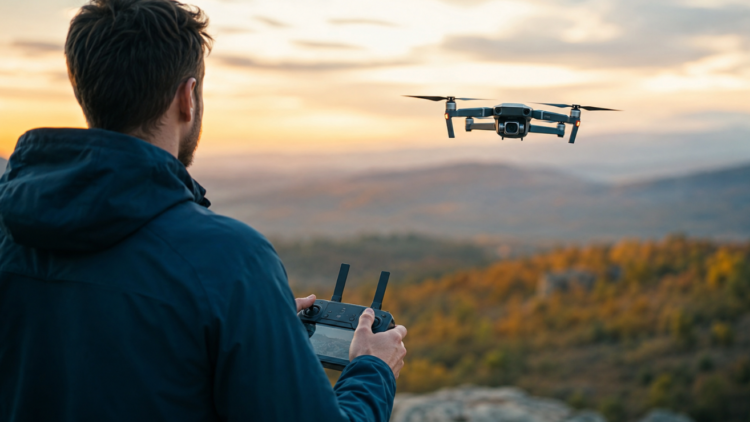
You buy your first drone thinking you’re about to film cinematic mountain shots like a travel YouTuber with 3 million subscribers.
Then the drone lifts off… drifts sideways… your heart rate doubles… and suddenly that one nearby tree starts feeling extremely personal.
Yeah. Been there.
The first time I flew a drone, I honestly thought something was wrong with the controls. I’d push the stick gently, panic when the drone moved too much, overcorrect, then spend the next 20 seconds trying not to crash into a bush.
Turns out, that’s completely normal.
Most beginners struggle with drone flying at first, even with modern drones doing half the work for you. The good news? It gets easier way faster than people think.
If you’re currently in that “why does this feel so hard?” stage, you’re not bad at flying. Your brain just hasn’t built the coordination yet.
And honestly, once it clicks… flying becomes ridiculously fun.
Why Drone Flying Feels So Difficult at First
The biggest problem for beginners is orientation confusion.
When the drone faces away from you, everything feels natural.
Push right → drone goes right.
Push left → drone goes left.
Simple.
But the second the drone turns toward you, your brain basically short-circuits. Suddenly left becomes right and right becomes left from your perspective.
That tiny mental flip causes a huge amount of beginner mistakes.
I still remember doing slow panic-circles in the air because my brain completely forgot which direction I was controlling.
Another thing nobody talks about enough is overcorrecting.
Most new pilots react too aggressively. The drone drifts slightly, so they slam the stick harder. Then the drone reacts too much, so they correct again even harder.
Within seconds, the flight looks like a confused mosquito.
The funny part is that modern drones are actually incredibly stable. The unstable part is usually the human holding the controller.
Your Brain Is Learning More Than You Think
Flying a drone is weird because you’re learning multiple skills simultaneously.
You’re controlling:
- altitude
- direction
- rotation
- camera awareness
- distance judgment
- speed control
…all at the same time.
Unlike driving a car, drones move in full 3D space. Forward, backward, sideways, upward, downward, rotating — your brain has to process a ton of information instantly.
That’s why beginner flights feel mentally exhausting.
In my opinion, drone flying feels closer to learning a musical instrument than people realize. At first, every movement feels awkward and deliberate. Then eventually your hands just “know” what to do.
Once muscle memory kicks in, everything becomes smoother.
A lot smoother.
Fear Makes Beginner Flying Way Harder
Nobody wants to crash a flying camera that costs hundreds of dollars.
That pressure alone makes beginners tense up.
And tense hands create jerky control inputs.
I also think social media makes this worse. You see creators flying perfectly through forests, cliffs, and tiny gaps like it’s effortless.
What you don’t see is the dozens of practice hours behind those smooth shots.
Most skilled pilots spent a long time doing boring practice:
- hovering
- slow turns
- basic landings
- simple circles
That boring stuff is what builds confidence.
Honestly, this article pairs really well with my post about best beginner drones that are actually easy to fly because some drones genuinely make the learning process less stressful.
Beginner Mistakes That Make Flying Even Harder
Flying in Windy Conditions
This one catches almost everybody.
A light breeze on the ground can feel completely different once the drone climbs higher.
Small drones especially get pushed around more than beginners expect.
The first time this happened to me, I thought I suddenly forgot how to fly.
Nope. It was just wind.
If you’re learning, fly on calm days whenever possible. Early mornings are usually perfect.
Your confidence level will improve dramatically.
Staring Only at the Screen
A lot of beginners lock onto the live camera feed and completely ignore the actual drone in the sky.
That’s risky.
Screens help with framing shots, but they also reduce awareness of nearby obstacles.
Trees always look farther away on a screen than they really are. Somehow branches become invisible at the exact worst moment too.
Try alternating between:
- looking directly at the drone
- checking the screen
- scanning surroundings
That balance helps a lot.
Skipping Basic Practice
Everybody wants cinematic footage immediately.
Nobody wants to practice hovering.
Unfortunately… hovering practice is exactly what helps.
Simple drills matter more than fancy flying:
- hold a stable hover
- practice smooth circles
- land in the same spot repeatedly
- move slowly and precisely
Those basics create the foundation for everything else.
I learned this the hard way after trying to do dramatic low-altitude flyovers way too early.
The bush won that battle.
How to Make Drone Flying Easier Fast
Start in a Huge Open Area
This changes everything.
Big empty fields remove pressure and give you space to recover from mistakes.
Avoid:
- parking lots
- neighborhoods
- forests
- crowded parks
At least in the beginning.
Wide open space gives your brain room to relax.
And relaxed pilots fly better.
Use Beginner Mode
A lot of people skip beginner mode because they think it’s “too easy.”
That’s literally the point.
Beginner settings usually limit:
- speed
- distance
- altitude
And honestly? That controlled environment helps you improve faster.
Panic-flying at full speed teaches absolutely nothing except stress.
Practice Nose-In Hovering
This is the drill beginners hate most.
It’s also one of the best.
Position the drone facing toward you and practice keeping it stable.
At first, your brain will feel completely confused because the controls appear reversed.
Then one day it suddenly clicks.
And once it clicks, flying becomes dramatically easier.
Use Smaller Stick Movements
One of the biggest beginner breakthroughs is realizing you barely need to move the sticks.
Tiny movements create smoother flights.
Aggressive stick inputs create chaos.
Professional-looking footage usually comes from calm, gentle control — not fast reactions.
Think of it like guiding the drone instead of fighting it.
That mindset helped me more than any YouTube tutorial.
Best Weather for Beginner Drone Flying
Perfect beginner weather is:
- low wind
- bright visibility
- dry conditions
- mild temperatures
Early mornings are usually ideal because the air tends to stay calmer.
Avoid learning in:
- strong wind
- rain
- fog
- rapidly changing weather
Even experienced pilots get cautious in bad conditions.
Also, flying directly toward the sun is surprisingly annoying. The glare can make the drone hard to track visually, especially at longer distances.
Why Some People Learn Faster Than Others
Gaming experience definitely helps.
People who play console or PC games often adapt faster because they already have decent thumb coordination and camera awareness.
But honestly, patience matters more.
The people who improve fastest are usually the ones who:
- stay calm
- practice consistently
- accept small mistakes
- focus on fundamentals
The people who struggle most are usually trying advanced cinematic flying on day two.
That almost never ends well.
How Long Until Flying Feels Natural?
For most people, things improve noticeably after around 5–10 practice sessions.
The first major breakthrough happens when hovering stops feeling stressful.
The second happens when directional controls stop confusing your brain.
After that, flying becomes way more relaxing.
And honestly… fun.
A lot of beginners quit right before reaching this stage because the early learning curve feels worse than it actually is.
Stick with it.
You’re probably closer than you think.
If you’re still deciding between drone brands, I also wrote a casual comparison on DJI vs Autel drones in 2026 after spending time with both ecosystems.
Drone flying feels hard at first because your brain is adapting to an entirely new way of controlling movement in space.
That’s normal.
Every experienced pilot once struggled with awkward hovering, reversed controls, shaky turns, and accidental tree encounters.
The difference is simply that they kept flying long enough for the controls to become instinctive.
In my experience, beginners improve way faster when they stop chasing perfect cinematic footage immediately and focus instead on smooth, controlled fundamentals.
Once those basics click, everything changes.
Flying becomes calmer, smoother, and honestly way more addictive than most people expect.
And eventually?
That tree stops looking so scary.