How Do RC Cars Actually Work Under the Hood
How Do RC Cars Actually Work Under the Hood
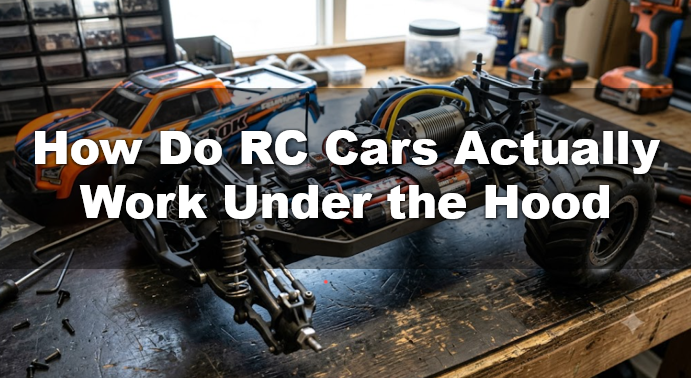
I remember taking apart an RC car once because I wanted to see what was actually making it move. From the outside, there isn’t much to look at. A plastic body, four wheels, a little antenna, and a trigger-style remote.
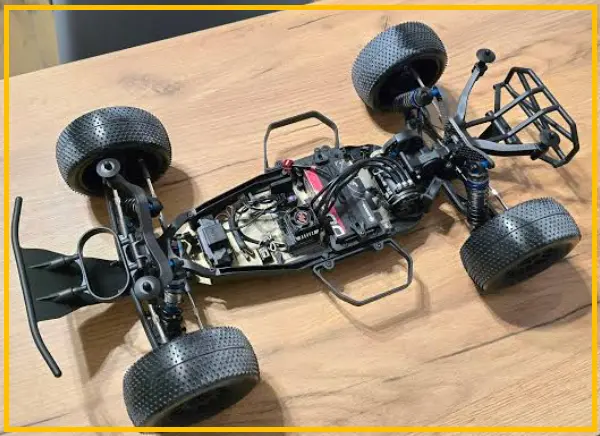
Take the body off, though, and it looks completely different. There’s a motor, battery, gears, wiring, a receiver, and a steering servo all packed into a surprisingly small space. Once I saw that, I started looking at RC cars less like toys and more like tiny machines.
What’s Actually Inside an RC Car
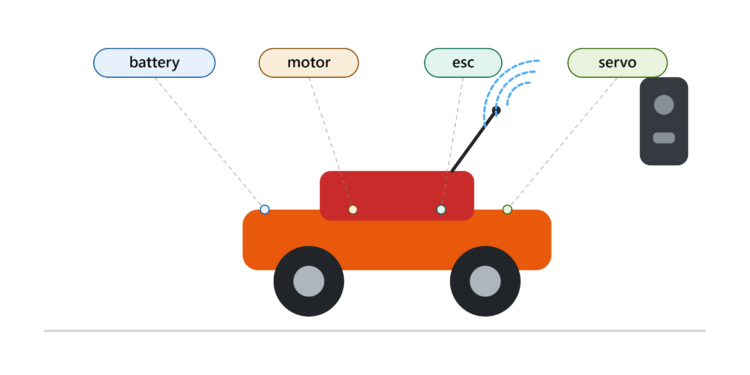
Strip away the body of an RC car and the layout is actually pretty easy to understand. The battery provides the power, the motor uses that power to turn the drivetrain, and the ESC controls how much power the motor gets. Then there’s the receiver, which is basically the car’s link to the person holding the remote.
There are other parts involved, but those are the pieces you’ll want to understand first.
The Battery Pack
You’ll usually run into two battery types when you start shopping for an RC car: NiMH and LiPo.
NiMH is the easier one to live with when you’re new. The packs are heavier, but they’re generally less demanding when it comes to charging and storage. LiPo batteries are a different story. They’re lighter and can deliver the kind of power you need for faster RC cars, which is why they’re so common in hobby-grade setups.
The downside is that you can’t treat a LiPo like a regular rechargeable battery. You’ll want the right balance charger and you need to store it properly between runs.
The Motor
When you start looking at RC motors, you’ll quickly run into the brushed-versus-brushless debate.
Brushed motors are the simpler setup. Inside the motor, physical brushes contact the commutator as it spins. They’re inexpensive and perfectly fine for basic RC cars, which is why you still see them in entry-level models.
Brushless motors work differently. Instead of relying on brushes making physical contact, the ESC handles the electronic switching that keeps the motor spinning. They’re generally more efficient and are capable of much higher performance.
A basic brushed car can feel perfectly quick until you get behind the wheel of a properly powered brushless setup.
How the Remote Talks to the Car
Nothing on the remote is physically connected to the car, of course.
Pull the trigger and the transmitter sends that command over the radio link. The receiver inside the car picks it up and tells the electronics what you want the car to do. Throttle commands eventually reach the ESC and motor, while steering commands are sent to the steering servo.
All of that happens almost instantly, which is why the car feels like it’s responding directly to your hand.
Check out these related posts:
👉 RC ESC failure symptoms and How to Fix Them – Troubleshooting
Why 2.4GHz Became the Standard
If you’ve ever seen older RC cars with long antennas, there’s a good reason they looked different from today’s models. Older systems commonly used frequencies such as 27MHz or 49MHz, and interference could become a real problem when several cars were running nearby.
Modern 2.4GHz systems made that much easier. The transmitter and receiver bind to each other, and many systems use frequency-hopping technology to reduce interference from other radios nearby.
The Servo’s Role in Steering
Steering is handled by a small servo mounted near the front of the chassis. Instead of simply spinning like the main motor, the servo moves to a particular position and holds it there. That movement gets transferred through the steering linkage to turn the front wheels.
Gearing and Why It Changes Everything
Motor speed is only part of the equation. The gearing between the motor and wheels has a huge effect on how the car actually feels on the road.
The small pinion gear on the motor shaft drives the larger spur gear, and changing that relationship changes the way the car delivers its power. Gearing can be set up to favor acceleration and torque or to chase more top speed.
A smaller pinion generally gives you more torque and acceleration, which can be useful for heavier cars, climbs, or off-road driving. A larger pinion can increase top speed, but there’s a catch: the motor has to work harder and temperatures can climb quickly.
Further Reading:
👉 Gear Ratio Tuning – Speed vs Torque Explained
A Couple Things That Aren’t So Obvious
One mistake that’s easy to make when buying an RC car is assuming that more voltage automatically means more speed. It doesn’t quite work that way.
The motor and ESC both have limits, and running a battery that doesn’t match the rest of the system can create a lot more heat than you’re expecting. Before dropping a higher-voltage pack into the car, check what the motor and ESC are actually designed to handle.
Radio range is another thing that’s easy to misunderstand. A remote might be rated for 100 meters, but that doesn’t mean you’ll get exactly 100 meters in every situation. Buildings, trees, other radio equipment, and the position of the antenna can all affect the connection.
An open parking lot with a clear line of sight is about as good as it gets. Start putting walls, trees, or other obstacles between you and the car, and the practical range can drop.
Putting It All Together
Once you know what you’re looking at, an RC car becomes much easier to understand. The battery feeds the electronics, the ESC controls the motor, the gears turn that motor’s output into usable power at the wheels, and the receiver keeps the whole thing connected to your remote.
That’s really all that’s happening underneath the body. There are plenty of details to dig into once you get deeper into the hobby, but understanding those basic connections is enough to make the car’s behavior start making a lot more sense.