RC Car No On/Off Switch – How to Turn It On
RC Car No On/Off Switch – How to Turn It On
You plug in the battery, turn on the remote, and… nothing. No light, no sound, and definitely no movement. If your RC car doesn’t have an obvious power switch, it’s easy to assume something is wrong with it.
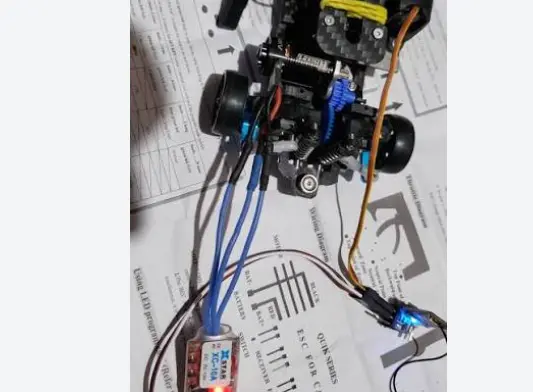
But that doesn’t necessarily mean the car is broken. Some RC cars simply don’t use a separate power switch. Instead, the ESC gets power as soon as you connect the battery.
On some models, the wiring is simply built this way from the start.
So before assuming there’s a problem, check how the battery and ESC are connected.
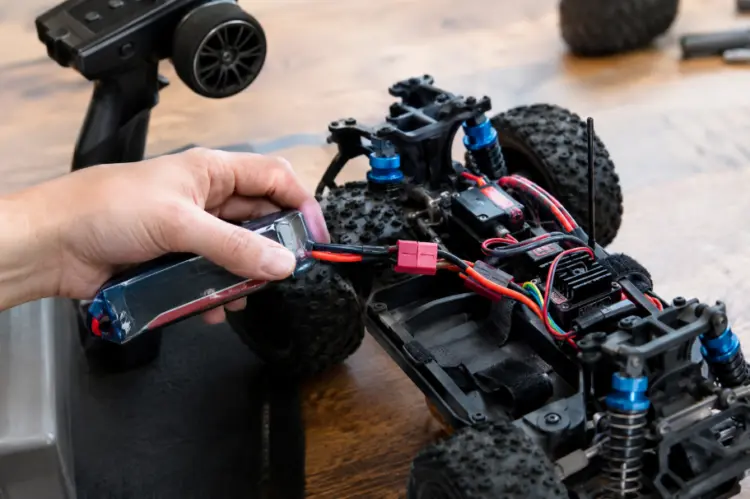
How the Power Connection Works
The Battery Plug Is the Switch
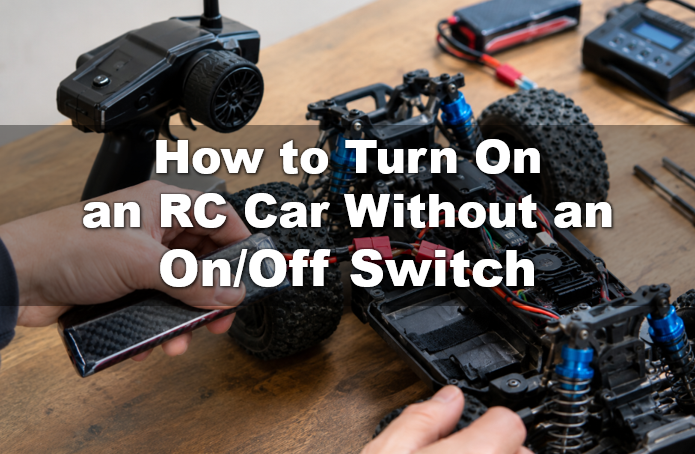
On these cars, the ESC gets its power directly through the battery connector. The type of plug depends on the model. You might see a JST, Deans, XT60, or another connector.
Once you plug the battery in, the ESC and receiver can receive power. Pull the battery connector apart, and the car is powered down.
If you’ve been searching the chassis for a little rocker switch, you may not find one. Start by checking around the battery tray and the ESC wiring. On some models, the connector can be tucked under the battery strap, foam padding, or inside the battery compartment.
Recommended Reading:
👉 2S vs 3S LiPo battery – What’s the Real Difference?
What About Receiver-Ready RC Cars?
If you bought a receiver-ready model, the ESC and receiver may already be connected. In that case, the battery connection is still what supplies power to the electronics.
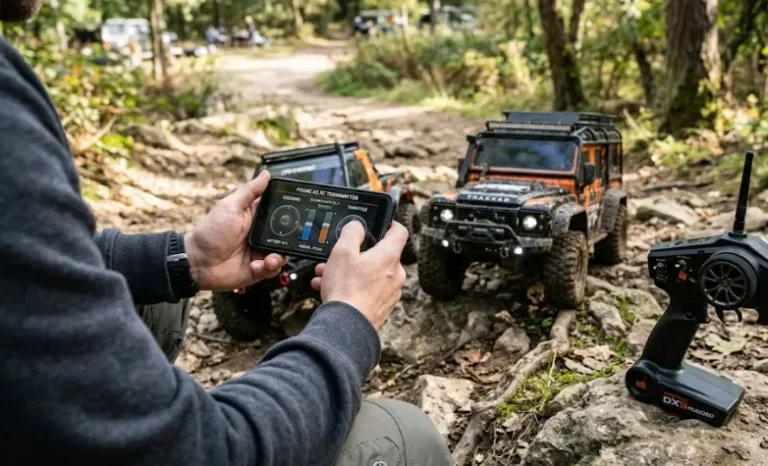
Turn on the transmitter first, then connect the battery to the car.
If you connect the battery first, the ESC may not respond normally until you turn the transmitter on or reconnect the battery.
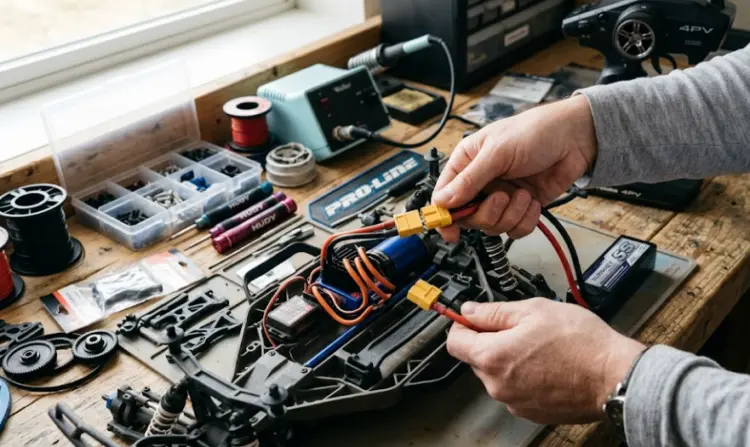
RC Car No On/Off Switch – How to Turn It On
Charge the Battery Fully First
First, make sure the battery actually has a charge. If the pack is nearly empty, the car may not show any obvious signs of life.
Charge the battery with the charger recommended for that battery type.
Power the Transmitter On Before Connecting the Battery
Turn on the transmitter and make sure the throttle is at neutral.
Then connect the battery to the car. If the ESC doesn’t respond, disconnect the battery and try again with the transmitter already on.
Further Reading:
👉 RC Car Loses Power Quickly? Here’s What’s Actually Causing It
Plug in the Battery Connector Firmly
Connect the battery firmly. Don’t force the plug, but make sure the two connectors are fully seated.
Depending on the model, you may hear a beep or see an LED on the ESC when power is connected.
Test the Throttle in a Clear Area
With the car on the ground and away from anything it could hit, gently test the throttle.
If the car responds, the transmitter and receiver are communicating normally.
If nothing happens, disconnect the battery and repeat the startup sequence with the transmitter turned on first.
If Your RC Car Still Doesn’t Turn On
If the car still doesn’t respond, don’t assume the electronics are dead just yet.
Next, check the battery connector. Unplug it and reconnect it firmly. Look for bent pins, damaged plastic, or a connector that feels unusually loose.
Also check the battery and connector for the correct polarity. Never force a connector together if it doesn’t fit. Check the polarity markings and make sure the positive and negative sides match.
Do You Need to Add a Power Switch?
You can add an inline switch if you really want one, but it’s not necessary for most setups.
If the car works normally, there’s usually no reason to modify the wiring just to add a switch.