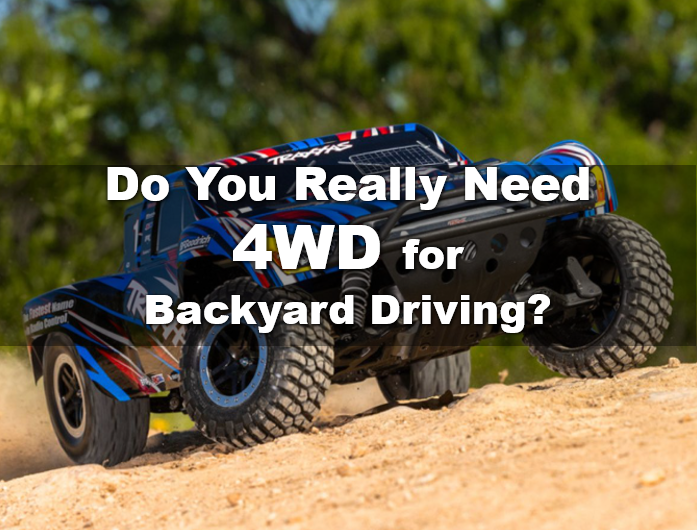
2WD RC Car – Do You Really Need 4WD for Backyard Driving?
2WD RC Car – Do You Really Need 4WD for Backyard Driving?
As an Amazon Associate I earn from qualifying purchases.
I used to think 4WD was almost always the better choice for an RC car. More wheels getting power should mean more traction, right? Then I started driving on the same kind of grass, gravel, and dirt most people actually have around their house.
On paper, 4WD sounds like the obvious winner. You get power going to all four wheels, so it seems like there isn’t much reason to choose anything else. But once you actually spend some time driving an RC car, the difference isn’t quite that simple.
Where 4WD Makes a Real Difference
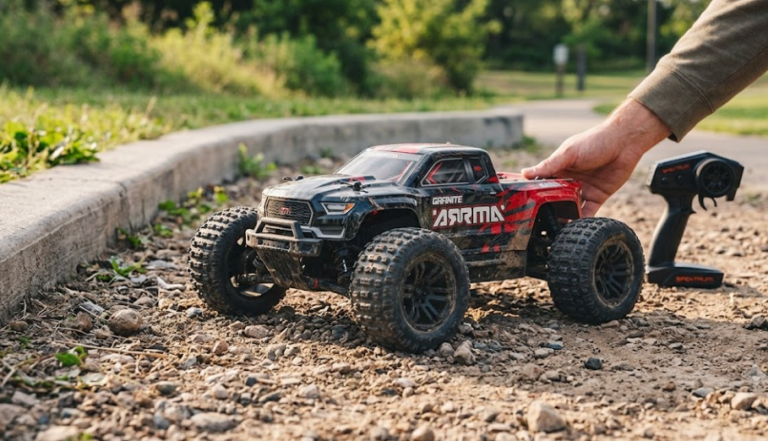
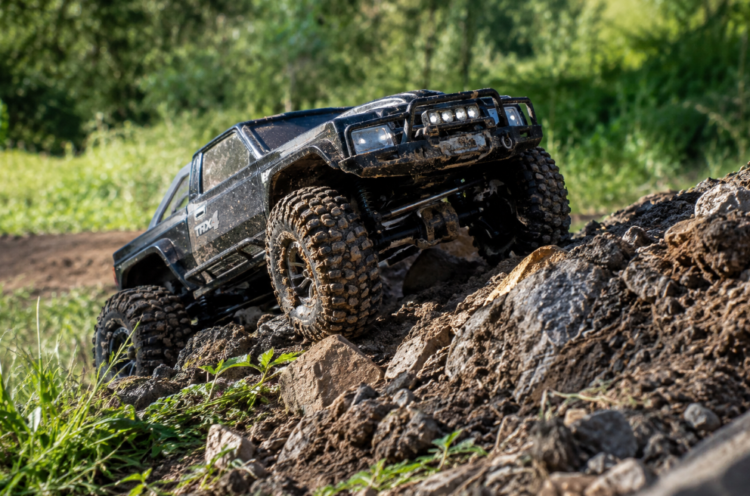
The main advantage of 4WD is pretty simple: you have more driven wheels putting the power down. You’ll notice that most when the surface is loose or uneven, especially when you’re trying to get up a hill or through something like mud, rocks, or deep grass.
There’s a catch, though. Extra traction doesn’t help much if the car is already getting hung up underneath.
I’ve run into this with low RC trucks on thick grass. The tires can still have plenty of grip, but the chassis ends up dragging through the grass and the car slows down anyway.
👉 Recommended Reading:
Best Entry-Level RC Cars – What You’re Really Paying For
Don’t Forget Ground Clearance
Ground clearance is easy to overlook when you’re comparing RC cars. A truck can have plenty of power and excellent traction, but that doesn’t matter much if the chassis keeps catching on the ground. This is one of those things you notice much faster after driving the car than you do from looking at the specs.
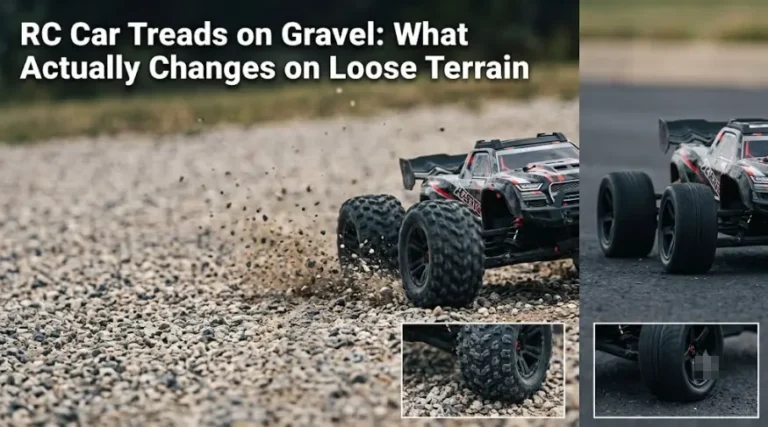
Tires matter more than I initially expected, too. A 4WD car on a loose dirt surface can still struggle if it’s running tires that don’t suit the terrain. So I wouldn’t look at the drivetrain by itself when comparing two RC cars.
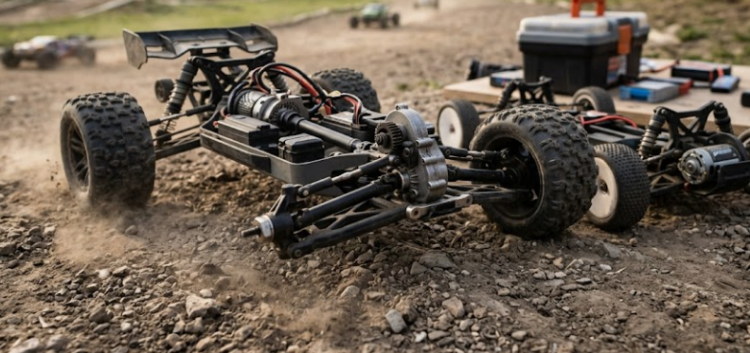
The Downsides of 4WD
There can also be some extra drivetrain loss with 4WD, although I wouldn’t expect the difference in runtime to be dramatic on every model. Motor, gearing, battery, tires, and how you drive all have a pretty big effect on runtime.
If two similar cars are using the same battery, the 4WD setup can use a little more energy because there’s more drivetrain to turn. How noticeable that is depends heavily on the cars, though.
👉 Recommended Reading:
2S vs 3S LiPo battery – What’s the Real Difference?
More Parts To Deal With
There are also simply more drivetrain components to deal with on a 4WD car. Depending on the design, that can mean extra gears, bearings, driveshafts, and differentials.
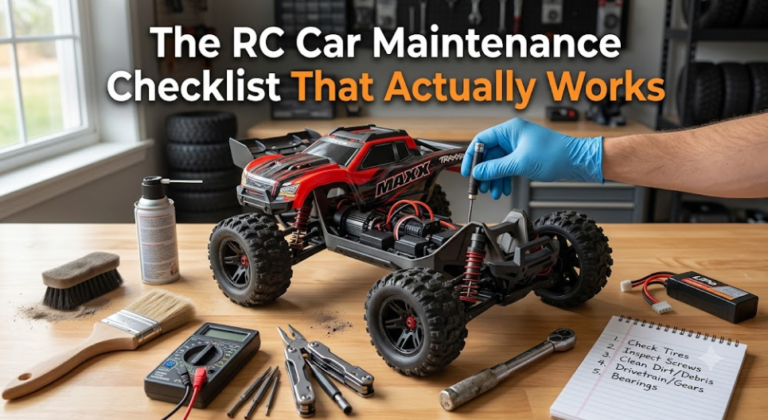
None of that means a 4WD car is unreliable. It just means there are more components to inspect when something starts making a strange noise or the drivetrain doesn’t feel right.
Maintenance can be a little easier on a 2WD chassis simply because the drivetrain is less complicated. Depending on the model, getting to a 4WD gearbox or differential can involve removing more parts first.
👉 Check Amazon’s Lowest Price
a decent balance charger
Venom Power Pro Duo LiPo Battery Charger
What About Top Speed?
On a flat surface, I’d also expect a comparable 2WD car to have an efficiency advantage. But I wouldn’t buy a 2WD RC car purely because you expect it to be faster. Gearing, motor choice, battery, weight, tires, and the actual design of the car can make a much bigger difference than 2WD versus 4WD by itself.
When I’d Choose 2WD
If most of your driving is going to happen on a driveway, a flat dirt lot, or a reasonably short lawn, I’d seriously consider 2WD. You probably won’t be missing the extra traction very often.
A 2WD car can also be lighter and simpler, depending on the model. That’s nice when you’re carrying the car around, cleaning it after a run, or fixing something at home. And if the 2WD version costs less, that money might be better spent on an extra battery or a decent charger.
👉 Check Amazon’s Lowest Price
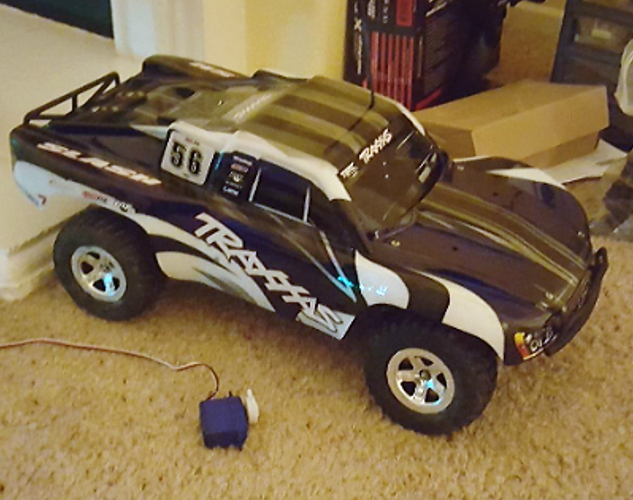
a car like the Traxxas Slash 2WD
I wouldn’t say 4WD is the wrong choice, though. If you’re dealing with deep grass, mud, rocks, or steep loose hills regularly, the extra traction can make a very noticeable difference. That’s where I’d spend the extra money on 4WD without thinking twice.
For everything else, 2WD makes a lot of sense. If you’re mostly driving around the driveway or on relatively flat ground, I’d rather have a simple car that I can clean quickly, fix easily, and get back outside with.
So, Which One Should You Buy?
I’d start with the terrain rather than the drivetrain. If you spend most of your time on flat ground, 2WD is worth considering. If you’re constantly driving through mud, rocks, deep grass, or steep terrain, 4WD is probably the better fit.
There’s no need to pay for four driven wheels just because they’re there.