Best Entry-Level RC Cars – What You’re Really Paying For
Best Entry-Level RC Cars
As an Amazon Associate I earn from qualifying purchases.
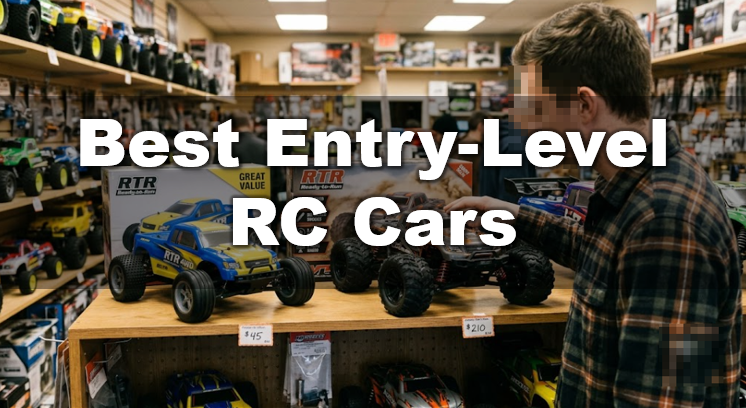
Walk into any hobby shop and you’ll notice something strange. A forty-dollar RC car and a two-hundred-dollar RC car can look almost identical sitting on the shelf. Same size, same rugged tires, same “ready to run” sticker slapped on the box. From what I’ve seen after years of buying, breaking, and rebuilding these things, somewhere close to a third of first-time buyers end up disappointed with their first RC car, and it’s rarely because the car was slow. It’s because nobody explained what that price tag was actually paying for.
That gap between “looks the same” and “performs completely differently” is where most beginners get burned. So instead of just handing you a list of models, I want to break this down the way I wish someone had broken it down for me: part by part, dollar by dollar, so you know exactly what you’re buying before you buy it.
What “Entry-Level” Actually Means in the RC World
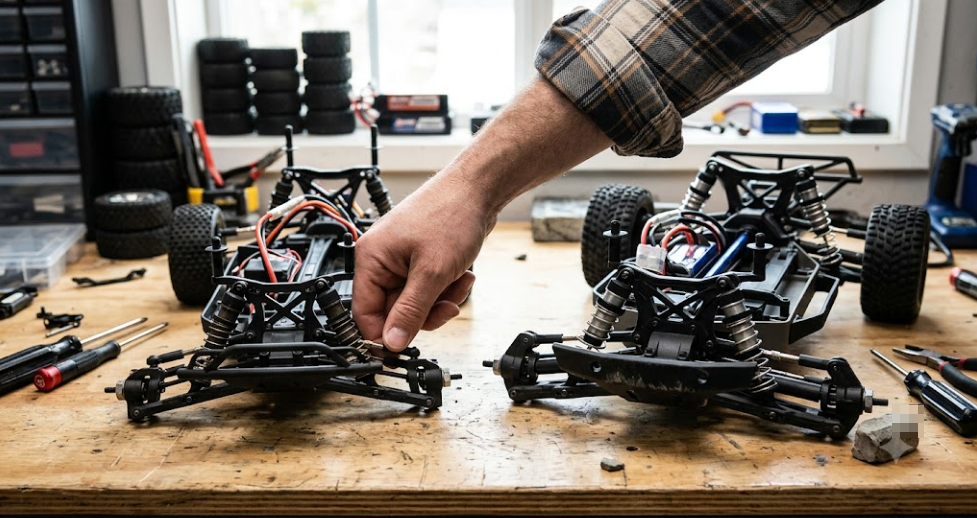
Entry-level doesn’t mean cheap, and it definitely doesn’t mean low quality. In this hobby, entry-level just means the car is built to forgive mistakes. It’s the difference between a car that shrugs off a curb impact and one that needs a new steering knuckle after its second run.
The problem is that manufacturers know beginners shop by price first, so a lot of budget models cut corners in places you won’t notice until you’re already committed. That’s exactly why the cost breakdown matters more than the sticker price.
The Real Cost Breakdown of an Entry-Level RC Car
The Base Kit Price Isn’t the Real Price
When you see a car listed at sixty or eighty dollars, that number covers the chassis, the motor, and usually a basic radio system. It almost never covers everything you need to actually drive it home from the store. Batteries, a charger, and sometimes even the receiver pack are sold separately on a surprising number of listings, which is how a “sixty dollar car” quietly turns into a hundred-dollar purchase.
If you’re still deciding what kind of car fits your driving style before worrying about accessories, this honest starter guide to RC cars for beginners walks through the basics without the sales pitch, which is a good place to start before you swipe your card.
Check Current Price & Availability
👉 Best RC Cars $60 on Amazon
👉 Best RC Cars $100 on Amazon
Batteries and Chargers-The Hidden Line Item
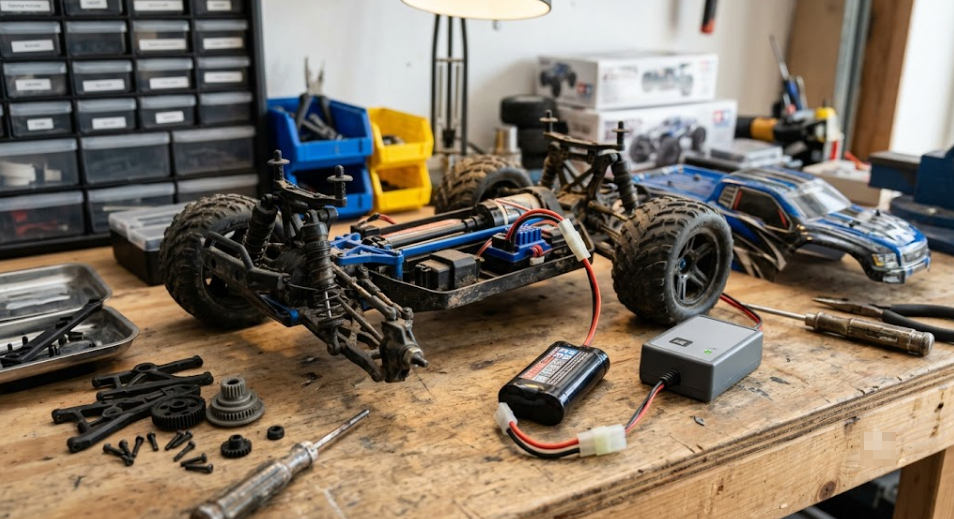
This is the part nobody puts on the box art. A cheap NiMH battery pack might run you fifteen to twenty-five dollars, and a basic charger adds another twenty. That’s not optional spending, that’s the difference between a car that runs and a car that sits in a closet. Budget kits often ship with battery packs that barely last fifteen minutes of actual driving time, which sounds fine until you realize you spent more time charging than playing.
Spare Parts-The Cost Nobody Mentions on the Box
Every RC car breaks something eventually. Entry-level cars are no exception, and honestly, they break more often because the plastic gears and suspension arms are built to a price point, not to survive a driveway curb at full speed. Budget ten to twenty dollars for a basic spare parts kit right out of the gate. It’s not pessimism, it’s just how this hobby works, and buying those parts before you need them saves you a frustrating week of waiting on shipping after your first crash.
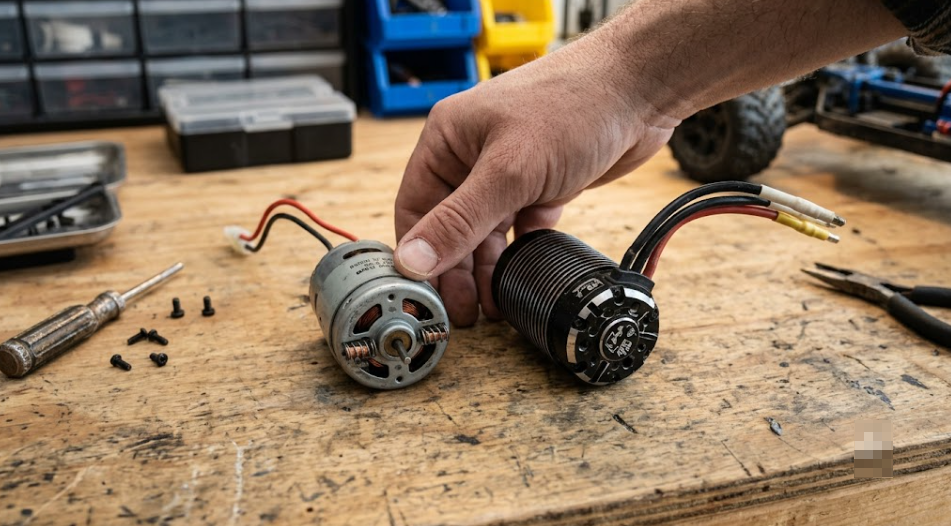
Brushed vs Brushless Motors – What You’re Really Paying For
This single spec explains almost the entire price gap between a sixty-dollar car and a two-hundred-dollar car. Brushed motors are simpler, cheaper to manufacture, and genuinely fine for a first car. They run cooler at low speeds and they’re nearly impossible to damage through normal use, which makes them a smart choice while you’re still learning throttle control.
Brushless motors cost more because they deliver more power, more efficiency, and a longer lifespan, but that extra speed is wasted on someone who hasn’t built the reflexes to control it yet. If you’re not sure how much speed you actually need for your first car, this breakdown on how fast your first RC car should really be lays out the tradeoff clearly, and it might save you from buying more car than you’re ready for.
Check Current Price & Availability
👉 Best Brushless Motors RC Cars on Amazon
👉 Best Bryshless Motors RC – DEERC 1:10 Large Remote Control Cars
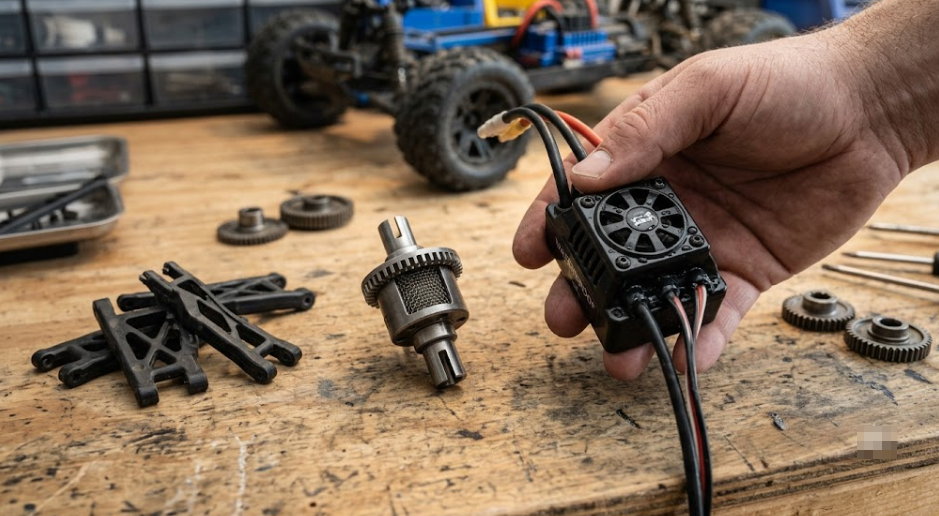
Where the Value Actually Shows Up
Durability Over Raw Speed
The best entry-level cars aren’t the fastest ones on paper. They’re the ones that survive being driven by someone who is still learning where the brakes are. Look for metal gear differentials over plastic ones, and check whether the suspension arms are reinforced. These are small line items in the manufacturing cost, but they’re the reason one car survives its first month and another doesn’t make it past the first weekend.
Waterproof Electronics Are Worth the Extra Cost
Sealed electronics usually add ten to fifteen dollars to the price of a car, and it is worth every cent. A single puddle or a patch of wet grass can fry an unsealed receiver in seconds, turning your “cheap” car into an expensive paperweight. If there’s one upgrade worth paying extra for on your first purchase, this is it.
How to Avoid Overpaying for Your First RC Car
The smartest move isn’t chasing the lowest price or the highest top speed. It’s matching the car to how and where you’re actually going to drive it. A car built for smooth pavement will struggle and break down fast on grass or gravel, while an off-road-ready truck is overbuilt and unnecessarily expensive if all you’ve got is a driveway. Buying based on your actual terrain, rather than the flashiest number on the box, is what separates people who stick with this hobby from people who quit after one bad weekend.
Bottom Line
An entry-level RC car isn’t really one purchase, it’s three: the car itself, the batteries and charger, and the spare parts you’ll eventually need. Once you look at it that way, the price differences between models start to make a lot more sense, and you’ll know exactly what you’re paying for instead of guessing based on a shiny box.