Brushless RC Cars-What I Wish I Knew
Brushless RC Cars-What I Wish I Knew
As an Amazon Associate I earn from qualifying purchases.
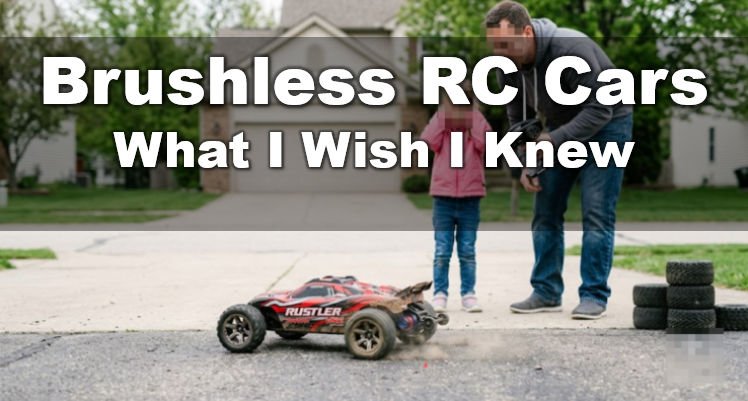
The first time I ran a brushless RC car in our driveway, my daughter clapped her hands over her ears before it even left the driveway, and I remember thinking this thing sounds like it’s about to take off. We had spent the previous six months bashing around a cheap brushed truck that felt slow and a little sad by comparison, and I wanted to know if the upgrade was actually worth the extra money or just marketing hype. So I bought one, wore out two sets of tires, and I’m writing down everything I learned along the way.
If you’re standing in the same spot I was a few months ago, wondering whether a brushless setup is worth the jump, here’s what nobody tells you upfront.
Check Current Price & Availability.
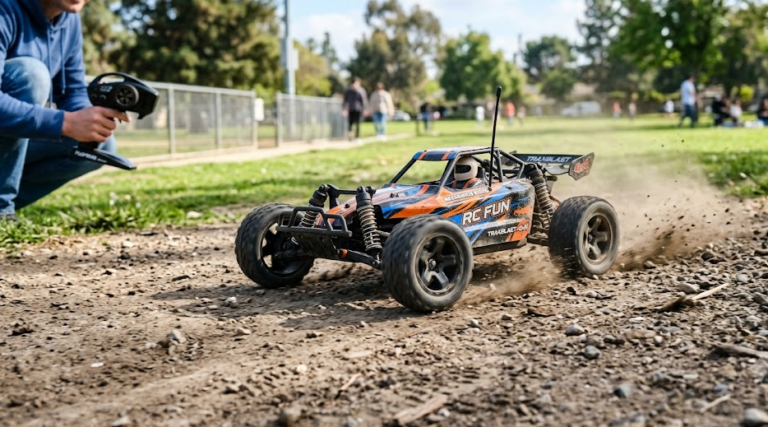
👉 Hosim Brushless RC Buggy for Adults and Kids on Amazon
How Fast Does a Brushless RC Car Actually Go?
This is the question everyone asks first, and the honest answer is it depends way more on gearing and battery cell count than the word “brushless” printed on the box. My first brushless truck hit somewhere around 35 miles per hour stock, which sounds impressive until you realize that speed is basically unusable in a normal backyard. I only ever hit that top end once, on an empty stretch of parking lot early on a Saturday morning before anyone else showed up.
What actually changed for daily driving was the throttle response. Brushed motors feel like they’re thinking about it before they move. Brushless motors just go, instantly, which matters a lot more than the top speed number when you’re dodging a kiddie pool or a stray soccer ball in the yard.
How Long Does the Battery Actually Last?
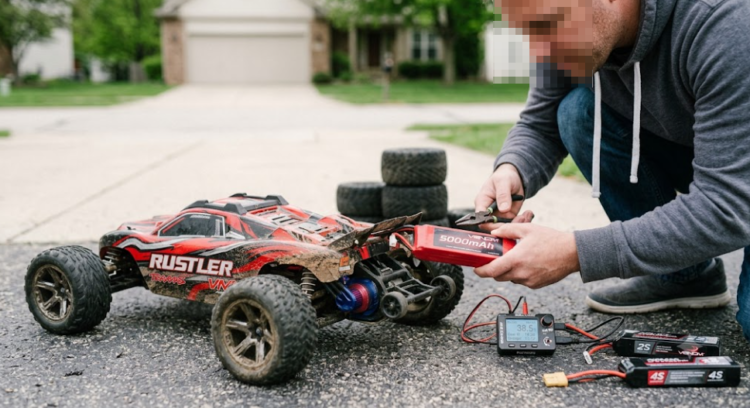
Nobody gave me a straight answer on this before I bought my first pack, so here’s mine. On a standard 3S 5000mAh battery, I get somewhere between 12 and 18 minutes of mixed driving, meaning some hard acceleration mixed with a lot of coasting while my daughter chases the truck around the yard. If you’re running it wide open the entire time, expect closer to 8 or 9 minutes before the low voltage cutoff kicks in and the fun stops abruptly.
I ended up buying a second and third battery pack pretty quickly, because there is nothing worse than a five year old standing there asking why the car stopped moving. If battery anxiety is already a concern for you, it’s worth looking at something like the MJX Hyper Go review I wrote a while back, since that model handles battery swaps in a way that made weekend sessions a lot less stressful for us.
Check Amazon’s Lowest Price.
👉 HOOVO 3S LiPo Battery 5200mAh 120C Softcase with XT60 & TR Plug, 2Pack
Brushless vs Brushed – Is the Upgrade Really Worth It?
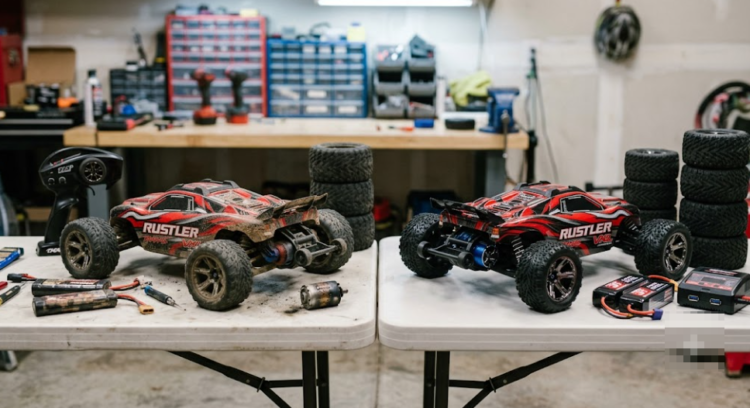
I went back and forth on this for weeks before pulling the trigger, and here’s what settled it for me. A brushless motor runs cooler, lasts longer without maintenance, and delivers noticeably more torque for climbing over curbs, roots, and the assorted junk that ends up in a backyard by July. The tradeoff is cost. Brushless setups run anywhere from 40 to 100 dollars more than a comparable brushed model, and the batteries themselves tend to cost more too.
For casual weekend driving, a good brushed setup is genuinely fine and I wouldn’t talk anyone out of starting there. But if you already know you’re going to be doing this regularly, or if your kid is the type who wants to drive every single day after school like mine does, the brushless jump pays for itself in fewer burned out motors and fewer disappointed afternoons.
Which Brushless RC Car Is Best for Beginners?
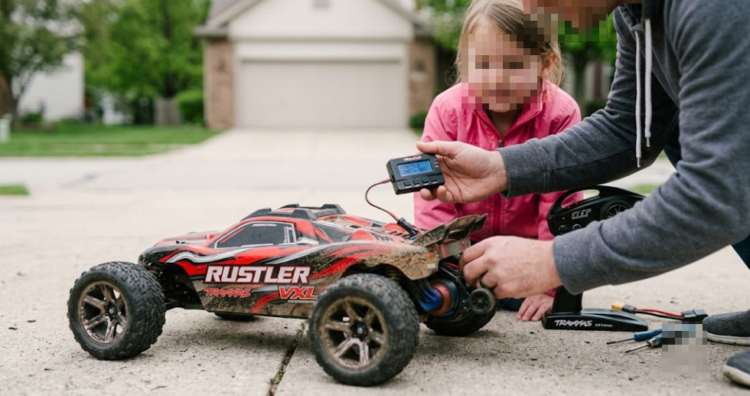
This one surprised me. I assumed brushless automatically meant harder to control, but that’s not really true anymore since most modern models ship with adjustable throttle profiles. I set mine to a lower percentage output for the first month while my daughter learned to steer, and it behaved almost exactly like a brushed model at that setting.
If you want a specific starting point, the Arrma Typhon review I put together covers a model that handled this beginner mode really well, with enough headroom to grow into once you’re comfortable with the speed.
Related Posts :
👉 Brushed vs Brushless RC Motors: Which One Makes Sense for Your RC Car?
How Much Maintenance Does a Brushless Motor Actually Need?
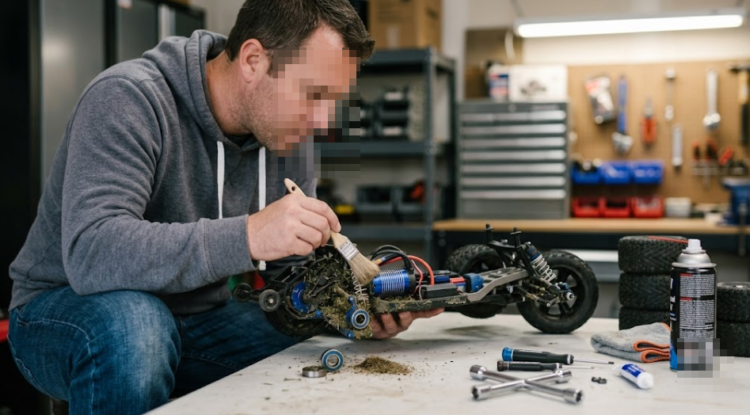
Compared to the brushed truck we ran into the ground, this has been the biggest relief. Brushless motors don’t have brushes to wear down, so there’s no replacing internal components every few months. What I do check regularly is the bearings, since dirt and grass clippings work their way in no matter how careful you are, and a quick wipe down after every session keeps things running smoothly for a long time.
Articles you might find helpful :
👉 Arrma Typhon Review – Is It Really Worth It?
So Is a Brushless RC Car Worth It?
For us, yes, without much hesitation. The extra upfront cost bought us fewer dead motors, more consistent power, and a lot more Saturday mornings spent outside instead of troubleshooting why the truck won’t move. If you’re on the fence, I’d say buy one solid battery pack to start, run it hard for a few weeks, and you’ll know pretty quickly whether it fits how your family actually uses it.