
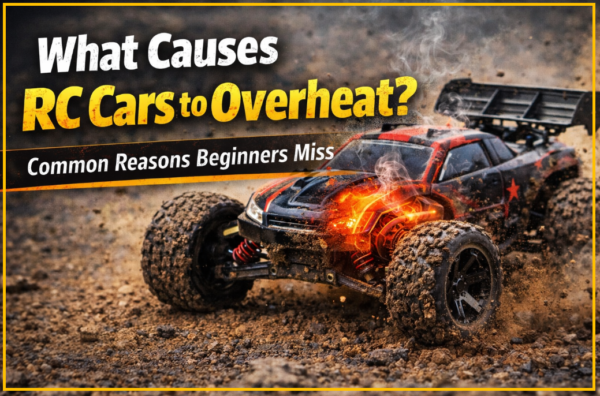
Overheating Isn’t Bad Luck
The first time my RC car overheated, I assumed something was wrong with the car. It was new, the battery was fresh, and nothing looked broken. Still, the motor was hot enough that I pulled my hand away immediately.
That moment turned out to be one of the most important lessons I learned.
RC cars don’t overheat randomly. When heat builds up, it’s a sign that something in the system is being pushed harder than it should be. Once beginners understand what causes RC cars to overheat, most heat problems stop being mysterious—and start being preventable.
Why RC Car Overheating Is So Common
RC cars feel simple. Turn them on, pull the trigger, and they go. What’s easy to miss is how tightly balanced the mechanical and electrical systems are.
Many beginners treat RC cars like toys instead of machines. Heat is the warning signal. Ignore it long enough, and parts start paying the price.
The Most Common Causes of RC Car Overheating
Motor Overload and Gear Ratio Problems
Improper gearing is one of the fastest ways to create heat. When gearing is too aggressive, the motor has to work harder to move the car. That extra effort turns directly into temperature.
Chasing top speed usually causes this. Faster setups feel exciting at first, but they often run hotter and shorten motor life—especially with powerful brushless systems.
Battery Stress and Voltage Mismatch
Batteries influence heat more than most beginners realize. Running higher voltage than the system is designed for increases current draw across the motor and ESC.
Higher voltage doesn’t automatically mean better performance. Without the right setup, it simply creates more heat and wear.
If battery basics are still confusing, this guide explains them clearly:
Redcat RC Car Battery and Charger Basics Explained: What New Owners Should Actually Know
Driving Style and Throttle Habits
Driving habits matter. Constant full throttle, repeated hard launches, and aggressive braking all generate heat.
Beginners tend to stay on full throttle longer, especially in open areas. Smoother throttle control keeps temperatures lower and allows the car to run longer without power loss.
Environmental Factors That Increase Heat
Terrain Resistance
Surface choice plays a big role. Grass, sand, and loose dirt create resistance that forces the motor to work harder. Pavement and packed surfaces are much easier on the system.
Overheating happens faster on grass than most beginners expect—especially with heavier RC cars.
Ambient Temperature
Hot weather magnifies existing problems. A setup that runs fine on a cool day can overheat quickly in summer.
Electronics have thermal limits. When ambient temperatures rise, there’s less margin for error.
Poor Maintenance and Heat Buildup
Dirt and debris quietly contribute to heat. Dust inside bearings increases friction. Grime around the drivetrain traps warmth where it shouldn’t.
Regular cleaning is one of the simplest ways to control operating temperatures. This maintenance guide helped reshape my routine early on:
How Often Should You Maintain an RC Car? A Practical Maintenance Schedule That Actually Works
If cleaning feels intimidating, this step-by-step guide breaks it down:
RC Car Maintenance Basics Explained for Beginners
Cooling Systems and Airflow Issues
Airflow is often ignored. Bodies mounted too low, blocked vents, or damaged cooling fans reduce heat dissipation.
Simple changes—like improving body ventilation or ensuring fans work properly—can lower temperatures more than expected.
Signs Your RC Car Is Overheating
Overheating rarely appears without warning. Reduced power, inconsistent throttle response, thermal shutdowns, and unusually hot motors are common signs.
A simple check after a run helps. If you can’t comfortably touch the motor for more than a second, it’s likely running too hot.
Long-Term Damage Caused by Overheating
Repeated overheating shortens motor life, weakens solder joints, stresses ESCs, and accelerates battery degradation.
Cars that seem to “wear out early” often suffer from accumulated heat damage rather than age.
How to Prevent RC Cars From Overheating
Prevention comes down to balance. Reasonable gearing, correct batteries, smoother driving, regular cleaning, and attention to airflow solve most overheating issues.
Learning to stop before the car forces itself to stop is a skill. Once that habit forms, heat problems become rare.
Overheating teaches lessons upgrades never will. Beginners who understand heat early tend to enjoy the hobby longer and replace fewer parts.
RC cars don’t overheat because they’re fragile. They overheat because they’re powerful machines that demand balance and attention. Once that clicks, everything else starts to make sense.