
RC Car Maintenance Basics Explained for Beginners
Most RC cars don’t stop working because they’re “bad quality.”
They stop working because no one ever explained the boring part—maintenance.
Beginners usually focus on speed, batteries, and how cool the car looks. Maintenance feels optional at first. Until something breaks. That’s usually when the hobby suddenly feels expensive, confusing, and frustrating.
This guide exists to help avoid that moment.
No advanced wrenching. No brand loyalty. Just basic RC car maintenance, explained clearly so beginners know what actually matters—and what doesn’t.
Why RC Car Maintenance Matters More Than You Think
RC cars live a rough life.
They deal with:
- Dust and dirt
- Vibration
- Heat
- Moisture
- Repeated impacts
Even light driving slowly loosens screws, wears parts, and stresses electronics. Maintenance isn’t about perfection—it’s about preventing small problems from becoming big ones.
General RC fundamentals and beginner concepts are also explained in related posts at
👉 What Is an RC Car? A Beginner’s Guide to How RC Cars Really Work
What “Basic Maintenance” Really Means
Not Repairs. Not Upgrades.
Beginner maintenance is not about modifying or improving performance.
It’s about:
- Cleaning
- Inspecting
- Protecting components
- Catching issues early
That’s it.
Cleaning Your RC Car the Right Way
When to Clean
You don’t need to clean after every run—but you should clean whenever:
- Dirt is visible
- Performance feels different
- The car was used on grass, dirt, or wet ground
[ How to Clean Your RC Car – And Why You should! – Hobbies Direct ]
How to Clean (Beginner-Safe Method)
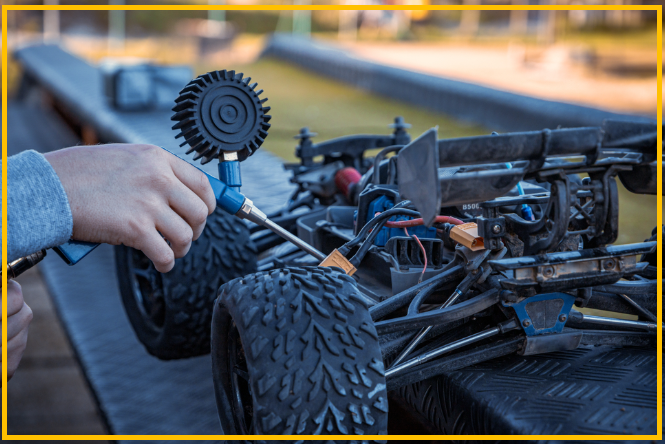
Step 1: Remove Loose Dirt
Use a soft brush or compressed air. Never use high-pressure water.
Step 2: Wipe Surfaces
A slightly damp cloth is enough for chassis and suspension parts.
Step 3: Avoid Electronics
ESCs, receivers, and motors do not like water. Keep moisture minimal.
Cleaning basics are often misunderstood, which is why simple RC care principles are repeated across beginner articles on
👉 Redcat Racing for Beginners: A Complete Guide to Getting Started with RC Cars
Basic Inspection: What to Check Every Time
Screws and Fasteners
Vibration slowly loosens screws. A quick visual check prevents parts from falling off mid-run.
Tires and Wheels
Look for cracks, loose wheels, or uneven wear.
Suspension Arms
Check for bends or cracks, especially after crashes.
These checks take minutes and prevent hours of frustration later.
Battery Care Basics for Beginners
Why Batteries Deserve Attention
Batteries power everything. Poor battery habits cause:
- Short runtime
- Weak performance
- Electrical issues
Safe Battery Handling Tips
- Let batteries cool before recharging
- Never store batteries fully depleted
- Avoid physical damage to battery casings
Battery fundamentals and safety concepts are explained in more detail in RC beginner content at
👉 Redcat Racing Parts Guide
Wiring and Connections: Small Details That Matter
Loose connectors cause intermittent problems that confuse beginners.
Check for:
- Frayed wires
- Loose plugs
- Bent connectors
Most “random” RC car issues come from connection problems, not broken parts.
Drivetrain and Moving Parts
What Needs Attention
- Gears
- Axles
- Bearings
You don’t need to disassemble everything. Just watch for:
- Grinding noises
- Stiff movement
- Unusual resistance
If something doesn’t spin freely, it’s a sign to investigate further.
Storage: The Most Ignored Part of Maintenance
Why Storage Matters
Improper storage causes:
- Battery degradation
- Corrosion
- Plastic fatigue
Beginner-Friendly Storage Tips
- Store in a dry place
- Remove batteries when not in use
- Keep away from extreme heat or cold
Good storage habits extend RC car life more than most upgrades ever will.
How Often Should Beginners Do Maintenance?
There’s no strict schedule, but a simple rule works well:
- Light inspection: Every few runs
- Basic cleaning: After dirty sessions
- Battery check: Every charge cycle
Consistency matters more than frequency.
Common Beginner Maintenance Mistakes
Over-Cleaning
Too much water or aggressive cleaning causes more harm than dirt.
Ignoring Small Issues
Tiny problems rarely fix themselves.
Assuming Maintenance Is “Advanced”
It’s not. It’s basic care—like checking oil in a real car.
Maintenance Builds Confidence, Not Just Longevity
Once beginners understand maintenance, RC cars stop feeling fragile.
You drive differently. You notice changes earlier. You enjoy the hobby more because nothing feels mysterious anymore.
Frequently Asked Questions (FAQ)
Do RC cars need maintenance after every use?
Not always, but basic inspection is recommended.
Can beginners do maintenance without tools?
Yes. Most basic tasks require minimal tools.
Does cleaning improve performance?
Indirectly. Clean components run more reliably.
Is maintenance different for electric and nitro RC cars?
Yes, but basic inspection and cleaning apply to both.
What causes most RC car failures?
Neglected maintenance and poor battery care.
RC car maintenance doesn’t have to be complicated.
It just has to be consistent.
Once beginners understand the basics—cleaning, quick inspections, simple battery care—the hobby becomes smoother, cheaper, and a lot more enjoyable.