
How to Store an RC Car to Prevent Damage: Long-Term Care Tips for Beginners
When I first got into RC cars, I worried most about crashes. Broken arms, stripped gears, flipped landings. What I did not expect was that some of the worst damage happened when the car was doing absolutely nothing.
I used to park my RC car on a shelf, unplug the battery, and assume that was enough. Months later, I would come back to stiff suspension, tired batteries, and connectors that no longer looked clean. At the time, I blamed age. Later, I realized it was storage.
Improper storage does not cause instant failure. It causes slow, quiet damage that only shows up when you try to run the car again. Learning how to store an RC car properly is one of the simplest ways to protect your investment long-term.
Why Proper RC Car Storage Matters
RC cars may look inactive when they are stored, but the components never truly rest. Tires stay compressed, suspension holds tension, batteries continue to age, and electronics react to their environment.
Many beginners assume storage is harmless because nothing is moving. That assumption leads to flat-spotted tires, corroded plugs, and batteries that no longer hold a charge when the next season arrives.
Storage is not just about putting the car away. It is about deciding how it will age while you are not using it.
Short-Term vs Long-Term RC Car Storage
Short-Term Storage Between Runs
Short-term storage usually means a few days or less. Even then, habits matter. I always remove the battery, wipe off loose dirt, and let everything cool down before putting the car away.
Skipping basic cleaning may not cause problems immediately, but dirt continues to work against bearings and joints while the car sits. This is why post-run cleaning matters more than most people think:
Long-Term Storage for Weeks or Months
Long-term storage is where most hidden damage happens. Parts that survive short breaks can slowly degrade when left under stress for months.
Suspension remains compressed. Tires stay under load. Batteries drift away from safe voltage. None of this looks dramatic, but together it shortens the life of the entire car.
Battery Storage: The Most Important Step
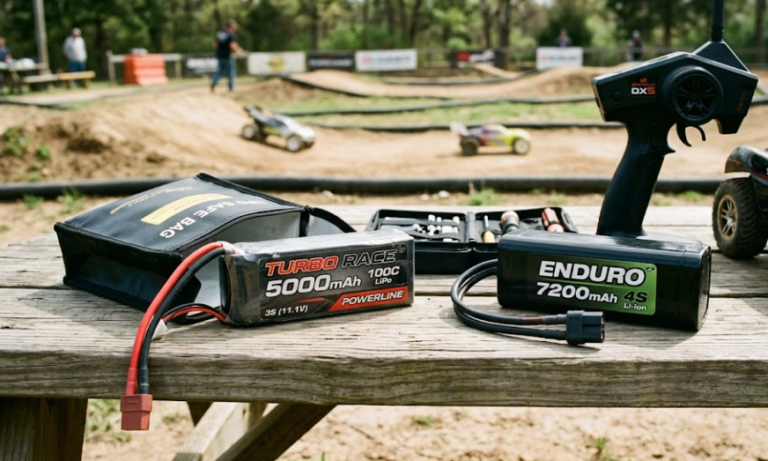
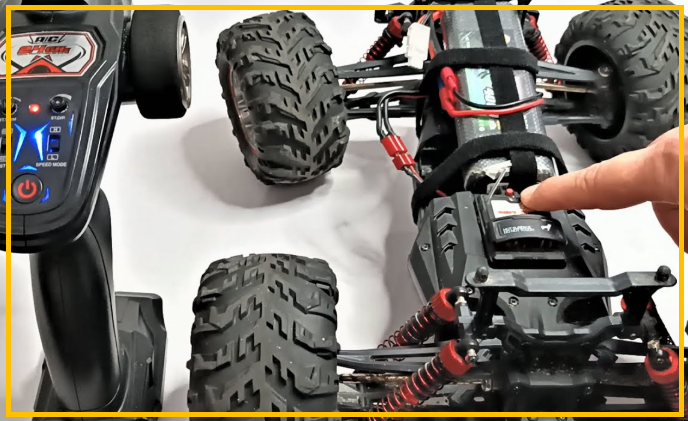
If there is one storage mistake that causes the most damage, it is leaving batteries installed.
Batteries should never be stored fully charged or fully drained. Both conditions accelerate degradation. Proper storage voltage keeps the cells stable and dramatically improves lifespan.
This guide explains battery handling and storage safety in detail:
RC Car Battery Problems Explained for Beginners: Common Issues, Fixes, and Real-World Tips
Removing batteries also protects electronics from accidental discharge, corrosion, and connector damage.
How to Position an RC Car During Storage
How an RC car sits during storage matters more than most beginners realize.
Leaving a car resting on its tires for months can cause flat spots. Keeping suspension compressed stresses springs, shocks, and seals. Over time, the car simply does not feel the same.
Using a stand or supporting the chassis takes pressure off critical components. This small habit prevents issues that often get misdiagnosed as “wear and tear.”
Environmental Factors That Cause Storage Damage
Moisture and Humidity
Moisture is one of the most common and least obvious causes of storage-related damage. Even indoor spaces can trap humidity, especially garages and basements.
Connectors that looked clean before storage can develop corrosion without ever being exposed to water directly. Climate-controlled indoor storage dramatically reduces this risk.
Temperature Extremes
Large temperature swings quietly damage plastics and electronics. Excessive heat weakens materials, while extreme cold makes them brittle.
Room-temperature environments are ideal. Attics, sheds, and uninsulated garages are rarely good long-term options.
Cleaning Before Storage Is Not Optional
Storing a dirty RC car almost guarantees future problems.
Dust and grime trap moisture, increase friction, and harden over time. When the car is used again, those contaminants accelerate wear immediately.
Routine maintenance before storage prevents most of these issues:
How Often Should You Maintain an RC Car? A Practical Maintenance Schedule That Actually Works
Protecting Electronics During Storage
Before storing, electronics should be clean, dry, and disconnected. Batteries should be removed, connectors inspected, and cooling fans checked for free movement.
A light cover can help keep dust away, but sealing the car completely often traps moisture. Airflow matters, even during storage.
Common Storage Mistakes Beginners Make
The most common mistake is assuming storage does not matter. Others include storing the car immediately after wet runs, leaving batteries installed, or ignoring environmental conditions.
These mistakes rarely cause immediate failure. Instead, they create problems that appear months later, making them harder to trace back to storage habits.
How Often Should You Check a Stored RC Car?
Even during long-term storage, occasional checks help. Every few weeks, I inspect batteries, spin the wheels, and look for signs of moisture or corrosion.
These quick checks prevent surprises and make the car feel familiar again when it is time to drive.
Long-Term Benefits of Proper RC Car Storage
RC cars that are stored correctly start easily, run consistently, and require fewer repairs. Batteries last longer. Electronics stay reliable.
Good storage habits reduce replacement costs and frustration, especially for beginners who are still learning what normal wear looks like.
For a long time, I focused on upgrades and performance while ignoring storage. That was a mistake.
Learning how to store an RC car properly is one of the simplest ways to extend its lifespan. Once storage becomes routine, the car stays predictable, reliable, and ready whenever you decide to run it again.
FAQ
Should I remove the battery before storing my RC car?
Yes. Batteries should always be removed to prevent discharge and long-term damage.
Can I store my RC car in the garage?
It depends on temperature stability and humidity. Many garages are not ideal.
How long can I store an RC car without using it?
With proper storage, several months is not a problem. Periodic checks help.
Do I need a storage stand?
Not required, but highly recommended for long-term storage.