Best RC Buggy for Beginners – 5 Things That Matter More Than Speed
As an Amazon Associate I earn from qualifying purchases.
A couple of years ago, I picked up my first RC buggy because the box promised crazy speed. I figured faster had to mean better. After a few weekends of dirt, crashes, broken parts, and a lot of laughs, I realized I had been paying attention to all the wrong things. I also think that’s exactly where most beginners start, so hopefully my mistakes can save you a little money—and maybe a few broken suspension arms.
Why an RC Buggy Is the Perfect First RC Car
There are dozens of different RC car styles out there, but if someone asked me where to start today, I’d still recommend an RC buggy without hesitation.
👉 Best budget-friendly RC buggy for beginners
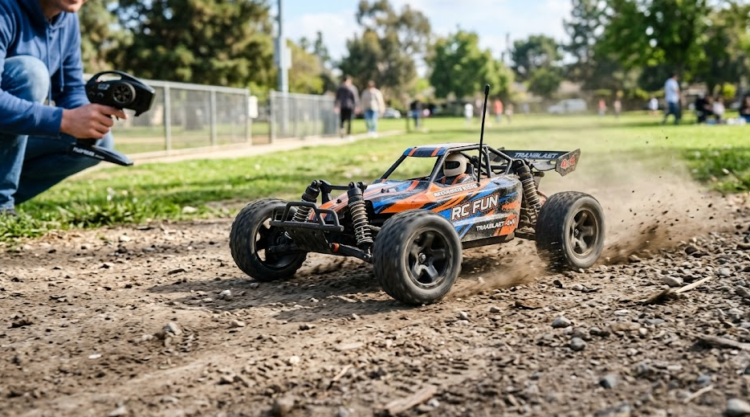
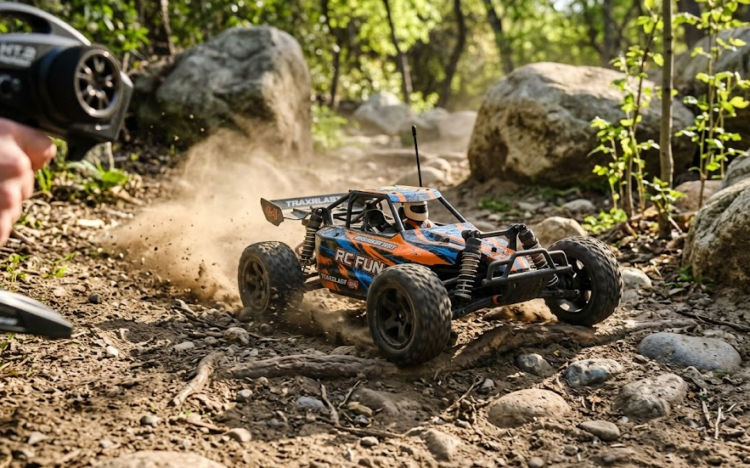
It has enough suspension travel to handle dirt roads, gravel, packed trails, and uneven parks, yet it still corners well enough to feel quick and responsive. That combination is hard to beat when you’re learning how an RC car actually behaves.
I also believe buggies are more forgiving than people give them credit for. They don’t feel overly bulky like some monster trucks, but they’re much happier off-road than touring cars. That middle ground makes them incredibly fun long after the “new toy” excitement wears off.
My first buggy definitely wasn’t the fanciest model on the shelf. In fact, it spent its first month tumbling across baseball fields, bouncing off curbs, and occasionally finding the only tree in an empty park. Somehow it kept asking for more, and that’s probably why I ended up enjoying the hobby as much as I do today.
If this is your very first RC car, I’d also recommend checking out my article on How Fast Should Your First RC Car Be? I explain why speed numbers are one of the most misleading things beginners focus on, and why a slightly slower car is usually much more enjoyable.
How Fast Should Your First RC Car Be? Here’s What I Wish Someone Had Told Me
What Actually Makes the Best RC Buggy for Beginners?
When I first started shopping, I compared one thing.
Top speed.
That’s exactly what most manufacturers want you to do.
Huge numbers on colorful boxes make it seem like speed is everything.
After owning several beginner RC cars, I couldn’t disagree more.
In my opinion, speed might be one of the least important specifications for someone’s first buggy.
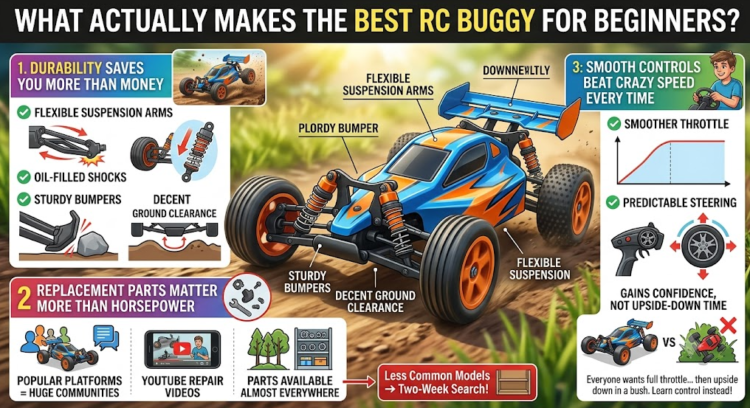
Instead, these are the things that made the biggest difference for me.
Durability Will Save You More Than Money
Your first RC buggy is going to flip.
It’s going to cartwheel.
It’s going to hit a curb much harder than you intended.
That’s simply part of learning.
I honestly don’t know anyone who mastered smooth driving during their first battery pack.
A buggy with flexible suspension arms, oil-filled shocks, sturdy bumpers, and decent ground clearance will forgive countless beginner mistakes.
Some crashes look absolutely terrible but end with nothing more than brushing dirt off the body shell.
Others happen at walking speed and somehow break something important.
That’s RC life.
Buying a buggy that’s known for surviving abuse means you’ll spend more weekends driving instead of waiting for replacement parts.
I also think durability is one of those features that becomes more valuable every single time you go out.
Replacement Parts Matter More Than Horsepower
This is something almost nobody told me when I bought my first RC car.
Eventually you’ll need replacement parts.
It doesn’t matter how careful you are.
Maybe it’s a steering link.
Maybe a shock shaft.
Maybe a wheel hex disappears somewhere in the grass.
The good news is that popular RC platforms have huge communities, countless YouTube repair videos, and parts available almost everywhere.
Less common models can turn a simple repair into a two-week search across multiple websites.
Looking back, I would’ve gladly traded another five miles per hour for easier parts availability.
I also feel this is one of the biggest reasons beginners either stay in the hobby or quietly give up after a few frustrating repairs.
Smooth Controls Beat Crazy Speed Every Time
One thing I noticed while letting friends drive my RC cars is that beginners don’t need more power.
They need confidence.
The smoother the throttle feels, the easier it is to learn cornering.
The more predictable the steering feels, the faster people improve.
Everyone wants to squeeze the trigger all the way on the first straight.
Five seconds later they’re upside down in a bush.
I’ve done it.
My friends have done it.
You’ll probably do it too.
That’s part of the fun.
A controllable RC buggy lets you enjoy learning instead of constantly recovering from mistakes.
Brushed vs Brushless – Which One Should Beginners Buy?
This question shows up almost everywhere.
The answer isn’t as simple as many people make it sound.
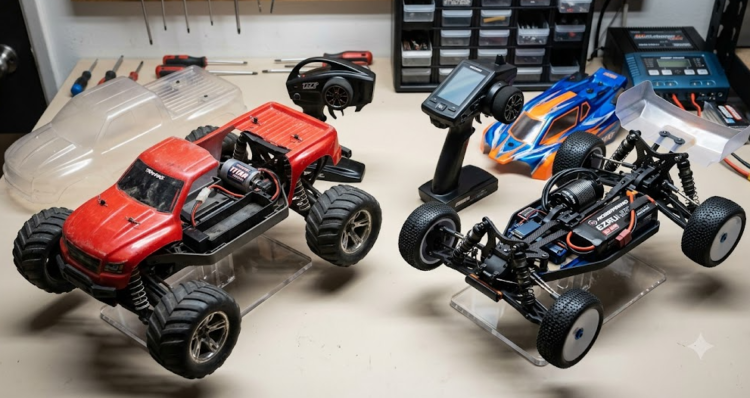
Brushed Motors
Brushed systems are affordable, simple, and very beginner-friendly.
Power delivery feels smooth.
Maintenance is straightforward.
They’re perfect for younger drivers or anyone who simply wants casual weekend fun without worrying about overwhelming acceleration.
Brushless Motors
Brushless systems are more efficient, more powerful, and usually last longer.
They’re also significantly quicker.
That’s exciting—but only if you can control them.
I watched a friend hand his brand-new brushless buggy to someone who had never driven an RC car before.
The entire drive lasted maybe three seconds before it launched straight into a fence.
Everyone laughed.
The fence probably didn’t.
For most beginners, I still think a brushless setup paired with a 2S LiPo battery offers the perfect balance. It has plenty of performance without feeling impossible to manage.
Think About Where You’ll Actually Drive
This seems obvious now, but I completely ignored it when I bought my first RC buggy.
I imagined myself flying across giant dirt tracks every weekend.
Reality looked very different.
Most of my driving happens in neighborhood parks, gravel parking lots, school fields, and empty baseball diamonds.
Those places are perfect for beginner buggies.
If your local area has lots of tall grass, rough trails, or rocky terrain, you may want larger tires or a different RC style.
Choosing a buggy that matches your environment makes every drive more enjoyable.
I also believe people should buy for where they’ll drive every weekend—not where they dream they’ll drive once a year.
Don’t Ignore Battery Life
Here’s something nobody gets excited about until they’re packing up early.
Battery life.
A buggy that runs twenty-five or thirty minutes often creates a much better experience than one that’s incredibly fast but needs charging after ten minutes.
One of the smartest purchases I made wasn’t a faster motor.
It was a second battery.
Being able to swap batteries and keep driving completely changed how enjoyable my weekends became.
If you’re working with a limited budget, I’d recommend buying an extra battery before spending money on performance upgrades.
Future you will appreciate it.
Beginner Mistakes I Made So You Don’t Have To
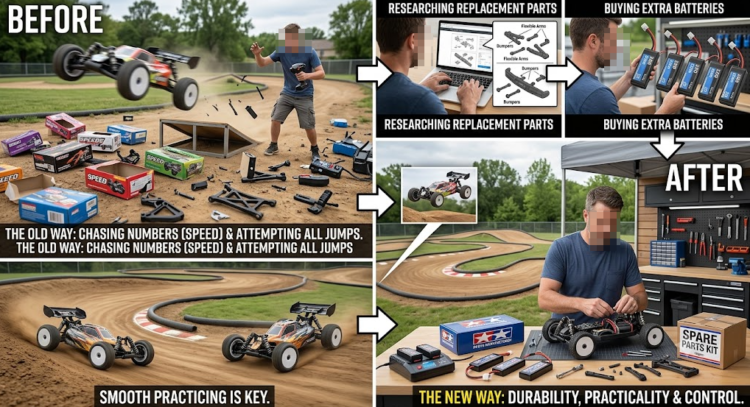
If I could go back and give my younger self a shopping list, it would look very different.
I would’ve stopped chasing speed numbers.
I would’ve researched replacement parts first.
I would’ve bought an extra battery immediately.
I would’ve practiced smooth driving instead of attempting every jump I could find.
Well…most of them anyway.
Some dirt piles are simply impossible to ignore.
Why I Still Recommend an RC Buggy Today
After driving different RC platforms over the years, I still come back to buggies.
They’re easy to drive.
They’re forgiving.
They’re versatile.
Most importantly, they never stop being fun.
I also think they’re one of the few RC cars that can make complete beginners smile within five minutes while still keeping experienced drivers entertained years later.
If you’re comparing different off-road RC styles, you might also enjoy my guide on Best RC Rally Car: 9 Picks That Make Every Dirt Road More Fun. Rally cars have a completely different personality, and after driving both, I found they each shine in different situations.
Best RC Rally Car – 9 Picks That Make Every Dirt Road More Fun
Another guide that pairs well with this one is my article on First RC Car Speed, especially if you’re wondering whether manufacturers’ advertised top speeds actually matter for beginners. It helped me rethink what I really wanted from my first RC car.
Buying your first RC buggy isn’t about finding the fastest model on the shelf.
It’s about finding one that makes you want to head outside every Saturday morning.
Focus on durability, reliable handling, easy-to-find replacement parts, reasonable battery life, and a platform that’s enjoyable to grow with.
In my opinion, those are the things that turn a first RC car into a hobby you’ll still enjoy years later.
My first buggy certainly wasn’t perfect, but it taught me one important lesson. The best RC buggy for beginners isn’t the one with the biggest speed number. It’s the one that keeps putting a grin on your face every time the tires hit the dirt.