3XO Scooter Wet Brakes After Infrequent Use: What I’d Check
3XO scooter wet brakes can be a strange problem to chase, because the same scooter can stop fine one day and feel vague the next after sitting in damp air overnight. Nothing changed on the scooter. It just sat there.
If the scooter only gets ridden on weekends, or less, the first pull of the lever after a gap can be a little alarming. I’d take it as a warning, but I wouldn’t ride through it either.
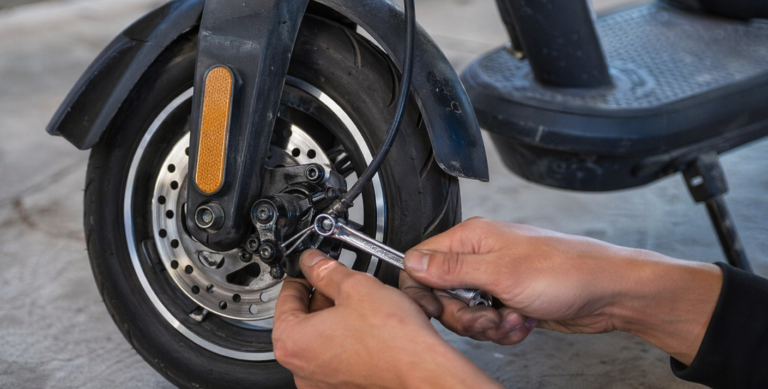
I can’t tell from the name alone which brake setup your 3XO has. Scooters come with a disc, a drum, or sometimes an electronic brake added on top, and which one you have changes the story a bit. Look at the wheel. A flat metal disc with a small caliper clamped over it is a disc brake. A closed hub with no visible rotor is a drum.
Could It Just Be Moisture on the Rotor?
A disc rotor is bare steel. Leave it in damp air for a few days, or park the scooter right after a wet ride, and a thin haze of surface rust can form. You won’t always see it, but you can often feel it. The lever pulls, the pads bite unevenly, there’s a scraping sound for the first few squeezes, and then it smooths out as the pads wipe the surface clean. Water trapped between the pad and the rotor can do something similar for a shorter stretch, and braking power drops until it’s pushed out.
A drum brake keeps its shoes inside the hub, so it’s less exposed to splashing. That doesn’t mean it’s completely protected from moisture, though. A drum that’s been stored damp can feel off on the first ride too.
Rust or water on the braking surface is the harmless version of this problem. Whether it’s actually the cause on your scooter is worth checking rather than assuming, because a soft lever or a slow return can come from other things.
How I’d Test It Before Riding Off
I wouldn’t start on the road. A driveway or an empty parking lot with room to roll is better. With the scooter standing, I’d squeeze each lever on its own and try to push the scooter forward. A working brake makes the wheel hard to turn. If the wheel rolls freely with a lever pulled, I’d stop right there and not ride it.
If both levers pass, I’d roll at walking pace and pull each brake gently a few times, then both together. Some manufacturers suggest applying the brakes lightly at low speed to help them dry out after they get wet, and the same light contact can help wipe a film of rust off a rotor. How quickly it clears depends on the model and on how damp the scooter was.
Pay attention to what changes. If the brake grabs a little better with each pull, that points to moisture. If the lever travels farther than you remember, or feels soft and never firms up, that points somewhere else, like cable tension or, on a hydraulic setup, air in the system. I wrote up cable adjustment, pad wear and hydraulic bleeding in my scooter brake problems post, and it’s the one I’d open if the lever feels wrong rather than just weak.
If It Doesn’t Clear Up
A few gentle pulls should make a difference when moisture is the cause. If the brake still feels weak, or one side is clearly better than the other, or the squealing and grinding hang around, I’d stop calling it moisture.
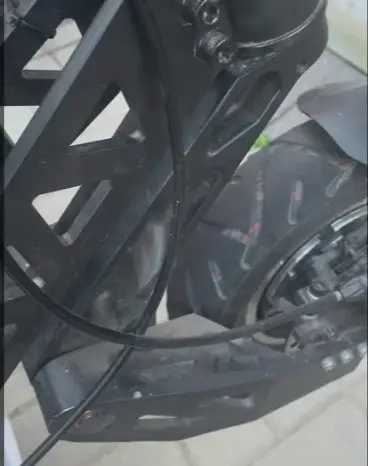
Contamination is the next thing I’d look at. Overspray from a lubricant used near the cables or the folding hinge can end up on a rotor or pad, and that can kill braking quickly. A brake cleaner made for the job is the safer choice over household sprays. Worn pads can give you a weak, noisy brake too, and a cable that’s sat damp can get stiff enough that the lever is slow to spring back. That last one is worth a closer look if the brake seems to drag after you let go.
One more thing, since it depends on the model: some scooters pair a mechanical brake with an electronic one. The electronic brake can make the scooter feel like it’s slowing down while the mechanical side does very little, which is why I’d test each lever separately instead of judging by feel on the road. Electronic braking by itself isn’t something I’d count on for a hard stop.
If a brake still isn’t working properly after all that, a shop visit is cheaper than the alternative.
Where I’d Park It Between Rides
A dry spot indoors helps more than anything else I can think of. I’d skip hosing the scooter down, and after a wet ride I’d roll a short distance with a few light brake pulls before parking it, so the pads and rotor aren’t left sitting wet. Keeping lubricant away from the brakes is easy to forget when you’re oiling a squeaky hinge.
Even then, a scooter that sits for weeks can feel different on the first ride. I’d squeeze the levers before I step on, every time, and if something feels different from how you remember it, I’d go with that over whatever a blog post says.
Recommended Reading:
👉 Rental Scooter Front Brake Shaking – Is It Safe to Ride?