RC Car Bottoming Out After Big Jumps: What to Change First
If your RC car slams into the ground after big jumps, change the shock oil before you touch the springs. Thicker oil, and sometimes a piston with smaller holes, increases damping resistance and can help control how quickly the shock compresses on landing. Springs hold the truck at ride height and shape its handling. A much stiffer spring can reduce bottoming out, but it often makes the truck bounce back off the ground.
The advice below is written for 1/10 and 1/8 scale off-road trucks, buggies, and truggies. Parts and numbers will differ on other types of cars.
Chassis Slap or Hard Bottoming Out?
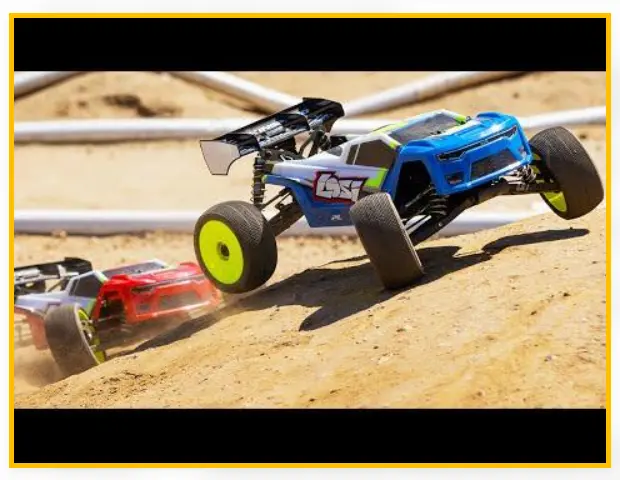
Not every hit on the chassis is a problem. A single flat thud as the underside touches down is often called chassis slap. Some trucks are built so the whole chassis plate takes part of a big landing, which keeps all of the force from going through the suspension arms and mounts.
Hard bottoming out is different. The shocks are fully compressed and the truck is still moving down, so the energy goes into the chassis, the arm mounts, and the screws. Look at the truck after a few big landings. A bent chassis plate, cracked arms, loose screws, or parts that have worked free all point to hard bottoming. If the car lands with a thud, nothing is damaged, and it drives away straight, tuning is optional.
I’d Start With Shock Oil
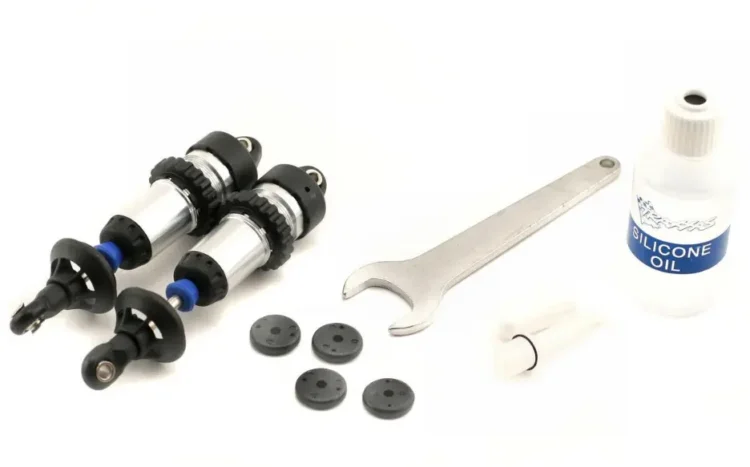
The oil in the shock resists the piston as it moves, and that resistance is what slows the landing. Thin oil offers little of it, so the shock can collapse almost all the way down before the truck has slowed.
Look up the weight of the oil currently in your shocks. Your manual or the bottle will say. Then go up one step at a time and test between changes. If the truck uses relatively light shock oil, trying the next available viscosity step is a reasonable starting point. Check the manufacturer’s viscosity chart before choosing a replacement. For reference, Traxxas sells silicone shock oil in seven weights from 20wt to 80wt, which gives you room to move in small steps.
One caution: the “wt” numbers don’t line up between brands. If you switch brands, compare the cSt (centistokes) rating printed on the bottle, and don’t mix brands between shocks on the same truck.
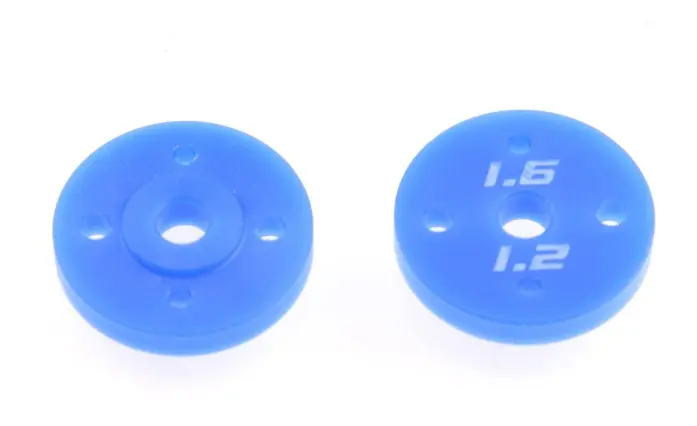
Pistons Change How the Oil Behaves
The piston’s hole size and count decide how easily oil passes through. Fewer or smaller holes restrict oil flow, increasing damping resistance during fast compression, such as on landing. This can help control suspension movement, although the effect depends on the piston design and oil viscosity. Larger or more holes let the shock move more freely.
The downside is that a piston with small holes can make the car feel slower and a bit dull on small bumps and in corners. If your shocks use tapered pistons, check which way the taper should face before you reassemble them, since it varies by brand.
Oil and pistons work together. If you change both in one go, you won’t know which one fixed the problem or caused a new one.
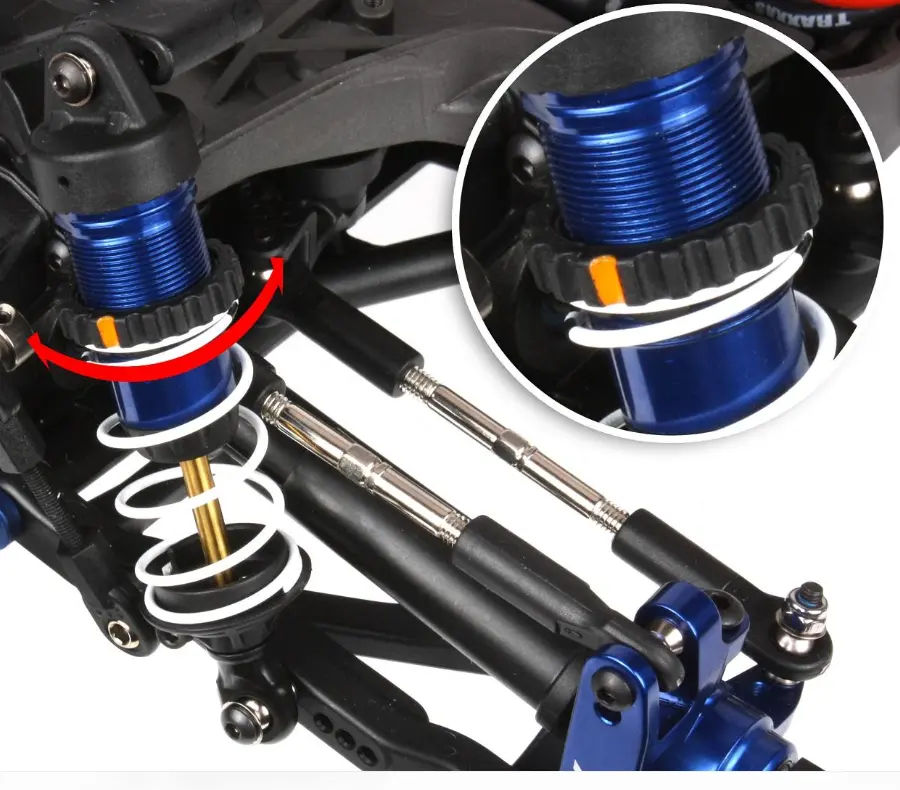
Springs and Ride Height
Preload collars on the shock body only change ride height. They don’t make the spring any stiffer. If the truck sits too low, tightening the collar raises it. Going too far has its own cost: a higher ride height raises the center of gravity, so the truck rolls over more easily in corners, and it leaves less room for the suspension to droop, which can make landings less stable.
A stiffer spring is worth trying when the truck still sags or bottoms out after the oil has been changed. Go up one step. Springs that are too stiff tend to make the truck kick back up after landing. Progressive-rate springs are another option. They’re softer early in the stroke and firmer the deeper they compress, which suits trucks that see both rough ground and big air.
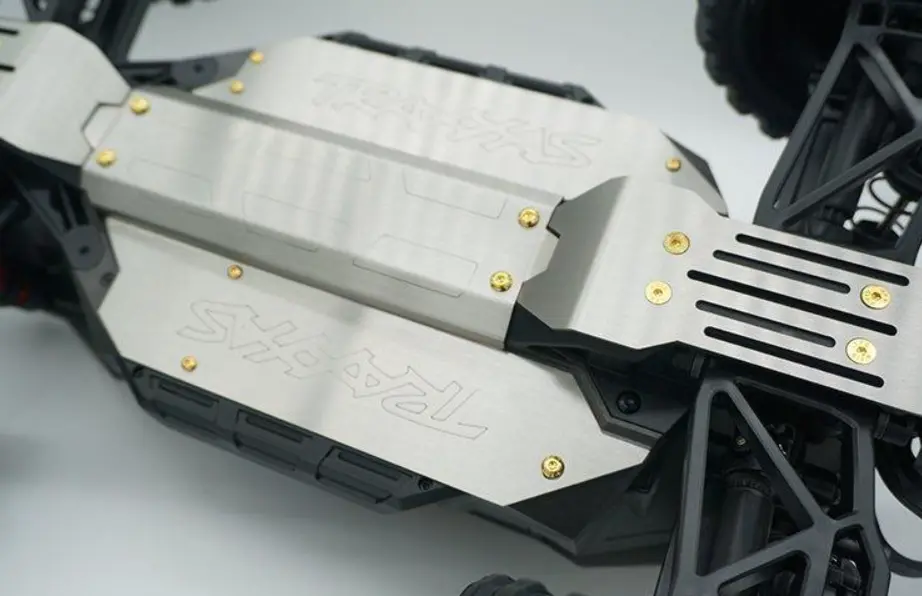
Skid Plates for the Chassis
Even with a good setup, the chassis will touch down on the biggest jumps. A skid plate takes the scrapes instead of the chassis plate and screw heads. Stainless steel plates are common, and some people print their own from TPU. It doesn’t replace the tuning work above, but it does keep the chassis from wearing down while you sort it out.
You might also like:
- RC Car Pulling to One Side Under Braking: What to Check
- RC Servo Buzzing Not Turning: How to Find the Cause
- RC Car Grinding Noise From Rear Differential: Causes and Fixes
A Couple Things That Aren’t So Obvious
Thicker oil changes how the truck behaves everywhere, not just on jumps. On gravel or small bumps, very thick oil can make the suspension slow to respond, and the truck may chatter or skip over the surface. If the truck now feels harsh on rough ground, the oil may have gone one step too far.
Raising ride height also doesn’t prevent bottoming out. It moves the starting point of the suspension, but the shock still compresses the same distance on landing, and the loss of droop can hurt stability.
The order I’d follow is oil first, then pistons, then preload, then springs, changing one thing between jumps. The same jump off a dirt ramp and off pavement can feel very different, so it’s worth noting where the truck lands as well as what’s in the shocks.