Fastest Electric Scooters in 2026 – What Actually Delivers Real Speed
Fastest Electric Scooters in 2026.
I still remember the first time a scooter blew past me like I was standing still. Mine topped out around 15 mph and felt fast enough until that moment. That was the day I fell down the rabbit hole of motor specs, voltage ratings, and everything else that separates a “fast enough” scooter from a genuinely fast one.
If you’re shopping for speed, the marketing numbers can be misleading, and the difference between a scooter that feels fast and one that actually is fast usually comes down to a handful of specs most listings bury near the bottom of the page. Here’s what I’ve learned after riding, comparing, and occasionally regretting a few purchases along the way.
👉 Fastest Scooters – Max Blinker – Enjoy the ride Max Blinker
Why Top Speed Isn’t the Whole Story
Every scooter listing has a big bold number for top speed, and every one of those numbers is measured under close to ideal conditions. Flat pavement, a rider under 165 pounds, full battery charge, and zero wind resistance. Take any one of those variables away and that number starts shrinking fast.
Motor Power and What It Really Means
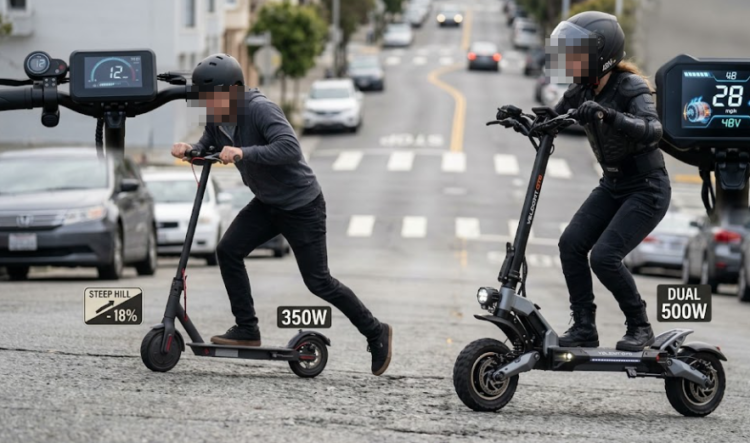
Wattage gets thrown around a lot, but a single 350W motor and a dual 500W setup behave completely differently once you hit an incline. A single motor might hit its rated top speed on flat ground, then lose several miles per hour the second the road tilts upward. Dual motor scooters distribute the load, which is why they tend to hold their speed far more consistently.
Battery and Voltage Play a Bigger Role Than You Think
This is the part most buyers skip over. A 36V system and a 48V system can technically list the same top speed, but the 48V setup will get there faster and hold it longer under load. Voltage is really what determines how hard the motor can push, while amp hours determine how long it can keep pushing before the battery starts to sag.
The Fastest Electric Scooters Worth Looking At
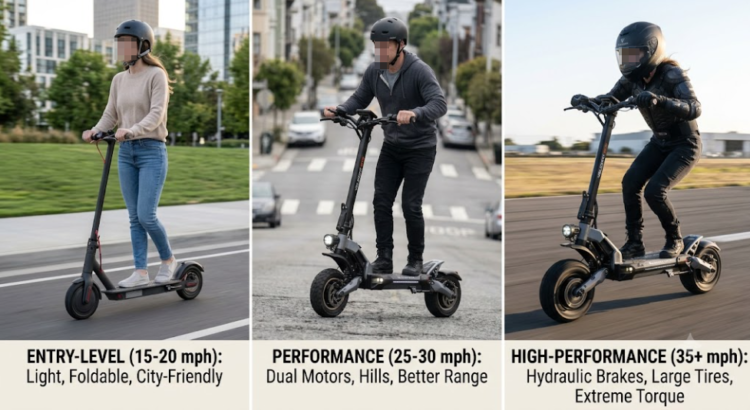
Instead of chasing a single “best” model, it helps to think in speed categories, because the right scooter really depends on what you’re using it for.
Entry-Level Speed (15 to 20 mph)
This range covers most commuter scooters built for short trips and city riding. They’re lighter, cheaper, and honestly plenty fast for sidewalk and bike lane use, but they’ll feel underpowered the moment you compare them to anything built for performance.
Performance Speed (25 to 30 mph)
This is where dual motor setups start showing up, along with beefier batteries and better suspension. Riders in this category usually want a scooter that can handle hills without losing momentum, which ties directly back into how battery capacity affects real-world range once you push it this hard. I broke that down in more detail in my battery capacity vs range breakdown, which honestly changed how I shop for scooters now.
High-Performance Speed (35 mph and up)
These scooters are a completely different animal, with larger pneumatic tires, hydraulic brakes, and enough torque to genuinely catch you off guard the first time you twist the throttle. They’re a blast, but they also come with a much shorter learning curve for margin of error.
Safety Considerations When You Go Faster
Speed is fun until the moment it isn’t, and I say that from experience. The faster a scooter goes, the more braking distance you need, and the less time you have to react to a pothole, a car door, or a pedestrian stepping off a curb without looking.
Braking Distance Increases With Speed
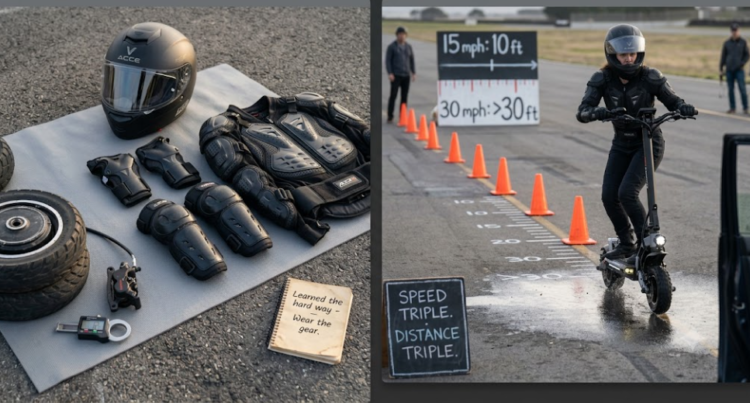
A scooter that stops comfortably within ten feet at 15 mph can easily need triple that distance at 30 mph, especially on wet pavement or with worn brake pads. I learned this the uncomfortable way, and it’s part of why I put together a full rundown of the most common scooter accidents and how riders end up in them. If you’re upgrading to something faster, that’s worth a read before your first ride.
Gear Matters More at Higher Speeds
A helmet stops being optional once you’re regularly riding above 20 mph. Wrist guards and knee pads feel excessive at commuter speeds, but they earn their keep the moment you’re riding anything in the performance or high-performance category.
Battery Life and Range Trade-Offs at High Speed
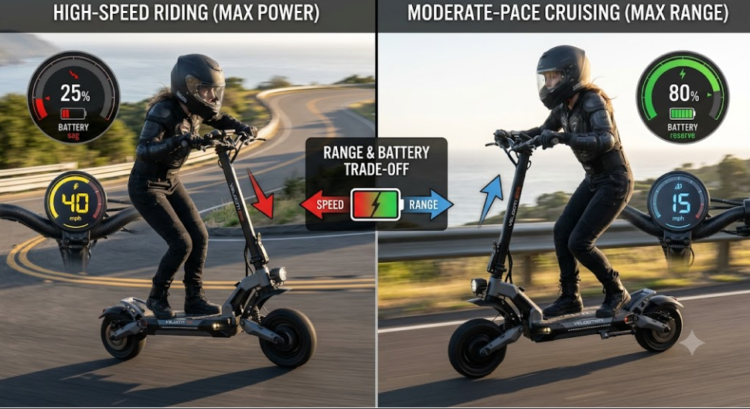
Here’s the trade-off nobody puts on the box. Riding at top speed drains a battery significantly faster than cruising at a moderate pace, sometimes cutting your advertised range by close to half. If range matters as much as speed for how you actually ride, it’s worth understanding how those two numbers pull against each other before you commit to a purchase.
How to Choose the Fastest Scooter for Your Needs
City Commuters
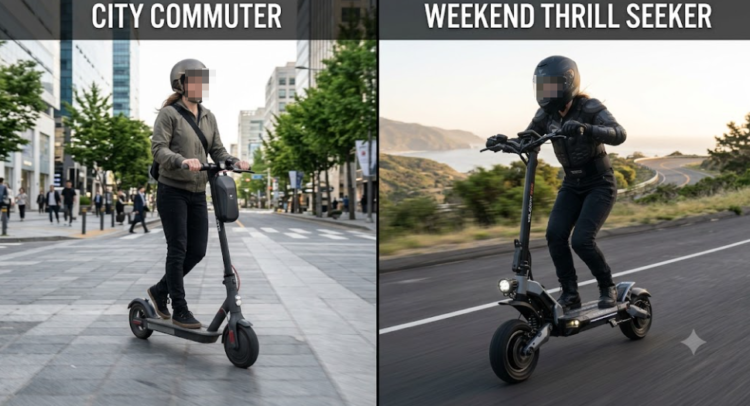
If your rides are mostly short hops to the train station or the office, a mid-range performance scooter gives you a nice cushion of speed without the added weight and price of a high-performance model.
Weekend Thrill Seekers
If you’re riding for fun on open trails or wide streets, a high-performance dual motor scooter is going to feel like a completely different sport compared to anything in the commuter category, but budget for proper safety gear alongside it.
Chasing raw top speed is fun, but the scooters that actually feel fast in real-world riding are the ones with the motor, battery, and braking system all working together instead of one flashy number carrying the whole listing. Figure out where you’ll actually be riding, then match the category to that, not the other way around.