
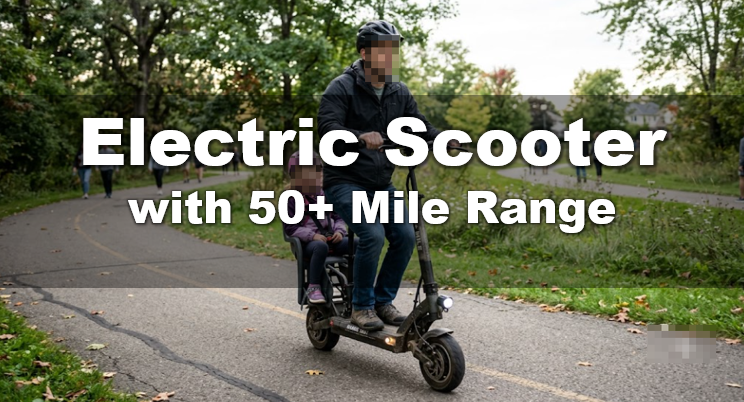
Electric Scooter with 50 Mile Range
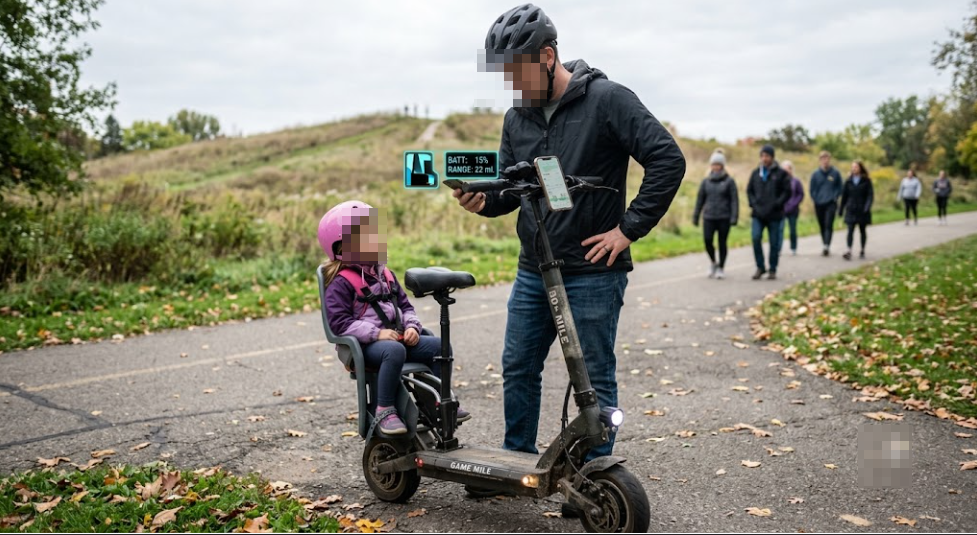
The first time I rode a scooter marketed as “50+ mile range,” I made it eleven miles before the battery indicator dropped from three bars to one. My daughter, six years old and buckled into her little scooter seat behind me, kept asking why we had to turn around so early when I’d promised her a whole loop around the neighborhood. That gap between the number printed on the box and the number that actually showed up on the road is what sent me down a months-long rabbit hole of testing, recharging, and quietly cursing at marketing departments.
The One Problem Nobody Puts on the Box
Every long-range scooter listing looks the same. Big bold “50 MILE RANGE” text, a happy rider gliding through a sunset, and a spec sheet that reads like a promise. What none of them mention is the fine print buried three scrolls down: that number was measured under conditions almost nobody actually rides in.
How Manufacturers Get Those Numbers
Most range claims come from a single, flat, windless test track, with a rider who weighs somewhere around 150 pounds, riding at the slowest available speed setting, using eco mode the entire time, on a battery that was fully topped off five minutes before the test began. It is technically accurate. It is also almost useless if you weigh more than that, live somewhere with a single hill between you and the grocery store, or ride the way an actual commuter rides, which is to say with some urgency.
What Actually Drains a “50 Mile” Battery
Cold mornings were the first thing that surprised me. Lithium batteries lose a meaningful chunk of their usable capacity once the temperature drops below about 40 degrees Fahrenheit, so a scooter that felt strong in September started showing me “low battery” warnings twenty miles earlier by December. Hills were the second surprise, and not a small one. Riding up even a gentle incline can pull two to three times the power draw of flat ground, which meant one hilly stretch near my daughter’s school quietly ate through almost a quarter of a full charge. Rider weight mattered more than I expected too. I am not a small guy, and every extra pound over that manufacturer test weight is extra work the motor has to do on every single rotation.
My Own Numbers After Months of Riding
By the time I stopped guessing and started actually logging my rides, the pattern was clear. A scooter rated for 50 miles gave me somewhere between 30 and 36 miles on a normal mixed route of flat sidewalk, a few hills, and stop-and-go traffic lights. Push the speed mode up, ride in cold weather, or carry any real cargo weight, and that number dropped into the low twenties. None of this means the manufacturers are lying, exactly. It just means the number on the box is a ceiling, not a promise, and treating it as anything else is how you end up stranded four blocks from home with a scooter that has more attitude than battery left.

What These Scooters Actually Get Right
Once I adjusted my expectations, the actual strengths of these long-range models became a lot easier to appreciate, and there are real ones worth talking about.
Battery Chemistry That Ages Well
The better scooters in this category use lithium-ion cells built around chemistry designed for hundreds of full charge cycles before you see any serious drop-off in capacity. I have one that is pushing close to a year of near-daily use and it still holds roughly 90 percent of what it did on day one, which is honestly better retention than my phone manages.
Ride Comfort Over Long Hauls
A scooter built for real distance usually comes with a bigger deck, softer suspension, and wider tires than the budget models, and you feel every bit of that difference after mile fifteen. My back does not hate me the way it used to after longer rides, and the wider footprint makes it a lot less nerve-wracking when I have my daughter riding along on the front deck for a short stretch around the block.
Charging Smart to Protect Range Over Time
The habit that made the biggest difference for me was simple. I stopped letting the battery run down to zero and stopped leaving it sitting at a full charge for days at a time. Keeping the battery generally between about 20 and 80 percent, and giving it a full charge only right before a longer ride, noticeably slowed down the range loss I was seeing month to month. It is a small change in routine that pays off in a scooter that still feels strong a year later instead of one that quietly loses five miles of range every few months.
What I’d Tell a Friend Shopping for One
If you are cross-shopping models right now, the mileage claim should be the last thing you look at, not the first. I actually broke down exactly how battery capacity translates into real mileage in a separate deep dive, and if you want the math behind why a bigger battery does not always mean a proportionally bigger range, that piece walks through it step by step. If your budget is tighter and you are trying to figure out whether a sub-$1000 scooter can still deliver a usable version of that long-range promise, I put one through the same kind of real-world testing and wrote up exactly what held up and what did not.
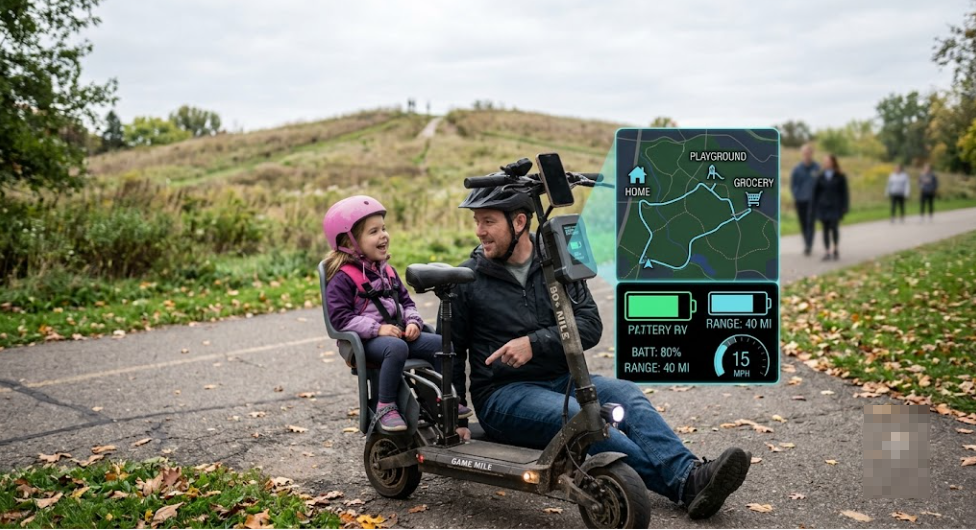
Riding a 50-mile scooter taught me to plan trips the way I plan a road trip, not the way I glance at a phone battery icon. Once I started treating the advertised number as a best-case ceiling instead of a daily guarantee, the whole experience got a lot less stressful, and a lot more fun, including for the six-year-old riding shotgun on the front deck.