Best Waterproof RC Cars for Rain, Mud, and Puddles
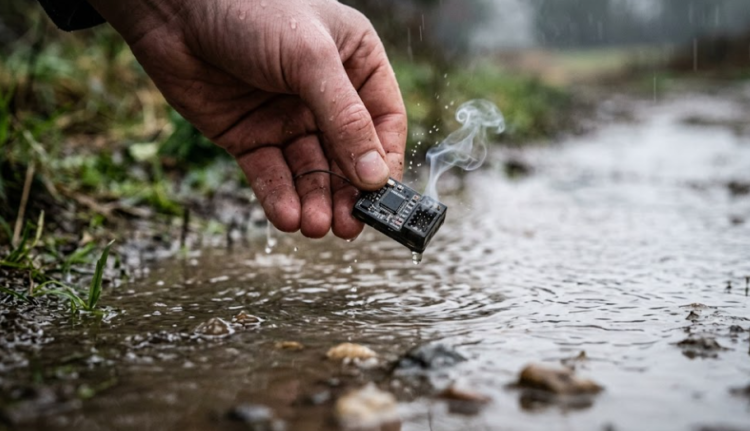
I fried my first RC car in about four minutes flat. It was a light drizzle, barely enough to need an umbrella, and by the time I got the thing back inside, the receiver was already smoking. That one mistake sent me down a rabbit hole of researching what “waterproof” actually means on an RC car, and honestly, most of what gets advertised is not what you think.
Best Waterproof RC Cars – Why This Even Matters
Rain, puddles, creek crossings, wet grass at seven in the morning. If you run your car outside for more than a season, water is coming for it eventually, whether you plan for it or not. The problem is that a lot of RC cars marketed toward beginners were never built with sealed electronics, and a five second dunk in a puddle can wipe out a receiver or an ESC that costs more than the car itself. Once you know what to look for, avoiding that outcome is honestly pretty simple.
As an Amazon Associate I earn from qualifying purchases.
👉 Waterproof Rc Car 4×4 Off-road – Amazon.com
What “Waterproof” Actually Means on an RC Car
This is the part that trips almost everyone up, myself included. Brands throw around the word waterproof constantly, but there is a huge gap between a car that can handle a rainy backyard session and one you could actually dunk in a creek.
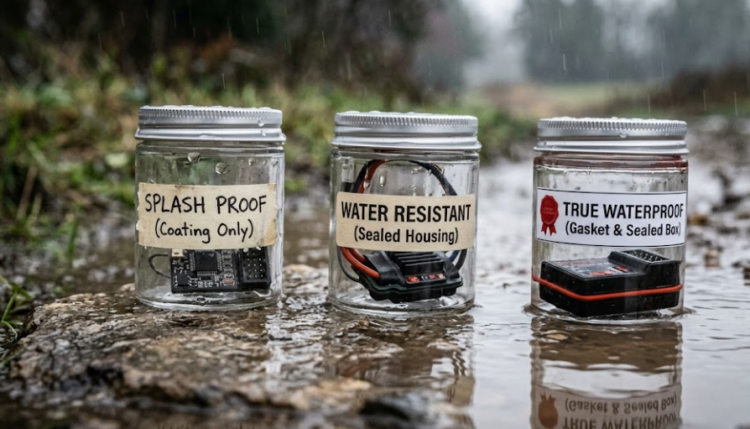
Waterproof vs. Water Resistant vs. Splash Proof
Splash proof usually means the electronics have some kind of coating or cover that can handle light moisture, like morning dew or a few drops of rain, but nothing more. Water resistant is a step up, generally meaning sealed housings on the receiver and speed control that can survive wet grass or a light shower without dying on you. True waterproof, in the way serious RC drivers use the term, means the receiver box, ESC, and servo are all fully sealed and gasketed so the car can genuinely be run through puddles, shallow streams, or a downpour and come out fine. When you are shopping, do not just trust the word on the box. Look for actual sealed electronics in the spec sheet, not just a marketing label.
What to Actually Look For Before You Buy
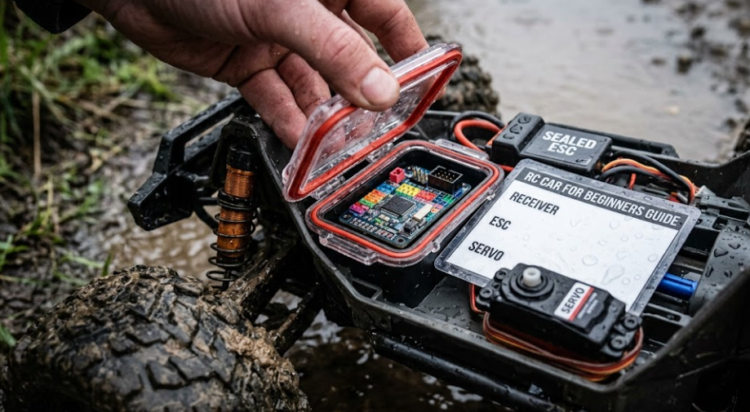
The receiver box is the single most important thing to check. If it is not sealed with a rubber gasket, water is getting in eventually, full stop. The speed control matters just as much, since a fried ESC is usually the most expensive part to replace on any RC car. Servo splines and motor housings deserve a second look too, since cheaper cars often waterproof the receiver box and completely forget about the servo, which then seizes up the first time it gets wet.
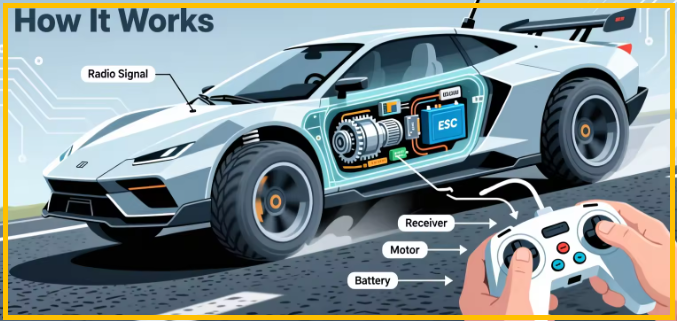
If you are still figuring out the basics of how these systems fit together, it is worth backing up and reading a proper RC car for beginners guide before you drop money on anything marketed as waterproof. Understanding what a receiver, ESC, and servo actually do makes it a lot easier to spot when a listing is cutting corners.
Best Waterproof RC Cars – My Honest Picks
I am not going to pretend there is one perfect waterproof RC car for everyone, because it really depends on how and where you plan to run it.
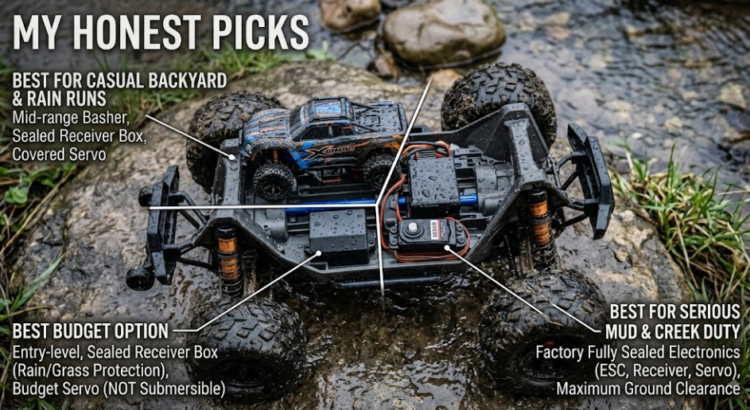
Best for Casual Backyard and Rain Runs
If you mainly deal with wet grass, light rain, and the occasional puddle, you do not need anything extreme. Look for a mid range basher style truck with a sealed receiver box and a covered servo. This is the category where most “water resistant” cars genuinely hold up fine, and it is usually the more affordable route.
Best for Serious Mud and Creek Duty
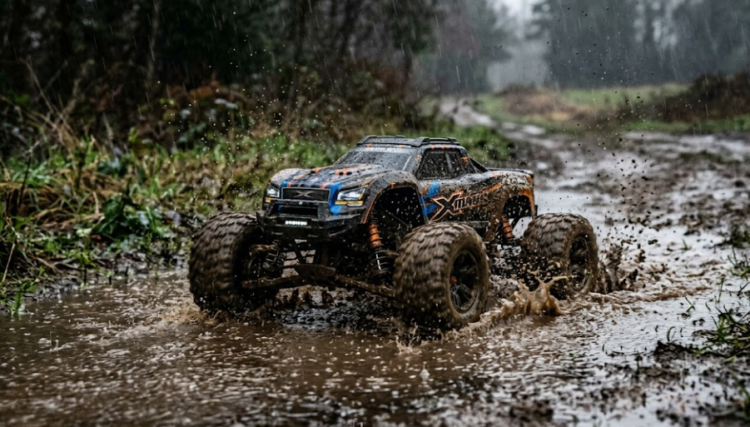
If you are the type who drives straight into a puddle on purpose, you want a truck built around fully sealed electronics from the factory, not an aftermarket fix. Larger monster truck platforms in this category tend to run bigger tires with more ground clearance too, which keeps the chassis further from standing water in the first place. That combination of sealed internals and extra clearance is really what separates a truck that survives creek crossings from one that does not.
Best Budget Option
You do not have to spend a fortune to get basic protection. A lot of entry level trucks now ship with a sealed receiver box even at lower price points, which covers you for rain and wet grass. Just do not expect a budget option to survive a full submersion, since the servo and motor on cheaper builds usually are not part of that waterproofing.
If your runs happen mostly off pavement, it is also worth checking out this breakdown on the best RC car for dirt, since dirt and mud performance usually go hand in hand with how well a truck handles moisture too.
Mistakes That Ruin a “Waterproof” RC Car Anyway
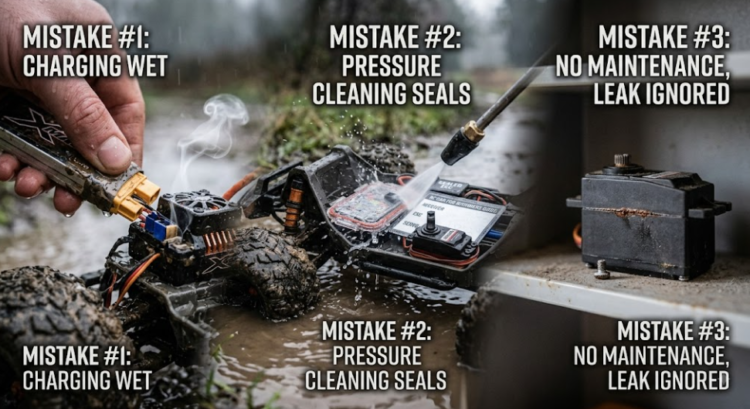
Even a genuinely waterproof car can get destroyed by bad habits. Charging the battery immediately after a wet run without letting the connections dry out is probably the number one killer I see. People also forget that waterproof does not mean submersible, so holding a truck fully underwater to rinse off mud is a great way to void that protection completely. Skipping post run maintenance is the other big one. Water can seep past seals over time even on a good truck, so if you never open things up to check, you will not catch a slow leak until the electronics are already gone.
Keeping It Alive After a Wet Session
After every wet or muddy run, pull the battery out first, since that is the single easiest way to prevent a short circuit. Wipe down the chassis and let the whole truck air dry somewhere with decent airflow for a few hours before you even think about charging it again. Every month or so, it is worth popping open the receiver box just to check for any moisture buildup, since catching a small leak early is a lot cheaper than replacing a fried receiver later.
A waterproof RC car is not really about buying the most expensive truck on the shelf. It is about matching the level of sealing to how you actually run it, then treating it right afterward so that protection actually lasts. My first fried receiver taught me that lesson the expensive way, so hopefully this saves you the same trouble.