Best RC Boat for Lakes – What Actually Handles Open Water Well
Best RC Boat for Lakes: What Actually Handles Open Water Well
As an Amazon Associate I earn from qualifying purchases.
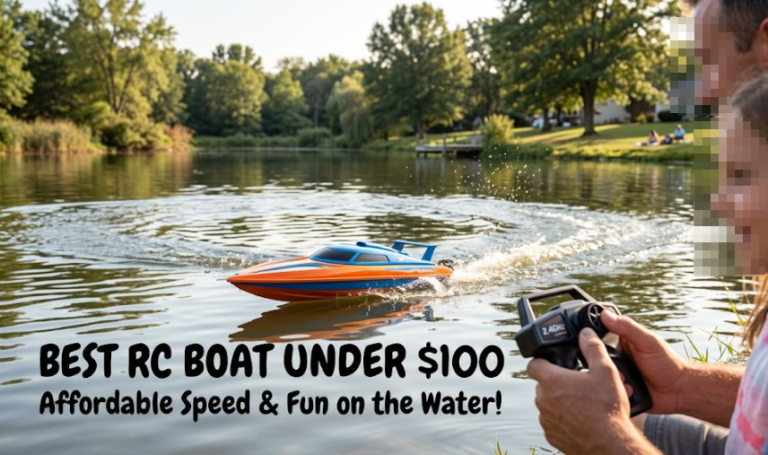
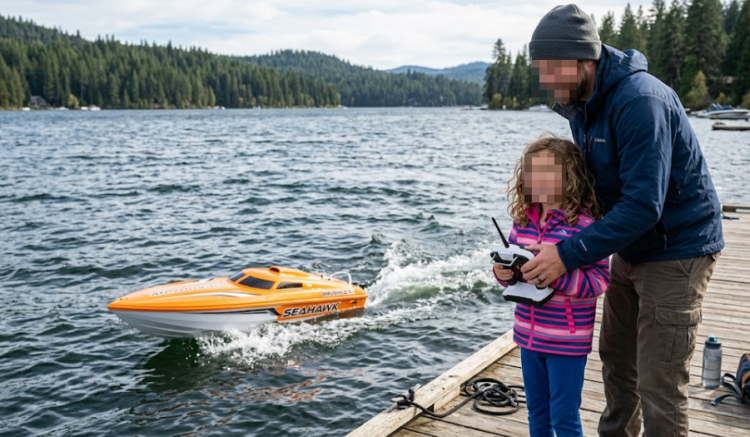
My six-year-old daughter and I spent most of this summer testing remote control boats on our local lake, and I quickly learned that most “lake ready” boats sold online are really just pool toys with a bigger price tag. After flipping, sinking, and chasing down more boats than I want to admit, I finally figured out what actually holds up once the water gets choppy and the wind picks up. Here’s what separates a real lake boat from a bathtub toy, and which features are worth paying for.
Why Most RC Boats Struggle on Lakes
A pool and a lake are not the same environment, even though the marketing photos want you to believe otherwise. Pools are flat, calm, and predictable. Lakes have wind chop, wake from other boats, weeds near the shoreline, and water that is nowhere near as forgiving if your electronics aren’t sealed properly.
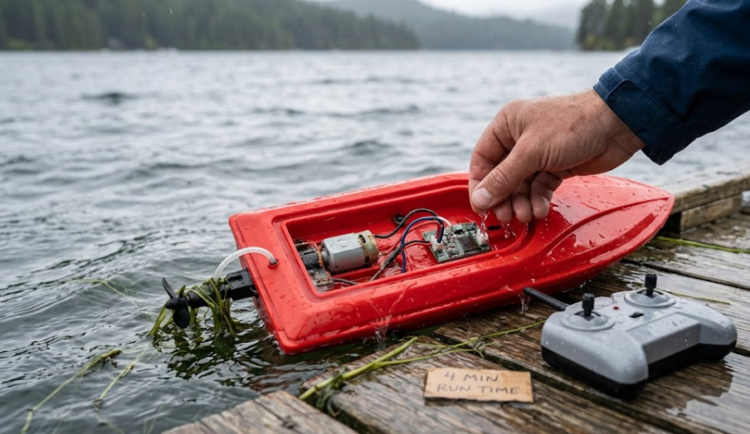
The first boat we bought was a cheap fifteen-dollar model that looked great in the product photos. It lasted about four minutes on the lake before it took on water and just stopped responding. That was the moment I realized “waterproof” printed on a box means very little without checking the actual build quality underneath it.
👉 Cheerwing UDI 2.4Ghz RC Racing Boat for Adults
What Actually Matters for Lake Performance
Hull Design Makes or Breaks Stability
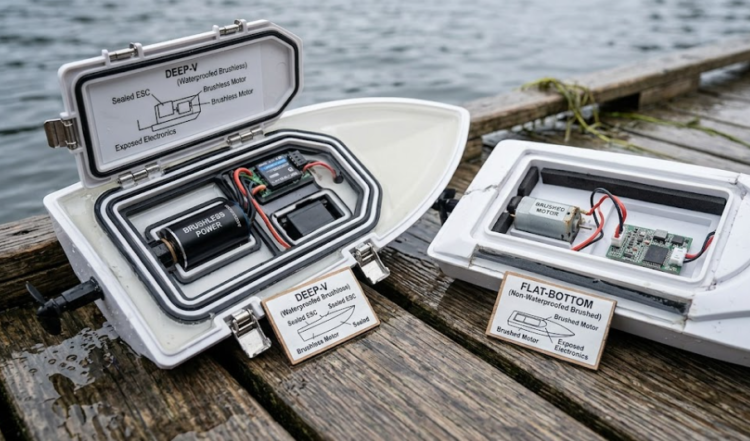
Deep-V hulls cut through chop far better than flat-bottom hulls. My daughter’s favorite boat this summer has a deep-V design, and it barely notices the small waves that come off passing kayaks. A flat hull might feel snappy in a pool, but on a lake it bounces and slaps against every ripple, which makes steering feel twitchy and unpredictable.
Catamaran hulls are another solid option if the lake tends to be calm most days. They sit stable at speed and resist tipping, though they don’t handle rough chop quite as gracefully as a deep-V.
Motor Type – Brushed vs Brushless
Brushed motors are fine for casual, slower cruising and tend to be the more affordable starting point. Brushless motors cost more but give noticeably better torque, longer motor life, and enough power to push through wind resistance on a bigger lake. If your lake has any real size to it, brushless is worth the extra cost in my experience.
Waterproofing Isn’t Optional
This is where that fifteen-dollar boat failed us. Look for sealed electronic speed controllers, a sealed servo bay, and a hatch that actually locks down tight instead of just resting on top of the hull. A boat with an open receiver tray and foam padding is not sealed, no matter what the listing claims. That distinction alone will save you a boat.
Best RC Boat for Lakes by Situation
For Younger Kids and Casual Weekends
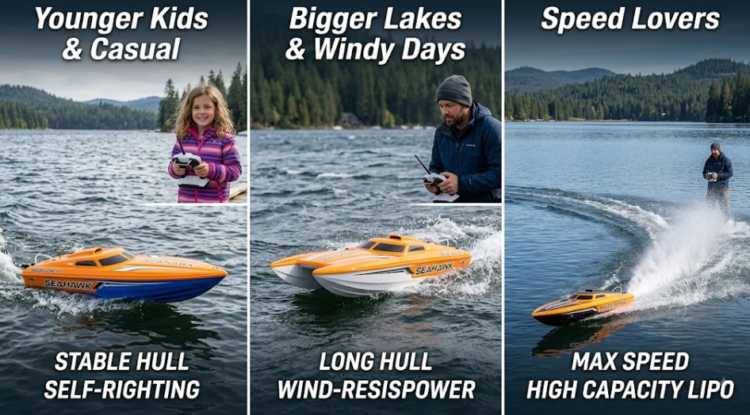
For my daughter’s age group, stability matters more than raw speed. A self-righting hull is genuinely one of the best features you can get here, since it flips itself back over instead of forcing you to wade in or paddle out with a kayak to rescue it. Moderate speed with proportional steering keeps things fun without being overwhelming for small hands on the controller.
👉 Best RC Boat for younger kids and Casual Weekends
For Bigger Lakes and Windy Days
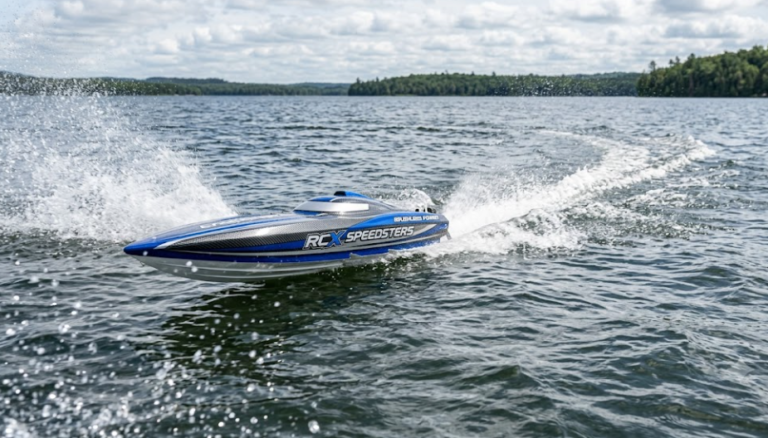
Larger lakes need a boat with real range and enough power to fight through wind and current. A brushless motor paired with a longer hull tends to track straighter and handle open water more confidently than a small, lightweight model that gets pushed around easily.
For Speed Lovers
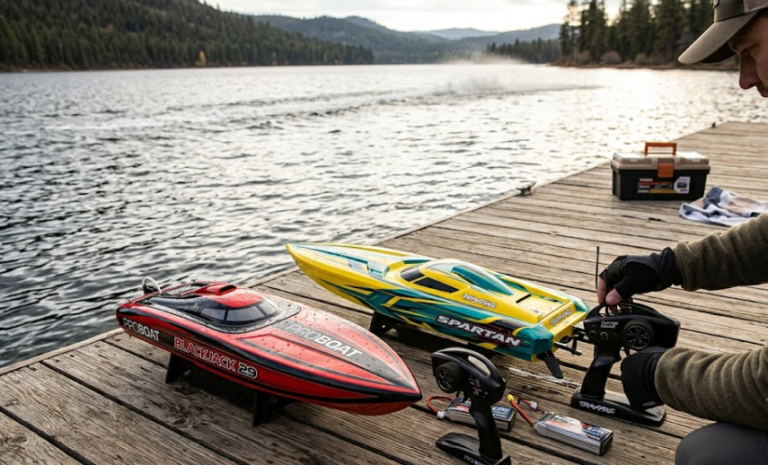
If the goal is top speed rather than a relaxed afternoon, look at brushless boats rated for higher-capacity batteries. Just know that speed and beginner-friendliness rarely overlap, so this category makes more sense once you’ve already got some hours of practice behind you. If you’re still deciding between two well-known speed-focused brands, this brand comparison breaks down the real differences pretty well: Pro Boat vs Traxxas – Which RC Boat Wins?
Mistakes I Made So You Don’t Have To
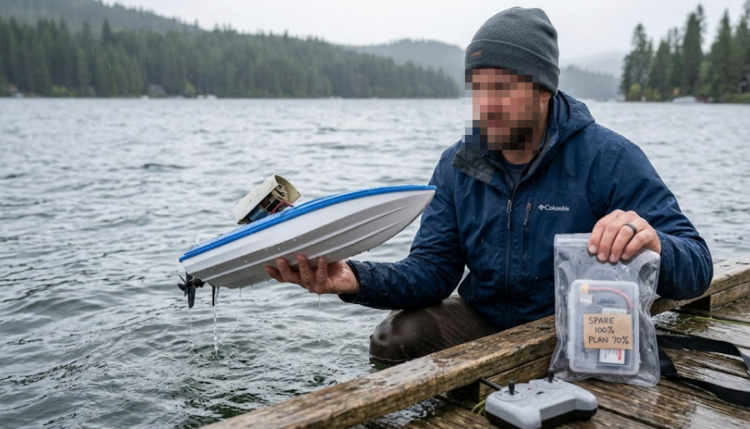
I underestimated how much wind affects a lighter boat. A model that felt plenty fast in the backyard pool struggled to hold a straight line once real lake wind got involved. I also learned the hard way that battery runtime claims on the box are almost always optimistic, so I now plan for about seventy percent of the advertised time and keep a spare battery charged before we head out.
Retrieval is another thing nobody warns you about. Without a self-righting hull, a flipped boat means someone is wading into lake water, and that someone was usually me. If you’re just getting into this hobby and want a broader rundown before spending money, this beginner-focused guide is worth reading first: Best RC Fishing Boat for Beginners – What I Wish I Knew Before Buying One
How We Test RC Boats on Real Lakes
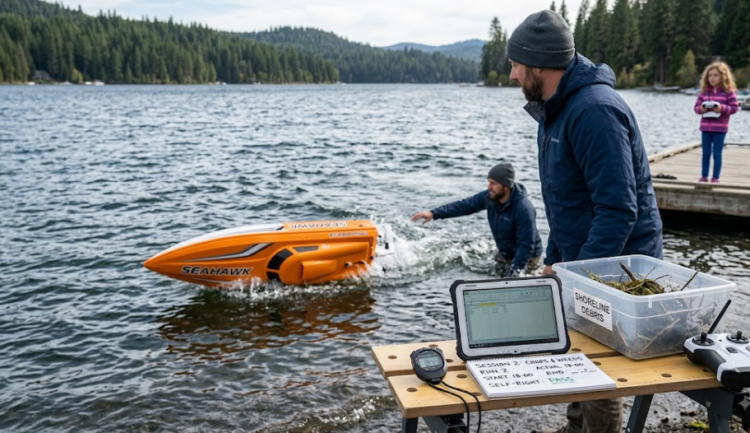
Every boat we review gets at least three separate lake sessions, not just one calm evening. We run it in light wind, in choppier afternoon conditions, and near the shoreline where weeds and debris tend to collect. We also time actual battery runtime against the advertised number, and we always test the self-righting feature, or lack of one, by flipping it on purpose.
Final Thoughts on Choosing a Lake-Ready RC Boat
The best RC boat for lakes isn’t necessarily the fastest one or the one with the flashiest paint job. It’s the one with a hull shape suited to real chop, sealed electronics that actually hold up, and enough power to handle wind without struggling. Once you match those basics to how you actually plan to use it, whether that’s calm weekend cruising with a kid or open-water speed runs, the rest becomes a lot easier to figure out.
FAQ
Is a deep-V hull better than a flat hull for lakes?
Yes, for most lake conditions. Deep-V hulls handle chop and small wakes far more smoothly than flat-bottom hulls, which tend to bounce and lose stability once the water isn’t perfectly calm.
Do I need a brushless motor for lake use?
Not always, but it helps. Brushless motors handle wind resistance and longer runs better than brushed motors, especially on larger lakes where you’re covering more open water.
What’s the biggest mistake beginners make with lake boats?
Trusting “waterproof” claims without checking how the electronics are actually sealed. A locking hatch and sealed servo bay matter far more than a label on the box.
How long should a battery realistically last on a lake?
Plan for roughly seventy percent of whatever runtime is advertised. Wind, cooler water temperatures, and throttle habits all cut into that number in real conditions.