RC Car Uneven Tire Wear: Why the Front Tires Wear on the Inside Edge
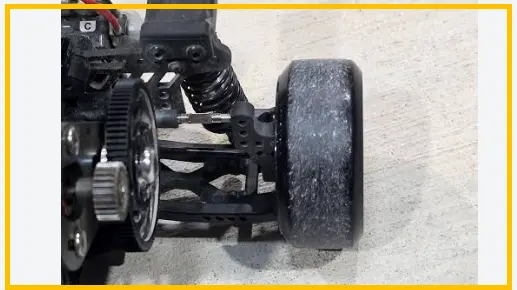
If only the inside edge of your RC car’s front tires is wearing down, the two most likely causes are too much negative camber and too much toe-out. Both can be adjusted with the turnbuckles on the front suspension, and both are worth measuring before you buy a new set of tires. Slop in the suspension and a low ride height can also push the wheels into the same angle while the car is moving.
The sections below go through the causes, then a check order that starts with the cheapest and quickest things.
Why the Inside Edge Wears First
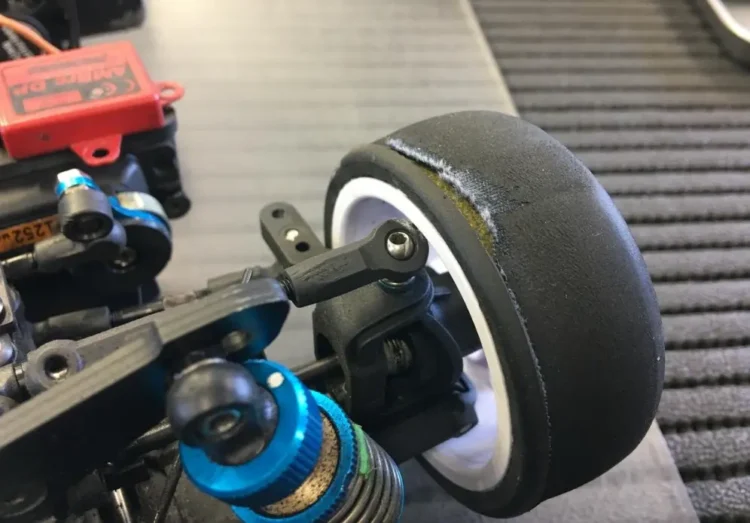
Camber is the lean of the tire when you look at the car from the front. With negative camber, the top of the tire tilts toward the chassis, so the inner shoulder carries more of the load. A camber guide from CompetitionX lists the inside edge wearing down as the result of excessive negative camber, and outside-edge wear as the result of positive camber. Many RC cars start somewhere around -1 to -2 degrees at the front, so a car sitting well past that range is a reasonable suspect.
Toe is the angle of the wheels when you look at the car from above. Toe-out means the fronts of the tires point away from each other. Front toe-out sharpens turn-in, which is why many setups use a little of it. Excessive toe-out increases tire scrub as the car moves forward, which can accelerate wear along the inner edges of the front tires. A setup article reposted on the RC Evolution forum puts it this way: too much toe-in wears the outer edges, and too much toe-out wears the inner ones.
When Both Are Slightly Off
Camber and toe are not independent. Changing one can nudge the other a little, so a car with moderate negative camber and a bit too much toe-out can chew through the inner shoulders faster than either setting would on its own. This is one reason to measure both before changing anything.
Other Things That Change the Angle While You Drive
A car can measure fine on the setup board and still wear on the inside edge. Two things to look at:
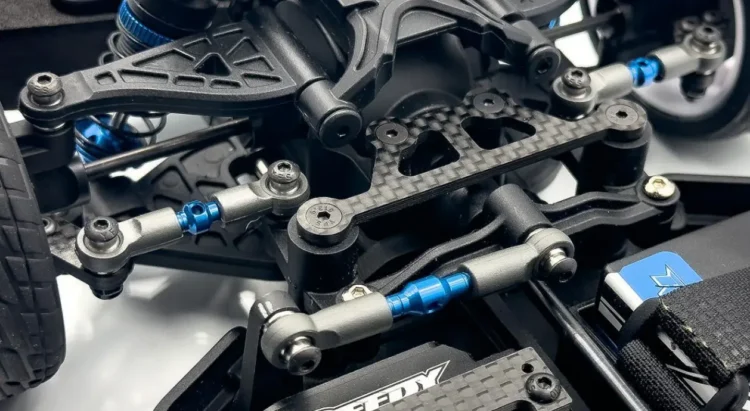
- Play in the suspension. Loose hinge pins, worn kingpins, or sloppy turnbuckle ball ends let the wheel tilt under load. The static setting stays the same, but the angle under cornering or braking does not.
- Ride height and springs. A very low car, or one with soft springs, can end up with more negative camber once the suspension compresses. How much depends on the suspension geometry, so it varies from car to car.
Tire compound matters too. A soft compound will show the damage after fewer runs than a hard one, so a problem that took a long time to show up on hard tires can appear quickly after a switch.
Could Camber Be the Problem? How I’d Check It
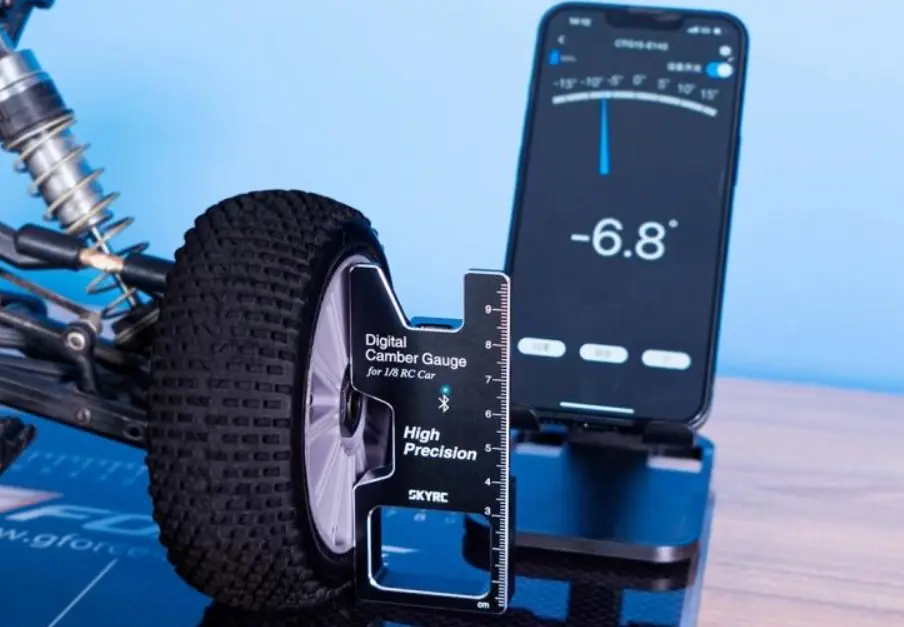
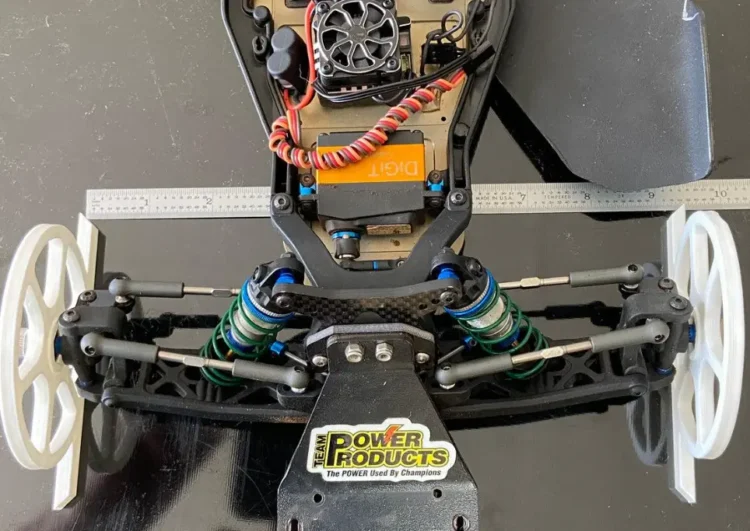
Put the car on a flat setup board or a piece of glass with the ride height set to your usual number. Check the camber on each front wheel with a camber gauge. If you don’t own one, a small digital angle gauge or a square held against the tire can at least tell you whether the left and right sides match.
If the readings show more negative camber than the recommended range, adjust the upper turnbuckle in small increments and re-measure after each change. The direction of adjustment depends on the suspension design. Small changes are easier to judge. If the inner shoulders are already worn, a move to something like -1 degree is a reasonable place to try first, though the right number depends on the car and the surface.
Do not go all the way to zero as a reflex. The CompetitionX guide notes that too much negative camber reduces straight-line traction, and the flip side is that too little can take away some grip in corners. Aim for a middle setting that fits the car and track.
Could Toe-Out Be the Problem?
Measure the front toe next, using the same board. Many cars run a small amount of front toe-out, and CompetitionX describes front toe-out above roughly 3 degrees as making a car twitchy. If your car is running more than the kit setup, bring it back toward the manual’s number using the steering turnbuckles. If the car wanders on straights or the inside edges are wearing, zero toe or a very small amount of toe-in is worth trying.
After any toe change, check that the steering trim still tracks straight and that both sides are equal. Then re-check camber, since the two interact.
Check the Hardware Before Chasing Numbers
Grab each front wheel and wiggle it up and down and side to side. Movement at the hinge pins, kingpins, or wheel bearings can mean parts are worn. If a turnbuckle ball end feels loose on its ball, that is another place where the angle can shift once the car is moving.
Replace worn pins and ball ends before you spend more time on setup numbers. A setup measured on a loose suspension is not very reliable.
Do Tires Need to Be Swapped Side to Side?
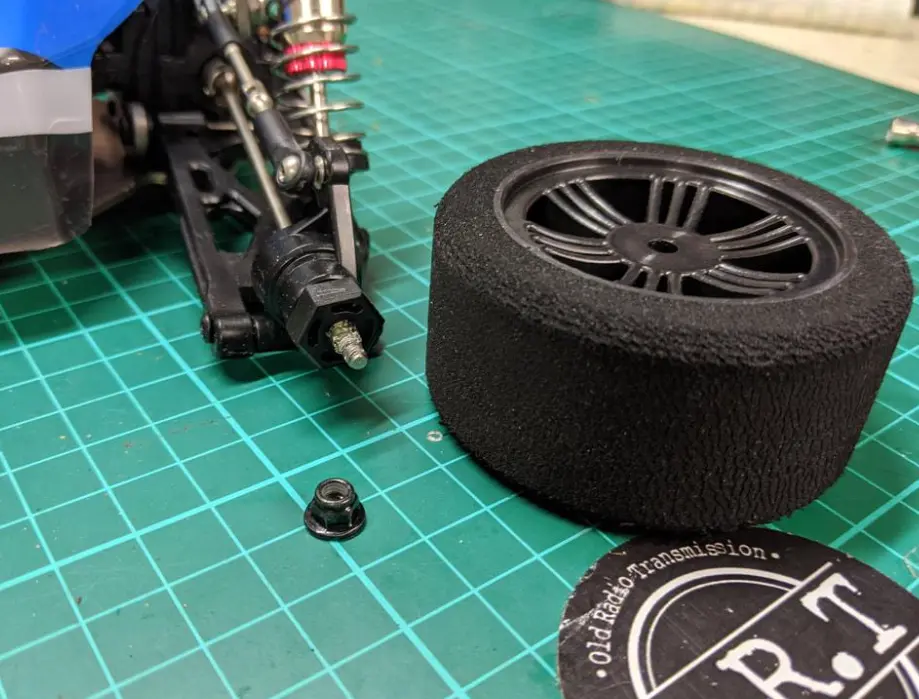
Swapping front tires left to right may even out wear on tires that are not directional, but it does not fix the cause. Tires on many RC wheels are glued, so check whether yours can be removed without damage. If one shoulder is already worn down to the carcass or the foam, replacing the tire is usually the better option.
If the Wear Keeps Coming Back
Re-measure after a few runs rather than after a whole pack of tires. Look at the shoulder on each front tire and compare left and right. If one side wears faster than the other, the car may have a bent arm, a slightly different turnbuckle length, or a tweaked chassis, and it is worth checking each side separately.
Run a short test pass on a surface you know well, then look at the tires again. That tells you much more than another full session on the wrong settings.
Recommended Reading: