

Drone Battery Won’t Balance Charge: One Cell Stuck Low
When a drone battery won’t balance charge and one cell stays low, the cause is either the balance lead or the cell itself. A multimeter on the balance plug will tell you which in a few minutes. If the cell turns out to be the problem, the pack is probably done. A LiPo cell that sits at or below about 3.0V, or keeps sagging after a full charge, shouldn’t be forced back to life.
Your charger will usually report this as “Cell Error,” “Balance Error,” or a low-voltage warning. HobbyKing’s charging error troubleshooting guide lists the same three possibilities for those messages: the charger misread a cell, the balance lead is bad, or one cell is far out of line with the rest. The same guide says a pack with one very low cell shouldn’t be forced back onto charge.
Is It the Balance Lead or the Cell?
Start with the plug, because it costs nothing to check.
Look at the connector and wires
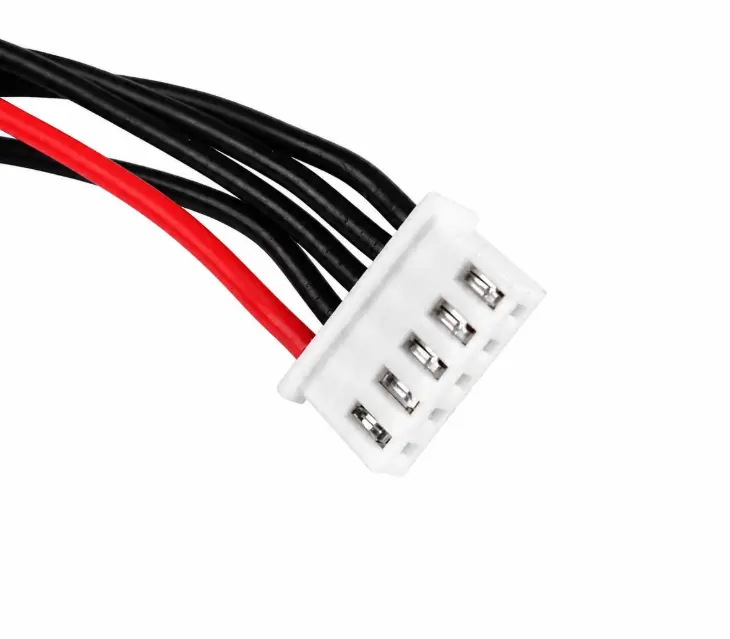
Look at the JST-XH balance plug on the pack. A pin that has backed out of the housing, a wire that has pulled away at the crimp, or green residue on the metal can all make the charger lose one cell. Gently tug each wire. One that moves freely or comes loose is your answer.
If the plug looks fine, try a different balance port or adapter board on the charger. HobbyKing’s guide points to a damaged balance board as one cause of cell errors, and that part is cheap to replace.
Measure each cell with a multimeter
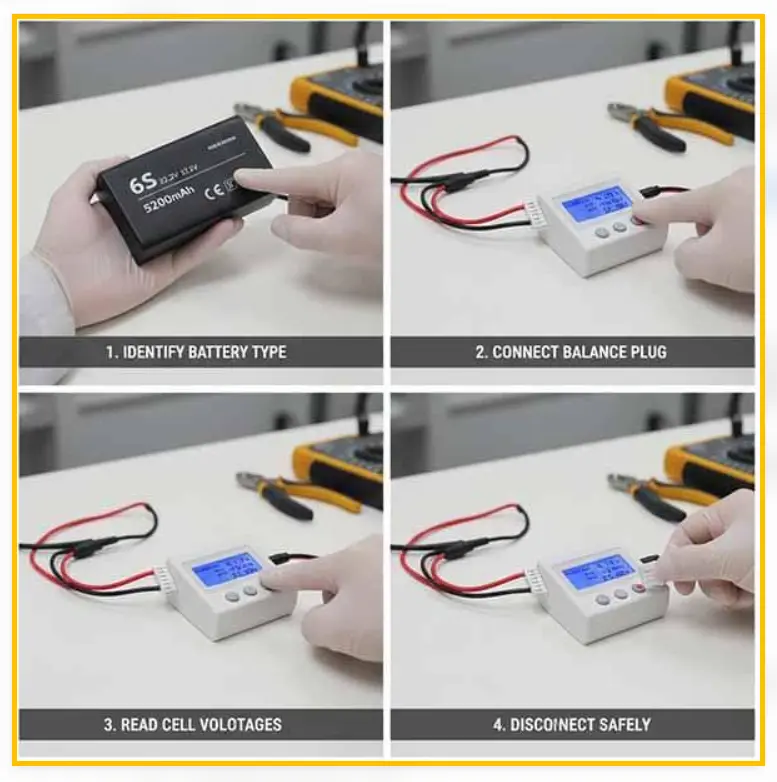
Set the meter to DC volts. Touch the probes to two neighboring pins on the balance plug, starting with the black (negative) wire and the pin next to it. That reading is cell 1. Move one pin over for cell 2, and so on. Keep the probe tips from bridging two pins at once, since a slipped probe can short the cells. A cell checker that plugs into the balance port is safer if you have one.
Add the cell readings together. The total should land close to the voltage you measure across the main discharge lead. Then compare what you found with what the charger was complaining about:
- Every cell reads normal on the meter, but the charger flags one. Suspect the balance lead, the charger port, or an adapter board.
- One pin reads zero or jumps around. A wire or pin in the plug has probably failed, and that part is repairable.
- One cell reads clearly lower than the others and stays that way. The cell itself is the problem.
Read internal resistance (IR)
If your charger shows per-cell internal resistance, compare the low cell with its neighbors in the same pack. A cell with a much higher reading than the rest is the one that sags under load and falls behind during charging. Acceptable numbers vary with pack size and C rating, so a pack’s own earlier readings are a better reference than any universal figure. One checker vendor suggests replacing a pack when a cell passes 25 mΩ (UAVModel’s imbalance guide), but treat that as a rough rule of thumb for smaller packs, not a standard.
Can a Low Cell Be Brought Back?
It depends on how low it went and why.
A bad balance lead is a soldering or connector repair, and the battery underneath is untouched. That’s the good outcome.
A cell that was over-discharged is a different story. Hobby guides commonly say not to take a LiPo below 3.0V per cell, and some put the point of permanent damage around 2.9V. Many chargers also refuse to start when a cell is that low. If a LiPo cell is severely over-discharged or shows signs of damage, don’t attempt to revive it by charging the cell directly through its balance connector. Disconnect the pack from service and consult the battery manufacturer’s guidance or a qualified battery specialist. A cell that remains abnormally low should not be returned to flight use simply because its voltage rises again. If you try it, do it in a LiPo safe bag, stay with the battery the whole time, and follow your charger’s manual for current settings. Stop at the first sign of heat, swelling, or a cell that won’t rise.
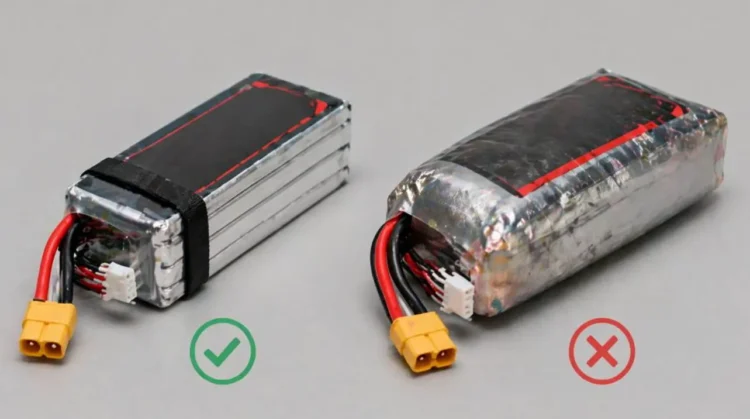
None of this applies to a swollen pack. A puffed LiPo gets retired, not recovered.
Why NiMH Mode Is a Bad Shortcut
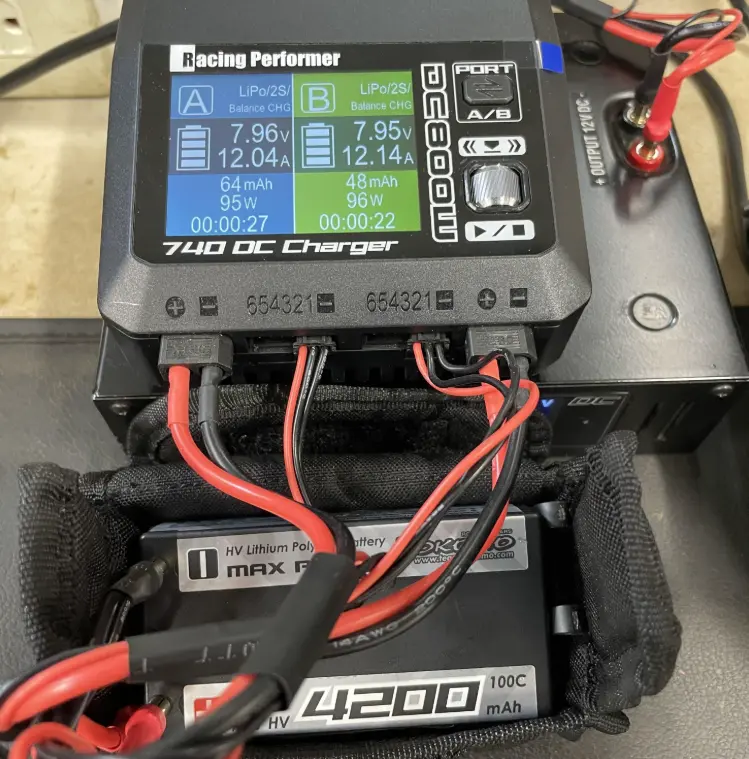
Forum threads sometimes suggest charging a pack in NiMH mode for a minute or two to jump-start a dead cell. That mode charges the pack as one block, so it ignores the individual cell voltages. If one cell is low and the others are full, the full cells can be pushed past 4.2V while you wait for the low one to move. Experienced hobbyists do use this trick on over-discharged packs, but it removes the safeguards the balance charger exists to provide, and a mistake here can start a fire. I’d leave it out of a routine fix.
Forcing the charge with higher current has the same problem. A cell that isn’t responding to a gentle charge won’t respond better to a harder one.
When the Pack Should Be Retired
Take the pack out of service if any of these apply:
- A cell has sat at or below roughly 3.0V and won’t recover to a normal voltage
- The same cell reads low again after a full balance charge, or drops first in flight
- IR on one cell is far above the others and keeps climbing
- The pack has puffed or deformed
- The pack has lost 20% or more of its capacity, which the Academy of Model Aeronautics gives as a point to recycle (AMA’s LiPo disposal basics)
A weak cell is also a flight risk. The flight controller reads total pack voltage, so a healthy set of cells can hide one that has already collapsed, and the drone loses power sooner than the battery readout suggests.
For disposal, the AMA notes that even puffed packs can go to battery recycling if they’re bagged and the terminals are protected. Don’t throw them in household trash.
A pack that does pass these checks is worth storing properly, at about 3.8V per cell if it won’t be used within a week or so. A cell that drifts low in storage tends to be the same one that gave you trouble before.
Recommended Reading: