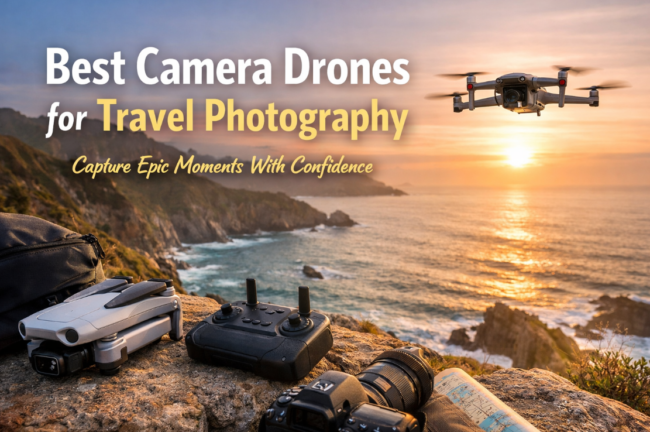
Best Camera Drones for Travel Photography: Capture Epic Moments With Confidence
Why Camera Drones Completely Changed My Travel Photography
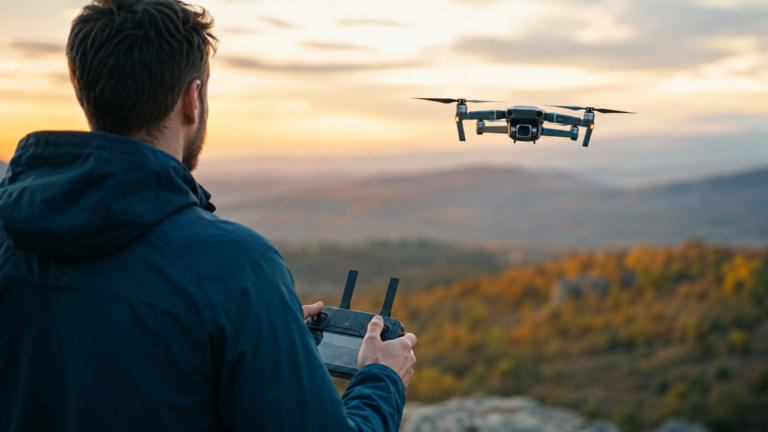
I still remember the first time I flew a drone over a coastline at sunset. I had my regular mirrorless camera in my backpack, but the shots I got from 200 feet in the air? Completely different league.
If you’ve ever stood on a cliff in Big Sur, wandered through a desert canyon, or watched waves crash onto a tropical beach, you know the feeling — this deserves a bigger perspective. That’s exactly what the best camera drones for travel photography give you.
And here’s the thing: it’s not just about specs. It’s about portability, battery life when you’re out all day, and how confident you feel flying it in real-world travel conditions.
After traveling with drones for several years (and making plenty of mistakes along the way), here’s what I’ve learned.
What to Look for in a Travel Photography Drone
Portability Is Everything
If it doesn’t fit easily in your daypack, you won’t use it as much. Period.
When you’re moving between airports, trains, rental cars, and hiking trails, bulky gear gets old fast. Foldable drones are a game changer. I’ve skipped bringing larger models on trips simply because I didn’t want to deal with the weight.
Lightweight drones under 250g are especially great for travel — fewer regulatory headaches in many places and easier packing overall.
Camera Quality (Because That’s the Whole Point)
For travel photography, I personally won’t go below 4K video capability anymore. Even if you mostly shoot stills, modern drone sensors handle dynamic landscapes way better than older models did.
A few things I always look for:
- 4K video at minimum
- RAW photo support
- Strong dynamic range
- 3-axis gimbal stabilization
Wind happens. Coastal gusts happen. Mountain thermals definitely happen. A solid gimbal makes the difference between cinematic footage and shaky regret.
Flight Time Matters More Than You Think
On paper, 20 minutes sounds fine.
In reality? It goes fast.
Between setting up shots, repositioning, and waiting for the perfect lighting moment, battery life disappears quickly. I aim for drones that get 25–30 minutes per battery. And I always travel with at least two extras.
Smart Flight Modes (Especially If You Travel Solo)
Orbit mode. Follow mode. Waypoints.
These features aren’t gimmicks — they’re lifesavers when you’re traveling alone and want cinematic movement without a second operator.
Some of my favorite solo travel clips were captured using automated tracking while I hiked or walked along a ridge.
My Favorite Camera Drones for Travel Photography
Here are the models I personally think hit the sweet spot for portability and image quality.
Compact All-Rounder: DJI Air 3
If you want something powerful but still travel-friendly, the DJI Air series is tough to beat. I’ve flown these in coastal wind, desert heat, and mountain mornings without issues.
Why I like it:
- Crisp 4K (and beyond) video
- Strong obstacle avoidance
- Excellent balance between power and size
- Reliable transmission range
It feels “pro” without being intimidating. For most travelers, this is more than enough drone.
Lightweight Favorite: DJI Mini 4 Pro
When I want ultra-portable and minimal hassle, I grab the Mini series.
Under 250g, insanely compact, and surprisingly powerful for its size. For city travel or international trips where regulations can get complicated, this is often my go-to.
You do sacrifice a bit of sensor size compared to bigger drones, but for travel content, it’s impressive.
Pro-Level Imaging: DJI Mavic 3 Pro
This one is for serious creators.
If your travel photography is part of your business — YouTube, licensing, client work — the Mavic 3 Pro is on another level. The dynamic range and low-light performance are noticeably better.
It’s heavier and more expensive, yes. But if image quality is your top priority, it’s hard to ignore.

Budget-Friendly Options (And Why They’re Totally Fine)
Not everyone needs flagship gear.
If you’re just starting out, there are entry-level drones that still deliver stable 4K footage and decent photos. You may not get massive dynamic range or top-tier obstacle sensing, but you’ll absolutely get usable travel shots.
Honestly? A beginner drone is often smarter than overspending on something you’re afraid to fly.
Tips for Flying Drones While Traveling
1. Always Check Local Regulations
Drone laws vary wildly by country, and even by city.
Before every trip, I check official aviation websites and local guidelines. It takes five minutes and can save you serious trouble.
If you’re planning a destination-heavy trip, you might also like my breakdown of must-know travel safety tips — drones included.
2. Shoot Early or Late
Golden hour isn’t just better lighting — it usually means calmer wind.
Midday thermals in hot climates can make flying way more stressful than it needs to be.
3. Practice Before Your Trip
Do not let your first flight be at a once-in-a-lifetime location.
Spend a weekend practicing near home. Learn how it handles in light wind. Get comfortable with return-to-home settings. Test your obstacle avoidance.
Confidence shows in your footage.
Are Travel Drones Worth It?
In my opinion? Absolutely.
The best camera drones for travel photography open up perspectives you simply can’t get from the ground. Once you see your first aerial panorama on a big screen, it clicks.
It’s not about flexing gear. It’s about storytelling.
If you choose something lightweight, reliable, and aligned with how you actually travel, you’ll use it constantly — not just once a year.
And trust me… that first sweeping coastline shot will make you wonder why you waited so long.