Buggy RC Car for Beginners – Where to Actually Run One
Buggy RC Car for Beginners – Where to Actually Run One
As an Amazon Associate I earn from qualifying purchases.
There’s usually a gap between buying a buggy rc car and actually knowing where to drive it. Battery charged, controller in hand, and then it hits you — the backyard is smaller than it looked in your head, the driveway has more of a slope than you remembered, and the park down the street turns out to have a “no motorized vehicles” sign you’ve walked past a hundred times without reading.
Why the Surface Matters More Than People Expect
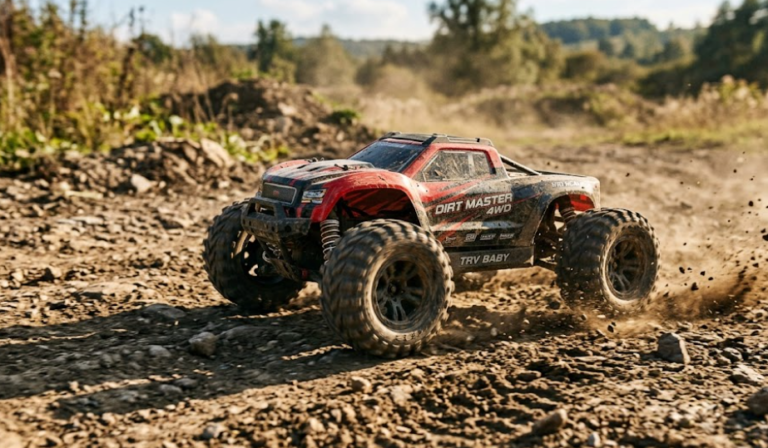
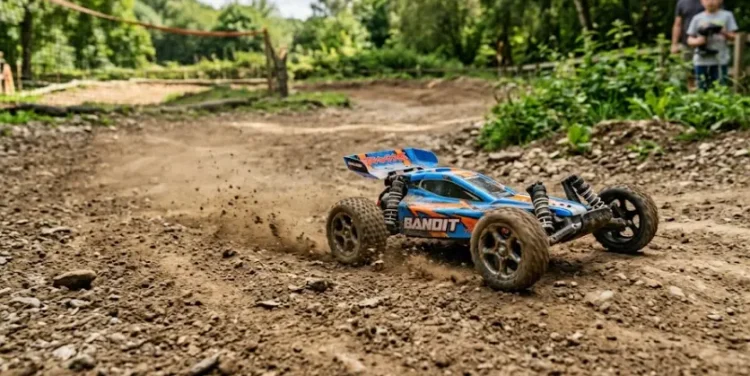
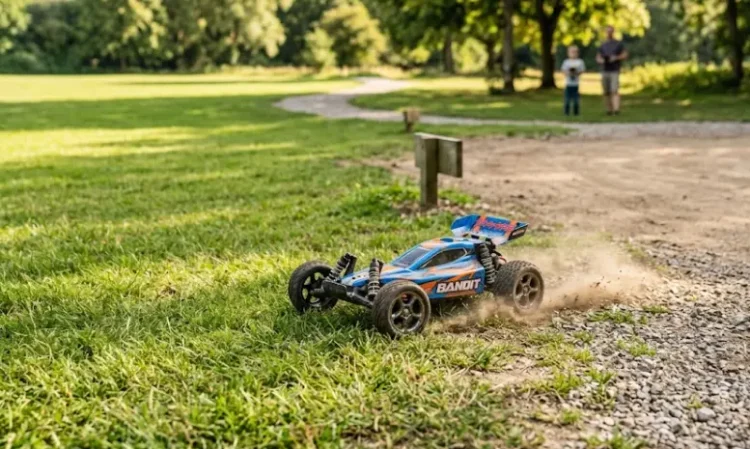
Once you actually get one moving, you start to understand why buggies are shaped the way they are. The wide stance and chunky tires aren’t there to look aggressive on a shelf. You notice what they’re doing pretty quickly once you get onto dirt or grass. Pavement works too, technically. It’s just not nearly as interesting. The car is fast, but you lose a lot of the little bumps, slides, and suspension movement that make a buggy fun to drive in the first place.
Where Beginners Should Actually Start
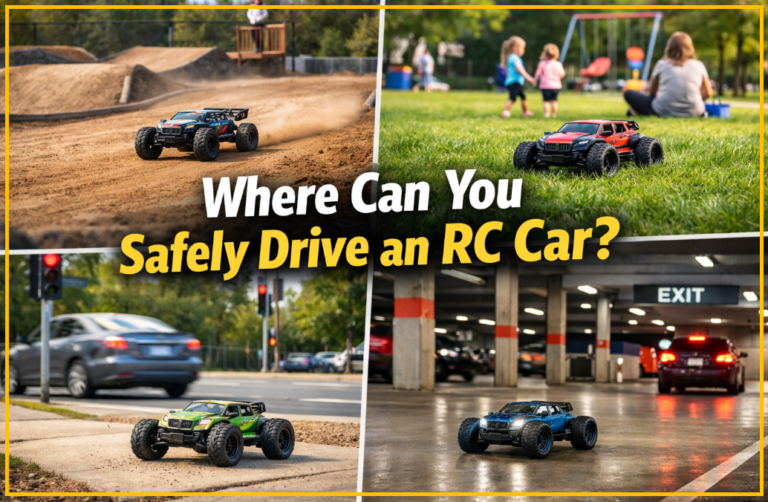
For a beginner, I’d honestly start with whatever decent open space is nearby. Short grass is probably the easiest place to learn on. It’s predictable, there’s usually plenty of room, and small mistakes don’t turn into disasters. Packed dirt works well too. I’ve also heard people mention using empty lots and gravel areas, though loose gravel is worth being a little careful with while you’re still figuring out the steering.
Steep edges, deep sand, and standing water are worth staying away from at first — it’s easy to get into trouble in those spots before you’ve got a feel for throttle control.
Don’t Forget to Check for a Local RC Track
A lot of newer hobbyists assume dedicated tracks are a big-city thing, or something reserved for serious racers. That’s not really how it works. Some local hobby shops run tracks, and there are sometimes small community-run ones too. They don’t always look impressive. Sometimes it’s basically a dirt lot with a few jumps carved into it. That’s usually enough to get a lot out of.
A quick search for “RC track near me” is a decent place to start, along with checking hobby shop social media pages, since a lot of these tracks don’t get advertised much beyond that. You don’t need to be interested in racing to get something out of it, either. Spending even an hour on a proper track tends to teach you more about throttle control and cornering than weeks of backyard driving will.
Brand Comes After the Surface Question, Not Before
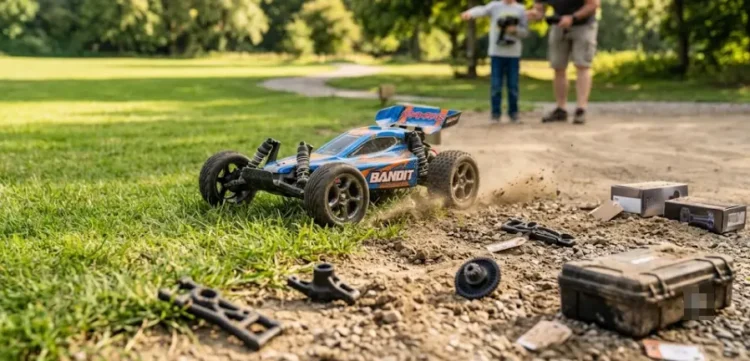
Once you start looking at beginner buggies, you’ll probably end up comparing brands — Traxxas, Arrma, whatever’s cheapest on Amazon that week. Brand does matter eventually, mainly because you’ll need parts at some point. Something is going to break. But early on, I’d worry more about where you’re actually going to drive it than what’s written on the chassis. An RTR buggy from a brand with decent parts support is usually plenty for a beginner, as long as it actually suits the ground you have access to.
If you’re at the point of actually choosing one, there’s a rundown of beginner-friendly options here:
👉 best rc buggy for beginners.
If you want to see what a decent beginner RTR buggy actually looks like on the spec sheet,
[Traxxas Bandit 4×4 (Amazon)] is one of the more commonly recommended starting points — reasonable parts availability, and it’s not a model that disappears off shelves every few months.
Buggy RC Car: Once You Actually Get Out There
Once you’ve got the buggy and somewhere decent to run it, things move fast. The first few sessions are mostly about figuring out how much throttle a loose surface can actually take before the back end steps out on you. After that, it stops feeling like something you’re controlling and starts feeling like something you’re driving.