RC Servo Buzzing Not Turning: How to Find the Cause
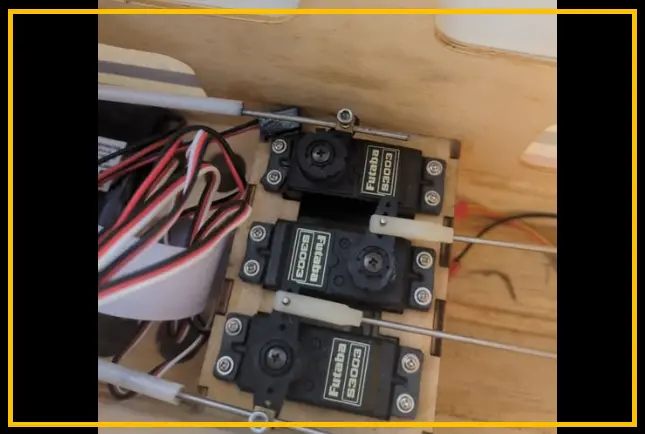
An RC servo that buzzes without turning may be stalled. It may be receiving power and a control signal, but something is preventing the output shaft from reaching its commanded position. The fastest way to sort out the cause is to take the servo horn off the linkage and try it with nothing attached. If it moves normally, the problem is in the car or plane. If it still buzzes and stays put, look at the servo’s gears and its power supply.
Why a servo buzzes when it can’t move
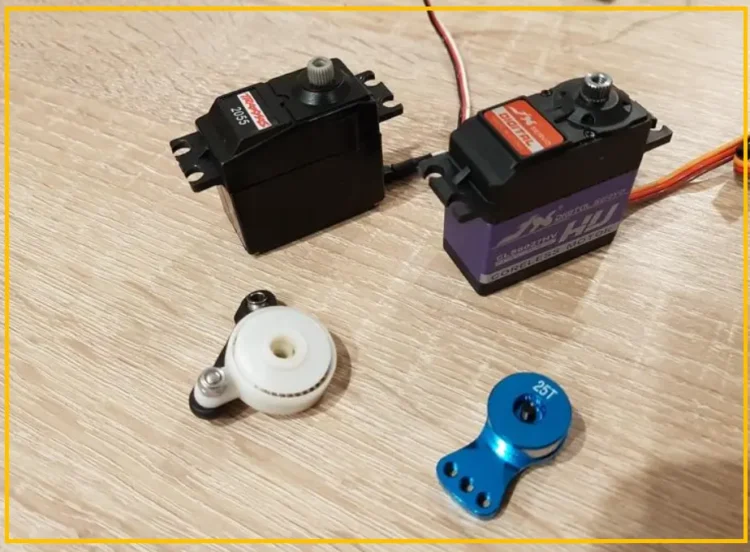
A servo constantly compares where its output shaft is with where the receiver says it should be. When the two don’t match, the control circuit sends power to the motor to close the gap. If the shaft can’t move, the circuit keeps pushing, and the pulsing current makes the motor windings hum. Kpower’s servo troubleshooting guide describes it this way and notes that a servo that buzzes without moving is stalled, overloaded, or damaged.
A faint buzz from a servo holding position under load is a different thing, and it’s covered near the end. The buzz this article deals with is the loud, steady kind that comes with no movement.
Take the servo off the linkage first
This one test separates two groups of causes before you touch a screwdriver to anything else.
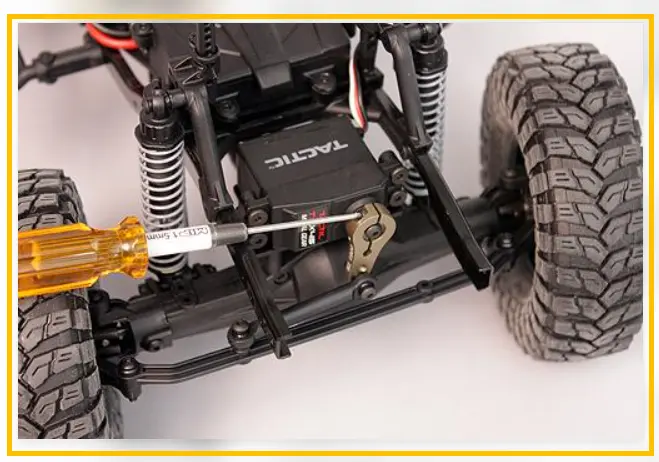
- Turn off the vehicle and remove the screw holding the servo horn (or disconnect the pushrod or clevis from the horn).
- Turn the transmitter and receiver on, with the wheels off the ground or the model secured.
- Move the steering control and watch the servo shaft.
If the servo turns smoothly and quietly, the servo is probably fine and the trouble is in the steering linkage or the end point setting. The York Area R/C Club’s servo troubleshooting page recommends the same test: disconnect the pushrod, and if the buzzing stops, treat the problem as mechanical.
If it keeps buzzing with nothing attached, skip ahead to the gear and power sections.
Is the linkage binding?
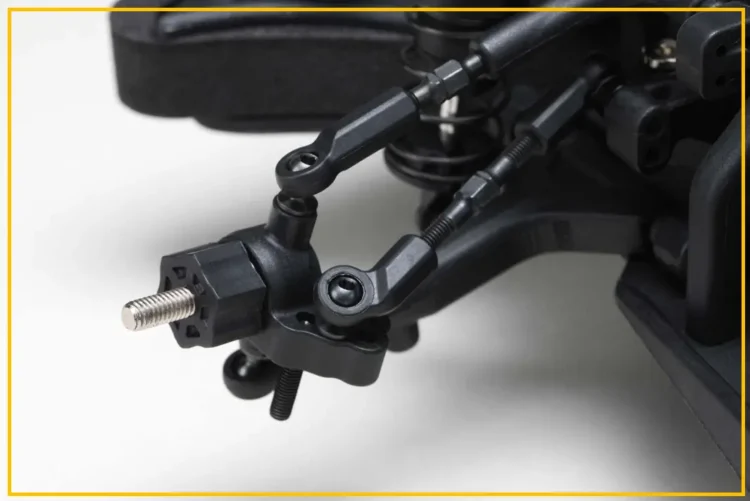
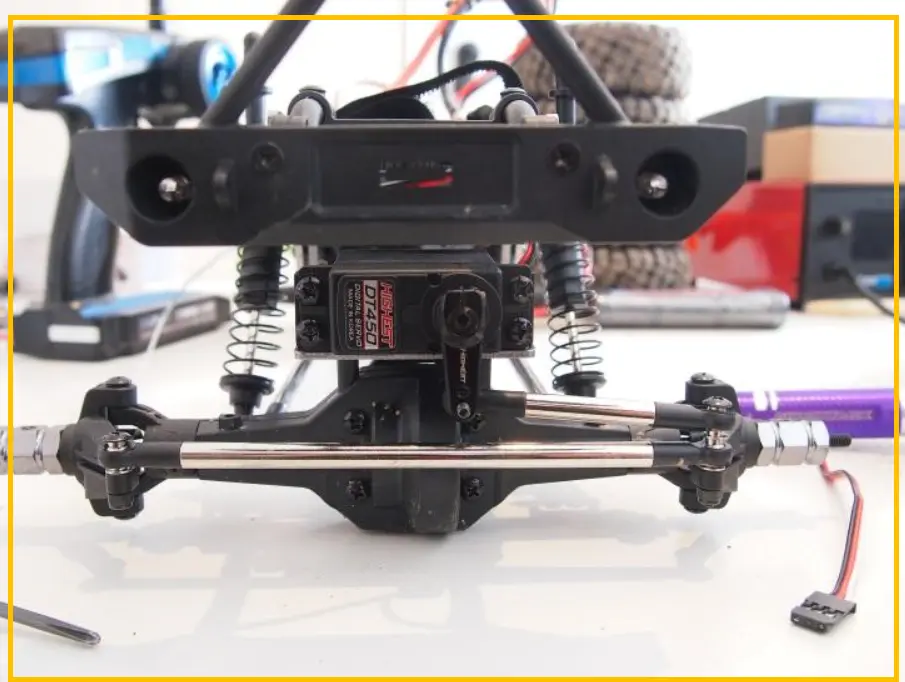
With the servo disconnected, move the steering by hand from full left to full right. It should travel without tight spots, clicks, or a point where it stops short.
Things worth looking at on a car:
- Ball ends or clevises tightened until they no longer pivot
- Steering knuckles or hub carriers that are dirty, or a pivot screw that’s too tight
- A servo saver that’s seized or jammed against the chassis
- A horn or pushrod that hits a chassis part near full lock
Loosen, clean, or re-center whatever is dragging, then reconnect the servo and test again. A servo saver can also absorb some of the force at the end of travel, which helps if the steering reaches its stops before the servo does.

Could the end point setting be the problem?
If the buzz only starts at full left or full right, the transmitter may be commanding more travel than the servo or the linkage can give. Kpower’s article on servo buzzing after increasing travel explains that a servo asked to go past its mechanical or electrical limit keeps trying and hums against the stop.
On the transmitter, find the end point adjustment for the steering channel. Radios label it EPA, ATV, or End Point, and some call it travel or dual rate. Lower the value in steps of about 5% until the buzz stops at full deflection. Then check that the car still steers as far as you need it to.
If you’ve recently raised the travel to get a tighter turning circle, this is a good place to look first.
Could the gears be stripped?
If the servo buzzes with the horn off, the next suspect is the gear train. When teeth are stripped, the motor can spin while the output shaft barely turns or doesn’t turn at all. The control circuit sees no movement and keeps driving the motor.
With the power off, turn the output shaft gently by hand. A smooth, even feel doesn’t rule out gear damage. Grinding, slipping, or unusual free movement may indicate stripped teeth or another internal fault. Avoid forcing the output shaft by hand, as this can cause further damage. Turn it gently, since forcing a servo shaft by hand can damage the gears further.
To confirm, remove the case screws (usually four) and look at the gears. Missing or flattened teeth, a cracked gear hub, or metal shavings in the case all mean the gear set needs replacing. Many common servos have replacement gear sets sold separately, and some are available in metal. If you can’t find a matching set, replacing the whole servo is the practical option. Kpower’s repair-or-replace table puts stripped plastic gears in the repairable category and burnt motors or control boards in the replace category.
If it still buzzes: check the power
A servo can also buzz and not move when the supply voltage sags under load. In an RC car, the power usually comes from the receiver through the speed controller’s BEC. If that supply is weak, or a battery is nearly empty, the servo can hum without enough force to move.
A few things to check:
- Whether the battery is fully charged
- Whether the servo plug and wires are secure and undamaged
- Whether the servo works with a known-good power source that matches the servo’s voltage and current requirements, following the manufacturer’s wiring instructions
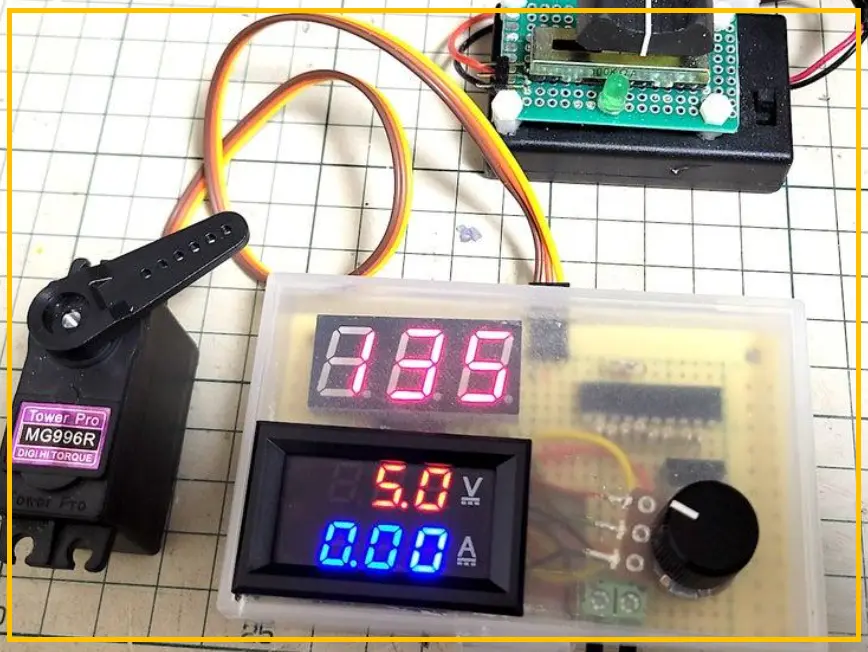
- Whether voltage at the servo drops noticeably while it’s buzzing, if you have a multimeter
Whether a BEC is strong enough depends on the speed controller and the servo, so check the BEC rating against the servo’s current draw if you’re using a high-torque servo.
Don’t leave it buzzing
A stalled servo draws extra current and heats up. Left long enough, it can damage the motor windings or the control board, and a weak BEC can also drop out and take the receiver with it. Switch off as soon as you hear the buzz, and troubleshoot with the power off between tests.
When to replace the servo
Replace the servo if it buzzes with nothing attached, the gears look intact, and it behaves the same on a separate known-good power source. A burnt smell, melted plastic, or a case that’s very hot after a short test also points to a damaged motor or control board. At typical hobby prices, replacement is usually quicker than trying to repair the electronics.
👉 Check out these related posts:
- RC Car Steering Glitching When Throttle Pulled: What to Check and Fix
- Vebeto RC Drift Car Noise: How to Find and Stop It
- RC Car Steering Motor Works Briefly Then Stops? Here’s Why
A couple things that aren’t so obvious
Metal gears resist stripping, but they don’t fix a binding linkage. If the steering is jammed, the force goes somewhere else, and the motor or control board may take the damage instead. Clear the binding first.
A faint hum is not always a fault. Some digital servos make a quiet buzz when holding position against a load, such as steering at rest. That’s different from a loud buzz with no movement, but if the sound gets louder over time or the servo runs hot, it’s worth a closer look.