RC Car Terms Explained: A Beginner’s Guide to Common RC Vocabulary
RC Car Terms Explained: A Beginner’s Guide That Actually Makes Sense
The first RC car I ever bought made me think I got a defective one.
It bounced all over the place, got hot way faster than I expected, and the manual? Might as well have been written in code. Everyone online kept throwing around words like brushed, ESC, gearing, and LiPo like I was supposed to already know what they meant.
Truth is, RC cars themselves aren’t that complicated.
The language just makes them feel that way.
This guide exists for one reason: to translate RC talk into plain English, the way someone should’ve explained it to me on day one.
If you learn the terms early, you save money, avoid dumb mistakes, and stop buying parts you don’t actually need.
Why RC Terminology Trips Up Beginners So Fast
At a glance, RC cars look simple. Charge the battery, pull the trigger, have fun.
The confusion starts the moment something breaks… or you want to upgrade… or you’re standing in a hobby shop pretending you understand what the guy behind the counter just said.
Most RC guides assume you already know the basics. That’s usually where beginners check out.
Once the terms click, though, everything gets easier. Specs make sense. Forums stop sounding hostile. Fixing stuff stops feeling intimidating.
If you’re curious why knowing this stuff matters long-term, this breakdown helped me connect the dots early on:
Basic RC Car Inspection Checklist for Beginners
Basic RC Car Terms You’ll Run Into Immediately
What “RTR” Really Means
RTR stands for Ready-To-Run.
Technically, it means the car comes assembled. In reality, it often means:
- No battery
- No charger
- Sometimes not even AA batteries for the radio
Still, RTR cars are perfect for beginners. Just don’t assume “ready” means everything is included.
Brushed vs Brushless (Without the Tech Headache)
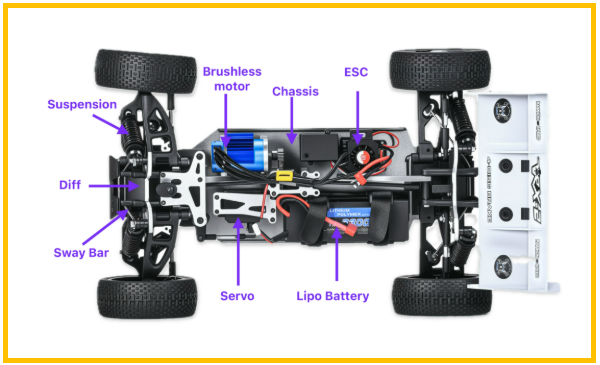
Brushed motors use physical brushes to transfer power.
Brushless motors don’t.
That’s the core difference.
Brushless setups are faster, more efficient, and last longer. They’re also more expensive and less forgiving when something goes wrong.
Brushed motors? Slower, cheaper, easier to learn on. They’re not junk—they’re training wheels, and there’s nothing wrong with that.
RC Car Terms Explained: What an ESC Actually Does
ESC means Electronic Speed Controller.
Think of it as the middleman between your battery and motor. When an ESC starts failing, the car feels “off” in weird ways—cutting out, stuttering, random shutdowns.
A lot of beginners chase motor problems when it’s really the ESC acting up.
Drivetrain and Performance Terms That Matter
2WD vs 4WD
2WD sends power to two wheels, usually the rear.
4WD sends power to all four.
2WD cars are harder to drive but teach throttle control fast.
4WD cars are more forgiving and feel planted.
Crashes happen more with 2WD. Learning happens faster too.
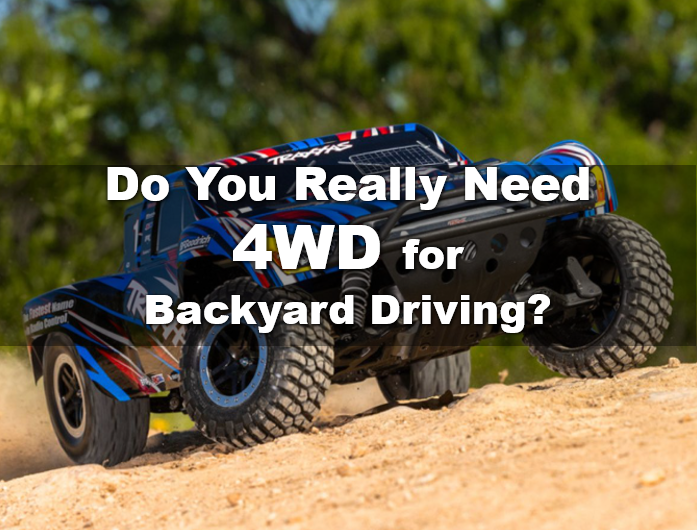
2WD vs 4WD RC Cars: Beginner Differences Explained Clearly
Gearing (And Why Cars Overheat)
Gearing decides how speed and torque are balanced.
Lower gearing:
- More torque
- Less heat
- Better for beginners
Higher gearing:
- More speed
- More heat
- More broken stuff if you’re not careful
Most overheating issues aren’t motor problems. They’re gearing problems.
Suspension Terms That Actually Affect How Your Car Drives
Shock oil controls how fast the suspension moves.
Springs handle weight.
Ride height affects stability.
If your car bounces like a basketball, it’s usually suspension—not power.
Battery Terms You Really Need to Understand
What a LiPo Battery Is
LiPo stands for Lithium Polymer.
They’re powerful, lightweight, and common. They also need to be treated with a bit of respect. Don’t over-discharge them. Don’t puncture them. Don’t use sketchy chargers.
Used properly, they’re safe. Ignore the basics, and you’ll learn the hard way.
2S vs 3S (Simple Version)
2S = about 7.4 volts
3S = about 11.1 volts
More voltage means more speed—and more stress on everything else.
Stick with 2S until you actually understand what 3S will do to your car.
C Rating Without the Math
C rating is how fast a battery can deliver power.
Higher isn’t automatically better. Most beginners buy way more battery than they’ll ever need.
Radio and Control Terms
Transmitter vs Receiver
The transmitter is the controller in your hands.
The receiver lives in the car.
They must match. Sounds obvious—until you buy the wrong one. Ask me how I know.
Trim Settings
If your car pulls left, adjust steering trim.
If it creeps forward, adjust throttle trim.
Always do this before tearing the car apart looking for mechanical issues.
Maintenance Terms That Save You Cash
Bearings vs Bushings
Bushings create friction and wear out fast.
Bearings roll smoother and last longer.
Swapping bushings for bearings is one of the best beginner upgrades you can make.
Threadlock (Yes, You Need It)
Metal screws going into metal parts need threadlock. Period.
Without it, screws vibrate loose and your run ends early. Everyone learns this lesson once.
Once the terminology clicks, RC stops feeling overwhelming.
You don’t need fancy tools. You don’t need the fastest setup. You just need to understand what people are actually talking about.
Learning the language is the first real upgrade you make—and it’s the one that never breaks.