Why Your RC Car Won’t Turn On (Basic Troubleshooting Guide)
RC Car Won’t Turn On? There’s nothing more frustrating than getting ready to run your RC car… and nothing happens.
No lights. No beeps. No response at all.
I used to think this meant the car was broken for good. In my mind, if an RC car wouldn’t turn on, something expensive had failed. Looking back now, I couldn’t have been more wrong.
In my experience, most RC cars that won’t turn on aren’t broken at all. They’re just dealing with a basic issue that’s easy to overlook—especially if you’re new to the hobby.
First Things First — Don’t Assume the Worst
Before opening your wallet or blaming the electronics, slow down for a moment. I’ve learned over time that RC troubleshooting works best when you start simple.
From my point of view, beginners tend to jump straight to worst-case scenarios. But RC cars are surprisingly logical machines. If you follow the basics step by step, the problem usually reveals itself.
If you’re completely new, this beginner guide may help put things in perspective:
👉How Do RC Cars Work? Explained for Beginners
Most Common Reasons an RC Car Won’t Turn On
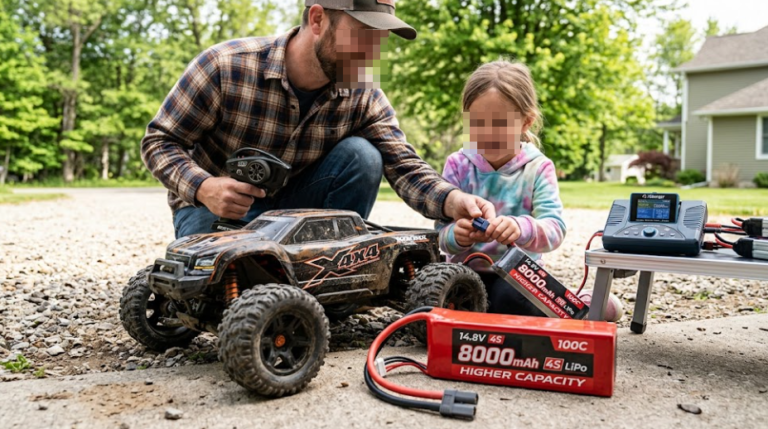
Dead or Improperly Charged Battery
This is the number one cause. And yes, I’ve been guilty of it too.
Even if the charger says “complete,” that doesn’t always mean the battery is usable.
What to check:
- Battery voltage
- Correct battery type selected on the charger
- Loose or damaged battery connector
In my opinion, batteries cause more RC issues than any other single part.
Battery Connected the Wrong Way
It sounds obvious, but it happens more often than people admit.
Some RC cars allow the plug to connect loosely or at an angle. If the connection isn’t solid, the car won’t power up.
I also believe it’s worth unplugging and reconnecting the battery once more before moving on.
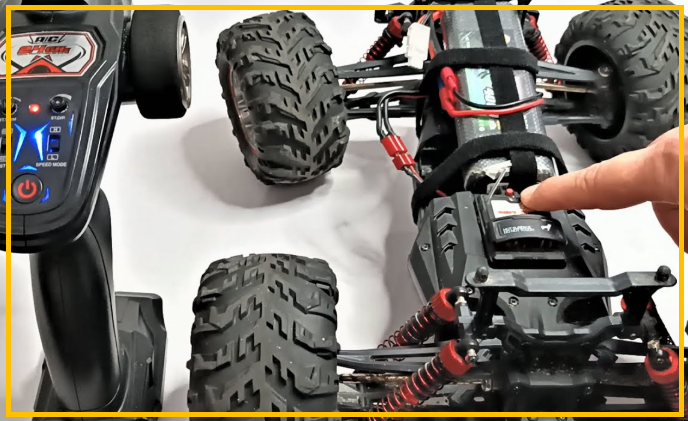
Power Switch Issues
RC power switches take a beating. Dirt, moisture, and vibration all work against them.
Signs of a bad switch:
- Car powers on only when you wiggle it
- No lights or sound at all
- Intermittent power loss
From my experience, power switches are a silent failure point many beginners overlook.
Electronic Speed Controller (ESC) Problems
ESC Not Armed or Calibrated
I used to think ESC calibration was “advanced stuff.” Turns out, it’s basic RC ownership.
If the ESC doesn’t recognize the throttle signal, it may refuse to power the system.
Quick check:
- Turn on the transmitter first
- Set throttle trim to neutral
- Power on the RC car
If you hear beeps but no movement, calibration is likely needed.
For a deeper look into RC electronics basics, this article helps:
👉 RC Car Maintenance Basics Explained for Beginners
ESC Thermal or Voltage Protection
Some ESCs won’t turn on if:
- The battery voltage is too low
- The ESC overheated during the last run
In my opinion, letting the car cool down for 10–15 minutes solves this more often than people expect.
Transmitter and Receiver Issues
Dead Transmitter Batteries
This one is sneaky.
I’ve personally wasted time troubleshooting the car when the real issue was the transmitter. If the transmitter doesn’t send a signal, the car may appear completely dead.
Always check transmitter batteries early in the process.
Receiver Not Getting Power
If the receiver isn’t lighting up:
- Check the ESC-to-receiver wire
- Make sure the plug is facing the correct direction
- Inspect for bent pins
In my experience, unplugging and reseating receiver connections fixes a surprising number of “dead” RC cars.
Mechanical Problems That Prevent Power-Up
Short Circuits or Damaged Wires
If your RC car was recently driven in water, mud, or wet grass, this matters.
Signs of electrical damage:
- Burnt smell
- Melted insulation
- Corrosion on connectors
From my point of view, water and RC electronics are a risky mix unless the system is fully waterproof.
Step-by-Step Basic Troubleshooting Checklist
I also find it helpful to follow a simple order:
Basic RC Power Checklist
- Fully charged battery
- Transmitter on first
- Battery firmly connected
- Power switch functioning
- ESC properly armed
- Receiver receiving power
This process alone solves most startup problems.
When It’s Actually a Serious Problem
In my experience, true component failure is less common—but it does happen.
Signs of Real Hardware Failure
- No power even with known-good battery
- ESC smells burnt
- No LED activity anywhere
At that point, replacement may be the safest option.
Final Thoughts — Don’t Let a Dead RC Kill the Hobby
I still remember how discouraged I felt the first time my RC car wouldn’t turn on. At the time, I thought I had wasted my money.
Now, I honestly see it differently.
In my opinion, learning how to troubleshoot is part of what makes RC cars such a rewarding hobby. Every issue you solve builds confidence—and saves you money down the road.
If your RC car won’t turn on today, don’t panic. Chances are, it’s a simple fix you’ll laugh about later.
FAQ: RC Car Won’t Turn On
Q: Why does my RC car show no lights at all?
A: This usually points to a battery, switch, or ESC power issue.
Q: Can a bad battery stop an RC car from turning on completely?
A: Yes. In my experience, batteries are the most common cause.
Q: Should I replace parts immediately if my RC won’t turn on?
A: I wouldn’t. Basic troubleshooting should always come first.
Q: Is this problem common for beginners?
A: Absolutely. Almost everyone runs into it early on.